Australian Institute for Bioengineering and Nanotechnology
Availability:
Available for supervision
Media expert
Disrupting the status quo and closing the circular bioeconomy
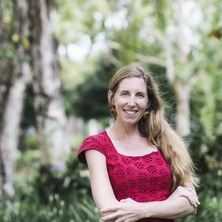
Dr Jitka Kochanek is the founder and leader of the Plant Performance Laboratory at the Australian Institute for Bioengineering and Nanotechnology. At the interface of biology and materials science, she utilises bioengineering to disrupt the status quo within the global bioeconomy. Specifically, her pioneering research aims to supersede dated industry practices with new, highly efficient products and to replace outdated materials (unsustainable, damaging etc) with cutting-edge biomaterials that close the circular economy.
Her latest scientific achievement has been the discovery of a new material that is a ‘technology platform’ upon which multiple technologies are being developed through tailoring of parent materials, such as for biomedical and food packaging applications, as well as for agriculture and environmental rehabilitation. In 2021 she gained private industry funding from a prominent Australian SME for translation and commercialisation is expected over a 2–5-year timeframe. Since parent materials are plant-based, the platform promises a closed circular economy.
In the agri-environmental space, Dr Kochanek’s vision is sustainable real-time plant regulation, using novel biomaterials and technologies. The most commercially advanced product promises to be a disruptive tool for better future-proofing agriculture and wild plant ecosystem restoration, having successfully delivered emerging growth regulators that assist plants to cope with climate-related stressors, such as heatwaves and drought. Additionally, classic chemistries have been delivered to plants at 100-10,000-fold lower dosages than current commercial practices, thus generating social licence and slashing chemical costs.
Dr Kochanek has collaborated with some of the world’s top organisations and researchers, such as conservation ecologists at Kew Gardens in the UK, natural product chemists via the Flematti Group at the University of Western Australia and materials scientists within the Rowan Group at the University of Queensland. She has had the pleasure of supervising/mentoring >30 research students and 2 postdoctoral researchers.
Other notable career achievements
Since 2010 Dr Kochanek has been principal chief investigator across 8 industry and government projects worth >$2.3M (Federal/Horticulture Innovation Australia, Local/Brisbane City Council, State/Qld Government and private industry projects), a research consultant for the Australian Centre for International Agricultural Research (ACIAR, developing sustainable and cost-effective crop sanitation technologies in Papua New Guinea) and won the CSIRO ON-Prime accelerator program in 2019 for her visionary agri-technologies. Other notable achievements are that Dr Kochanek became a stand-alone researcher at <2 years post-PhD, after securing funding as principal CI ($302K, 2010); has developed a novel systematic framework to close the circular economy for waste recycling technologies; was among the first to confirm empirical evidence for epigenetics in plants or animals; and has developed a bioassay to rapidly ascertain plant responses for growth promoting/harming compounds. The bioassay provides the ability to predict chemical dosages for plants within 1 week.
Dr Julius Kotir is a Senior Lecturer in Agribusiness, Rural Development and Economics in the School of Agriculture and Food Sustainability. His academic and research interests focus on understanding and managing the long term sustainability of coupled socio economic and environmental systems. A key area of interest is the development of decision support tools and models that evaluate the impacts of alternative pathways and policy options under uncertain global futures. His work adopts an interdisciplinary approach that combines participatory co design, field based research methods, systems thinking, and system dynamics modelling to develop both qualitative and quantitative simulation models that support evidence based decision making.
Julius currently applies these tools and methods to address a broad range of complex agri environmental challenges, including international and rural development, food security, farming systems economics, agrifood and digital twin supply chains, climate smart agriculture, water resources management, farmer adoption of innovative practices, and agribusiness policy design and analysis.
Lecturer in Interdisciplinary Agricultural Studies | Deputy Director (Curriculum), School Teaching & Learning Committee | ACDA Steering Committee Member & 2026 ACDA T&L Awards Chair | Affiliate Academic, ITaLI | Senior Fellow (SFHEA)
I am an educator and researcher dedicated to transforming teaching and learning in higher education, with a focus on interdisciplinary agricultural studies, student engagement, and curriculum innovation. With a background spanning chemistry, biology and animal science, I integrate scientific perspectives to create authentic, applied learning experiences for students.
As Deputy Chair of the School Teaching & Learning Committee, I lead strategic initiatives that strengthen curriculum design, assessment practices, inclusive teaching, academic integrity, and student transition. I actively support colleagues in adopting evidence‑based pedagogies, co‑teaching models, and innovative approaches that enhance learning and teaching across the school.
Nationally, I contribute to sector-wide educational leadership through the Australasian Council of Deans of Agriculture (ACDA), serving on the Steering Committee and as the Incoming Chair of the ACDA Teaching & Learning Awards for 2026. In these roles, I help shape national conversations on agricultural education, celebrate excellence, and support the development of high-quality teaching across the discipline.
My research explores virtual field trips in agriculture, student–industry engagement, digital inclusion, and the role of technology‑enhanced learning in supporting diverse cohorts, including rural and remote learners. I have led and contributed to multiple teaching and learning grants that embed sustainability, digital tools, and real‑world applications into agricultural curricula.
As an Affiliate Academic with ITaLI, I contribute to educator development through workshops, SECaTS-informed consultations, peer coaching, and co‑teaching initiatives. I mentor early‑career educators in active learning, curriculum alignment, and evidence‑based teaching practices that promote student success.
My Scholarship of Teaching and Learning (SoTL) focuses on co‑teaching effectiveness, assessment redesign, and improving student learning outcomes, informing both my practice and broader institutional enhancement efforts.
A Senior Fellow of the Higher Education Academy (SFHEA), I have received commendations for teaching excellence and pedagogical leadership.
Research Interests
Co‑teaching and interdisciplinary collaboration
Curriculum innovation and assessment redesign
Digital inclusion and technology‑enhanced learning
Virtual field trips and industry engagement in agricultural education
Student transition and first‑year STEM experience
Scholarship of Teaching and Learning (SoTL)
I collaborate with university and industry partners to reimagine agricultural education, mentor the next generation of educators, and cultivate skilled professionals equipped to shape the future of the agricultural sector.
My current research is all about finding ways to improve teaching and student learning, with a focus on biology and other sciences. This is a new and exciting direction for me to which I and my group are now dedicated. Of particular interest to me is finding ways to improve communication abilities of science students through the design, testing and implementation of effective curricula, class activities and assessment methods. Naturally, no learning occurs in isolation, so my current research also looks at learning scientific reasoning, information literacy, and how to improve the relevance and authenticity of practical/lab classes and assessment tasks.
Previously my research focussed on using physiological approaches and techniques to address questions in ecology, conservation and aquaculture, especially in vertebrates living in extreme environments (see references for examples). I continue to be involved in biological research through teaching, co-supervision and examination of postgraduate students.
My current projects aim to find effective ways to...
Improve abilities of first year biology students to work effectively in groups.
Improve science students’ communication abilities through the development and implementation of a new 3rd year course titled Communicating in Science.
Improve scientific reasoning and writing in first year biology students.
Improve tutor support and consequently student learning through implementation of a program of tailored tutor professional development.
Improve information literacy in first year biology students.
Motivate students to improve their biological knowledge and use of modern communication technologies by implementing authentic assignments throughout the curriculum e.g., websites, video, blogs.
Improve the ability of students to articulate the skills and knowledge they develop in undergraduate ecology research through the use of a skills portfolio.
Improve student practice and confidence in avoiding plagiarism and adhering to academic integrity.
Research Fellow/Senior Research officer (Supervisor)
Queensland Alliance for Agriculture and Food Innovation
Availability:
Available for supervision
Yasmine Lam is a researcher within the Queensland Alliance for Agriculture and Food Innovation at the University of Queensland. Her main areas of interest are using biotehnological tools like gene editing to dissect key traits of interest in cereals to further understand the molecular mechanisms that underpin phenotypes. Currently she is focusses on integrative approaches for leveraging breeding data for biotechnological research and disseminating the influences of genes on various aspects of root system architecture in winter cereals. Overall, she endeavours to form more integrative approaches for crop improvement by looking at ways to harness biotechnlogical tools in a manner that can be utilised not only in crop research, but in crop breeding.
Affiliate of ARC Training Centre for Bioplastics and Biocomposites
ARC Training Centre for Bioplastics and Biocomposites
Faculty of Engineering, Architecture and Information Technology
Research Fellow
School of Chemical Engineering
Faculty of Engineering, Architecture and Information Technology
Availability:
Available for supervision
Ian has been a research fellow in the School of Chemical Engineering since 2023. He has a diverse background in chemical engineering R&D, with PhD in chemical engineering at UQ, experience in pilot scale hydrometallurgy where he was a lead researcher in the product development team for AlphaHPA and has a growing researcher profile focussing on bioplastics production, modification, and applications, as well as their life-cycle assessments. His current research within the ARC Centre for Bioplastics and Biocomposites is supporting transition away from linear, non-degradable plastics toward a more circular economy through the production of a bioderived and biodegradable bioplastic called PHA (polyhydroxyalkanoate) using halophilic biotechnology, with expertise in scaleup design and techno-economic assessments. Another topic Ian is passionate about is nutrient pollution, which has cascading effects on our local aquatic ecosystems, as well as air quality and climate change. To address this global challenge, he is developing novel controlled release fertilisers by coating them with PHA and other bioplastics to help mitigate nutrient losses from agricultural lands and reducing fertiliser requirements. Ian is a motivated problem-solver, applying fundamental chemical engineering principles to help support a transition to a more sustainable future.
I am specialised in remote sensing, Earth observation (EO), and geospatial data science. My current research centres on modelling canopy height by integrating GEDI LiDAR and Sentinel-2 satellite data. This work leverages high-performance computing (HPC), cloud platforms, and machine learning (ML) to produce scalable, reproducible workflows for environmental monitoring and decision support.
My current focus includes:
EO-driven canopy height estimation for forest structure and biomass monitoring
Scalable HPC/cloud workflows for processing LiDAR and satellite data
AI/ML applications in EO for ecosystem modelling and climate resilience
Supporting policy and land planning with EO-derived environmental indicators
Previously, I led research on satellite-based grassland curing to improve fire monitoring, addressing inter-satellite variability and product accuracy for use by fire managers. I also contributed to government-led programs focusing on environmental water planning and provide the framework for coordinating the development of flood works.
I collaborate with academic, government, and industry stakeholders nationally and internationally to ensure EO science translates into tools and insights that support environmental monitoring.
Dr. Li has been making noteworthy strides as a Research Fellow at the University of Queensland since June 2023, demonstrating his broad expertise in environmental science. His current research endeavors are focused on soil organic carbon.
Dr. Li's research portfolio is a testament to his intellectual versatility and commitment. It encompasses a variety of critical environmental issues, ranging from sustainable livelihoods for pastoralists in grassland ecosystems to geospatial pattern analysis, grassland degradation management, soil organic carbon studies, and wood decay fungi and community ecology. He also excels in employing bibliometric/scientometric and machine learning analysis in ecological studies. With such a wide gamut of expertise, Dr. Li stands at the nexus of several environmental science disciplines, poised to make substantial contributions.
In recognition of his academic excellence, Dr. Li has earned prestigious accolades. He received the Chinese Government Award for Outstanding Self-financed Students Abroad in 2021, ranking him among the top 500 worldwide. The following year, he was distinguished with the President's Award for Excellence from the Chinese Academy of Sciences, positioning him in the top 400 recipients.
Queensland Alliance for Agriculture and Food Innovation
Availability:
Available for supervision
Media expert
Dr. Guoquan Liu has more than ten years experience in sorghum tissue culture and genetic transformation. He developed a highly efficient sorghum particle transformation system in 2012. Since then, hundreds of transgenic plants have been regenerated from tens of constructs that are invoved in plant disease resistant genes (e.g. Lr34), report gene (gfp), specific-promoters (e.g. alpha- beta- kafirin, A2, LSG), G proteins etc.. He has trained many students how to transform sorghum including honor students, master students, and PhD students.
He has focused on improving sorghum grain yield and grain quality through biotechnologies including genetic transformation, genome-editing, synthetic biology, and plant apomixis.
Director of Indigenous Engagement of School of Social Science
School of Social Science
Faculty of Humanities, Arts and Social Sciences
Professor
School of Social Science
Faculty of Humanities, Arts and Social Sciences
Availability:
Available for supervision
Media expert
Professor Kristen Lyons is a public intellectual with over twenty years experience in research, teaching and service that delivers national and international impacts on issues that sit at the intersection of sustainability and development, as well as the future of higher education. Trained as a sociologist, Kristen is comfortable working in transdisciplinary teams to deliver socially just outcomes, including for some of the world's most vulnerable communities. Kristen works regularly in Uganda, Solomon Islands and Australia, and her work is grounded in a rights-based approach. In practice, this means centring the rights and interests of local communities, including Indigenous peoples, in her approach to research design, collaboration, and impacts and outcomes. Kristen is also a Senior Research Fellow with the Oakland Institute.
Queensland Alliance for Agriculture and Food Innovation
Professor and Director, Centre for Animal Science
Queensland Alliance for Agriculture and Food Innovation
Availability:
Available for supervision
Media expert
Prof Tim Mahony joined QAAFI’s Centre for Animal Science in October 2010, after 15 years of conducting research projects with the Queensland Government. He obtained his PhD from James Cook University in the area of molecular microbiology. During 2001 and 2002, Prof Mahony was a visiting professor at the University of Saskatchewan.
Research interests
Dr Mahony’s research interests are in the area of molecular virology revolving around improving viral disease control in production animals such as cattle and poultry. His group is characterising the molecular interactions between invading pathogens and the subsequent host responses with the goal of developing new vaccines and diagnostic technologies. A key component of this work includes improving the basic understanding of the molecular mechanisms that underpin and drive viral virulence and evolution. Next-generation sequencing has been used to sequence the genomes of herpesviruses and adenoviruses from a variety of species including, cattle, chickens, marsupials, horses, and crocodiles. Prof Mahony’s team is also investigating the role of virally encoded microRNAs in virulence, replication, and disease development. His group was one of the first in the world to apply bacterial artificial chromosome infectious clone technology for the efficient manipulation of herpesviruses that have large DNA genomes. These strategies are also being exploited to understand viral gene function and the development of vaccines.
Currently, Prof Mahony is researching risk factors that protect and predispose feedlot cattle to developing bovine respiratory disease (BRD). He is also leading the development of new vaccines for BRD and cattle tick infestations. Prof Mahony has also led the development of new vaccine delivery technologies for the poultry industry targeting the application of in ovo strategies. Prof Mahony research into improving animal health is increasing industry productivity, food safety, and consumer confidence in food products and he is keen to explore collaborations with other scientists in this area.
Prof Mahony has a strong interest to work with post-graduate students and has supervised a number of post-graduate students from Australia and overseas. These projects have covered research areas in molecular virology, animal health, vaccine development, and pathogen-host interactions.
As an agricultural and resource economist, Thilak Mallawaarachchi focuses on building resilient and sustainable food, agricultural and natural resource systems under climate, market and policy uncertainty. His work combines economics, public policy and systems thinking to improve decision-making across agriculture, agribusiness, water and environmental management.
With over 35 years of international experience across Australia, Asia and Africa, Thilak has contributed to research and policy development on climate adaptation, agricultural productivity, water allocation, food systems, natural resource management and rural development. He has worked with governments, industry and international development agencies to address challenges affecting farmers, communities and ecosystems.
Current multidisciplinary research focuses on economic modelling and policy analysis to inform institutional arrangements in agriculture, food systems and land management, including:
• Agricultural economics and rural development • Risk management and resilience • Industrial organisation and entrepreneurship • Collective decision-making and cooperation • Contract theory and its applications • Environmental and resource economics
His work has informed major Australian policy initiatives, including climate adaptation strategies, Murray-Darling Basin water reform and national food policy, while supporting agricultural development programs across the Asia-Pacific and Africa aimed at improving agricultural productivity, reducing food loss and waste, and enhancing market access.
Queensland Alliance for Agriculture and Food Innovation
Availability:
Available for supervision
Kieren McCosker has expertise in tropical beef production. Kieren completed an Agriculture Science - Animal Science degree (University of Queensland) and later a PhD (School of Veterinary Science, University of Queensland) deteriming the factors associated with reproductive performance in northern Australia beef cows, otherwise known as the Cash Cow project while working in the Agriculture Division of the Northern Territory Government's Department of Industry, Tourism and Trade. In 2021, Kieren commenced working with the Centre of Animal Science, Queensland Alliance for Agriculture, Food and Innovation and comes with approximately 20 years of experience investigating production issues across many facets of the northern beef production system and south-east Asia. Some of his current projects examine the impact of shade and paddock infrastructure on calf mortality, and utilising remote technologies to remotely detect key production events, such as calving and associated maternal behaviours.
My research has focused on molecular studies of pathogens, disease syndromes and health of Australian wildlife and domestic species. Particular research interests include the study of emerging and novel viral infections and syndromes of Australian bat species, being awarded the School of Veterinary Science, Award for Outstanding Contribution to Research in 2023. I am passionate about my undergraduate teaching in the discipline of animal genetics and genomics and my supervision and mentorship of Higher Degree Research students, being awarded the School of Veterinary Science, Helen Keates Developing Teacher Award, and Higher Degree Research Supervision Excellence Award in 2022. I mentor my students in developing their molecular biology skills in a diverse range of project areas, from molecular detection and characterisation of pathogens with zoonotic potential in wildlife and companion animals, characterisation of novel viruses of wildlife with potential wildlife health and conservation impacts and gene expression analyses in disease of companion animals.
My research integrates ruminant nutrition, gut microbiology, and sustainable livestock production, with a strong focus on improving feed efficiency and manipulating the rumen to reduce methane emissions. Passionate about early-life programming, my lab explores how targeted nutritional strategies from birth can optimise lifetime performance and environmental sustainability. The work we conduct spans the full spectrum of product development—from laboratory testing to animal trials—conducted in both controlled environments and large-scale grazing and feedlot systems, often in collaboration with industry partners.
Senior Lecturer in Small Animal Internal Medicine - Registered Veterinary Specialist
Erika graduated from the National Veterinary School of Lyon (France) in 2003 and continued her clinical training with a rotating internship at the University of Montreal in small animal medicine and surgery (Canada). She pursued her clinical training with a Certificate in advanced studies in internal medicine at the National Veterinary School of Nantes (France) which is equivalent to an Australian Membership. Then interested in laboratory research work, she completed a Master in Oncogenetics at the Medical School of Marseille (France) and worked on the side as veterinary general practitioner.
Erika who enjoys both clinical research and internal medicine practice, decided to take the experience to the next step further. In order to broaden her knowledge and competences in both fields she entered a combined Master in Veterinary Sciences and residency program in small animal internal medicine at the Purdue University Veterinary Teaching Hospital (United States). She was awarded both her Master by the University of Purdue and her Certification in Small Animal Internal Medicine by the American College of Veterinary Medicine in 2010. During her Residency, Erika won the Osborne case report competition organized by the Phi Zeta Society which rewards the best case presentation of the year.
After her residency, Erika worked for about 3 years in one of the biggest emergency and referral private practices in Canada where she founded the internal medicine service. Erika has trained in her career many students, interns, veterinary nurses and mentored younger colleagues. She has given continuing education conferences and written numerous articles summaries for general practitioners. Having worked in both private and academic environments, she can prepare her students for both careers and understands the challenges of both types of practice.
Erika's academic activities encompass clinical teaching and management of referral cases in the department of small animal internal medicine at the University of Queensland Veterinary Medical Centre, classroom teaching for veterinary students in their 3d, 4th and 5th years and veterinary technology students in their 3d year of training, as well as research work bridging human as well as laboratory science and IT technology to clinical practice (so called collaborative and translational medicine). She has also an interest in developing business management field in veterinary medicine as well as innovative teaching methods for veterinary students and professionals.
Erika’s clinical areas of interest are the use of new technologies in veterinary medicine such minimally-invasive techniques (including laser and stenting) in dogs.
Erika's research areas of interest are infectious diseases such as MRSA, MRSP, protozoal, viral and fungal diseases in pet companions.
Erika's teaching areas of interest are the development of new teaching methods in the veterinary clinical setting and the exploration of a new balance between economic needs of teaching hospitals and their educational goals.
Erika is definitively a team player and has an excellent track record in student supervision and graduation. Although veterinary oriented, these themes are also deeply translational so any colleague from a medical or educational background who would like to collaborate is very much welcome to make contact. Erika looks forward to work with any colleagues and students interested any of the themes listed above.
Discipline Lead - Animal Science of School of Agriculture and Food Sustainability
School of Agriculture and Food Sustainability
Faculty of Science
Associate Professor
School of Agriculture and Food Sustainability
Faculty of Science
Availability:
Available for supervision
I study aspects of reproductive physiology that impact fertility in cattle, early embryonic development, and precision animal agriculture technologies that can improve animal health and performance. The goal of my research program is to apply research-based knowledge to refine current and develop new bio-technologies that can be readily adopted by cattlemen.
My research program is centered on three focus areas:
To investigate reproductive physiology and advance reproductive efficiency of beef cattle through the development of reliable bio-technologies that can be quickly implemented;
To maintain collaborative research that focuses on investigating early embryonic development in cattle;
To develop reliable, efficient, and profitable management strategies and technologies that can enhance the productivity of beef production systems.