Affiliate of Australian Centre for Ecogenomics (ACE)
Australian Centre for Ecogenomics
Faculty of Science
Affiliate of Centre for Marine Science
Centre for Marine Science
Faculty of Science
Availability:
Available for supervision
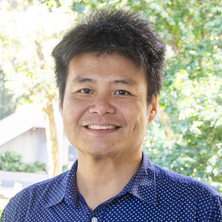
Dr Chan has a PhD in Genomics and Computational Biology from UQ. He underwent postdoctoral training at Rutgers University (USA) in algal genomics and evolution. He returmed to UQ in late 2011 as one of the inaugural Great Barrier Reef Foundation Bioinformatics Fellows.
Dr Chan joined the School of Chemistry and Molecular Biosciences in 2020 as a group leader at the Australian Centre for Ecogenomics (ACE). His group uses advanced computational approaches to study genome evolution and develop scalable approaches for comparative genomics.
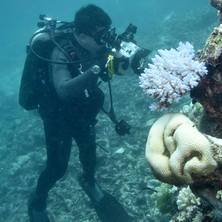
I have a long track record in cephalopod biology, as a taxonomist (Guide to the Cephalopods of Taiwan), scientific diver, visual neuroscientist, brain imaging pioneer in cephalopods. My work has deepened our understanding of morphological and functional adaptations of the fish and cephalopod visual system in the marine environment and shown ecological links to ambient light and behavioural tasks. I am also at the forefront of high-resolution MRI-based imaging technology tailored explicitly for studying cephalopod brains. My recent work has established analysis protocols to investigate the gross neuroanatomy and underlying neural networks amongst cephalopods (octopus, squid, cuttlefish and nautilus).
Evolutionary and ecological genomics of marine invertebrate animals.
My lab's research is driven by a fascination with genomes that carry within them endless, brilliant solutions forged by evolution over millions of years in response to a constantly changing planet. We tap into this to learn how the genomes of coral reef invertebrates and their bacterial symbionts interact with each other, and with the environment, throughout their life cycle. We study these gene-environment interactions in evolutionary and ecological contexts, using genomic, molecular and cellular approaches combined with behavioural ecology in natural populations.
We work often with embryonic and larval life history stages of indirect developers, as these stages are crucial to the maintenance and evolution of marine populations. Our current focus is around larval settlement and metamorphosis in the holobiont of the coral reef demosponge Amphimedon queenslandica. In recent years, our work has extended to functional genomic approaches to identify noval ways to control the coral reef pest, the Crown-of-Thorns starfish.
When not immersed in the molecular or computer lab, we are lucky enough to be immersed in the ocean, often in beautiful places!
Andrew is a population biologist in the School of the Environment. A broad goal of his research is to understand the effect of environmental variability on the stability of ecological communities. At the same time, in order to deliver on this broader goal, he is working to scale up understanding from simple tractable systems to the more complex dynamics of real world-systems.
Before joining UQ, he was a Marie Curie fellow working with Jonathan Levine and Alex Hall at ETH Zurich (2018-2020), a postdoctoral fellow in Daniel Stouffer's lab at the University of Canterbury, New Zealand (2017-2018), and a CEHG (Centre for Computational, Evolutionary and Human Genomics) postdoctoral fellow in Tad Fukami's lab at Stanford University, USA (2015-2017). He did his PhD (2011-2015) with David Keith in the Centre for Ecosystem Science at UNSW Australia.
Faculty of Health, Medicine and Behavioural Sciences
ARC Future Fellow
School of Social Science
Faculty of Humanities, Arts and Social Sciences
Availability:
Available for supervision
Media expert
I am an ARC Future Fellow at UQ with interdisciplinary research interests spanning social and biological sciences. My research examines how environmental and societal structures shape skeletal growth, metabolism, and health, drawing on technical expertise in skeletal histology applied across bioarchaeology, forensics, palaeontology, biology, and biomedicine. I also offer ad hoc skeletal histology consultation in forensic cases. My research has attracted ~$1.7M in competitive funding as PI (>$3.3M including collaborative grants), including an ARC DECRA and Future Fellowship.
I currently serve as Editor‑in‑Chief of Anthropological Review, Editorial Board Member of Annals of Human Biology, and Vice‑President of the Australasian Society for Human Biology. In 2024, I received the Linnean Society of London’s Trail‑Crisp Medal for contributions to microscopy in natural history.
My career spans academic, government, and industry roles in Australia, the UK, and the Netherlands, including positions at Naturalis Biodiversity Center, the Australian Government, ANU, Imperial College London, and the University of Kent, where I completed my BSc (Hons), PhD, and PGCHE. My previous service includes Treasurer of the Australasian Society for Human Biology and editorial roles with The Proceedings of the Royal Society of Queensland, Scientific Reports, and Anthropological Review.
In The Ortiz-Barrientos Lab we seek to understand how natural selection drives the origin of traits and new species. We combine empirical and theoretical approaches from across multiple disciplines.
We are located in beautiful Brisbane, Australia, in the School of The Environment at The University of Queensland.
Please explore our pages to learn about research, culture, and the team of scientists that bring their passion and creativity to discovering how nature works.