
Overview
Background
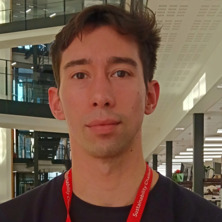
Dr Mauro Torres is a Lecturer in the School of Chemical Engineering at the University of Queensland, and leads a research group working at the interface of engineering and biology. designing living cells so that they behave in reliable, controllable ways
Background
Many of our most important medicines are made by cells, and a growing number of new treatments are living cells. Dr Torres's research changes how cells work by engineering the molecular mechanisms controlling how cells grow, produce therapeutic products, and respond to their surroundings, so they can be put to use more effectively. The same set of tools applies across very different goals: 1) Make biological medicines more efficiently, 2) Build cells that act as effective therapeutics, and 3) Develop tools for controlling gene expression. These goals focus of transforming how we make protein-, cell and gene therapeutics.
Dr Torres holds a PhD in Molecular Biology at the University of Manchester, and undergraduate in Chemical Engineering. His interdisciplinary background defines his approach to problems spanning the two fields. Before joining UQ, he was awarded a Leverhulme Trust Early Career Fellowship, which supported the establishment of his independent research group at Manchester. His current programme extends these principles to synthetic biology and to the engineering of cells for manufacturing biologics and advanced therapies, with industrial partnership as main focus for translating research into manufacturing settings.
Dr Torres welcomes new academic collaborations and enquiries from prospective research students.
Research areas
- Mammalian synthetic biology including designing genetic circuits that confer predictable, controllable behaviour on mammalian cells.
- Metabolic and secretory engineering for reprogramming cellular metabolism and the secretory pathway to improve the production of complex biologics in industrial cell lines.
- Cell engineering for advanced therapies including stem cells for enhancing their immunomodulatory function and therapeutic output.
- Biomanufacturing of cell and gene therapies for improving the production of the cells and viral vectors used in advanced therapeutic products.
Collaboration and supervision
Dr Torres actively seeks new academic collaborations, both within his field and across disciplines, and is particularly interested in working with researchers in immunology, disease biology, clinical translation, bioprocessing, and computational modelling. He also welcomes applications from prospective PhD and MPhil students with backgrounds in engineering, biotechnology, or the molecular life sciences. Enquiries, accompanied by a curriculum vitae and a brief statement of research interests, are warmly received.
Availability
- Dr Mauro Torres is:
- Available for supervision
Fields of research
Qualifications
- Doctor of Philosophy, The University of Manchester
Research interests
-
Mammalian synthetic biology
Development of genetic circuits that confer predictable, controllable behaviour on mammalian cells.
-
Metabolic and secretory engineering
Targeted genetic engineering for reprogramming cellular metabolism and the secretory pathway to improve the production of complex biologics in industrial cell lines.
-
Cell engineering for advanced therapies
Engineering human cells, including stem cells and immune cells, for enhancing their immunomodulatory function and therapeutic output
-
Biomanufacturing of protein, cell and gene therapeutics
Optimisation of bioprocess for improving the production of the antibodies, cells and viral vectors used as therapeutic products
Works
Search Professor Mauro Torres’s works on UQ eSpace
2018
Journal Article
Mild hypothermia upregulates myc and xbp1s expression and improves anti-TNFα production in CHO cells
Torres, Mauro, Zuniga, Roberto, Gutierrez, Matias, Vergara, Mauricio, Collazo, Norberto, Reyes, Juan, Berrios, Julio, Carlos Aguillon, Juan, Carmen Molina, Maria and Altamirano, Claudia (2018). Mild hypothermia upregulates myc and xbp1s expression and improves anti-TNFα production in CHO cells. PLoS One, 13 (3) e0194510, e0194510. doi: 10.1371/journal.pone.0194510
Supervision
Availability
- Dr Mauro Torres is:
- Available for supervision
Looking for a supervisor? Read our advice on how to choose a supervisor.
Available projects
-
Synthetic biology of mammalian cells for programmable biomanufacturing
Biologic medicines, from antibody drugs to gene therapies, are made in living mammalian cells. How much we can make, and how reliably, is limited by our inability to control what those cells do once they are producing. This project takes a synthetic biology approach, building genetic logic circuits that act as a programmable control system inside the cell and switch production pathways on and off on demand. You will work across three integrated areas: (i) Synthetic biology: design genetic parts that control gene expression on demand, including buffer, AND and NOR logic gates for multi-input control. (ii) Mammalian cell engineering: engineer mammalian cells to carry these circuits and drive expression of multi-gene products. (iii) Bioprocessing: optimise culture conditions and circuit induction to maximise the yield and quality of the final product. You will finish with an uncommon and highly employable combination of skills across synthetic biology, cell engineering and bioprocess.
-
Engineering stem cell metabolism for immunotherapies
Mesenchymal stromal cells (MSCs) are the most widely trialled cell therapy in history, yet they remain largely unapproved for chronic inflammatory disease. This is because their immunosuppressive potency varies unpredictably between cell batches. This PhD project tests whether engineering a cell's metabolism can make that potency consistent and reliable. You will build and apply CRISPR activation and interference (CRISPRa/i) tools to switch key metabolic genes in human MSCs, creating cells locked into defined metabolic states. Characterise these engineered cells in depth, combining metabolic profiling with measures of cell identity and quality. Test how each metabolic state changes the cells' immune function, measuring their effect on T cells and the anti-inflammatory signals they release. By the end you will have built a skill set in strong demand across the cell and gene therapy sector
Media
Enquiries
For media enquiries about Dr Mauro Torres's areas of expertise, story ideas and help finding experts, contact our Media team: