Faculty of Engineering, Architecture and Information Technology
Affiliate of Minerals Industry Safety and Health Centre
Minerals Industry Safety and Health Centre
Faculty of Engineering, Architecture and Information Technology
Availability:
Available for supervision
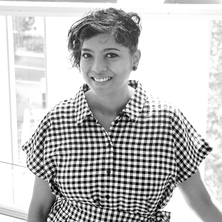
Nyssa Nair is an expert in risk management and hazard identification for industrial processes, with a strong focus on advancing process safety education. Over the past 15 years, she has worked in academia and industry, specialising in risk management, process optimisation, process control and data-driven decision-making.
Nyssa has hands-on industry experience in a Major Hazard Facility processing hydrocarbons for polypropylene production, providing her with a practical foundation for her teaching and research. She currently lectures at The University of Queensland (UQ), with the Minerals Industry Safety and Health Centre (MISHC), delivering postgraduate coursework and industry short courses in process safety and system safety. Her academic work explores the integration of artificial intelligence in chemical engineering, with a particular interest in how emerging technologies can support safer, more resilient industrial operations. Nyssa is passionate about equipping the next generation of engineers with the tools and mindset needed to lead in safety-critical environments.
Affiliate of Julius Kruttschnitt Mineral Research Centre
Julius Kruttschnitt Mineral Research Centre
Faculty of Engineering, Architecture and Information Technology
Emeritus Professor
Sustainable Minerals Institute
Faculty of Engineering, Architecture and Information Technology
Availability:
Available for supervision
Media expert
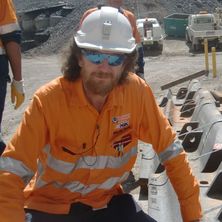
Malcolm has applied fundamental comminution research to design and process improvement on over 70 mines worldwide during 40 years at Mintek, UCT, Professor of comminution at the JKMRC in Australia, and through private research companies. His work is published in over 240 papers and has been presented in as many conferences worldwide. Malcolm collaborates extensively, with close compatriots on 5 continents forming the Global Comminution Collaborative (GCC) – providing an expert research and consulting base covering the full comminution process chain. Malcolm provides on-site experiential training and site reviews to empower mine staff to upgrade the productivity and their skills. This is supplemented with formal training workshops on liner design, comminution and Advanced Mine to Mill. Malcolm’s research vision is of integrated total process simulation as a tool for innovation – linking geology, mining, energy and size reduction, gangue rejection and recovery into flexible process design and process optimisation.
Malcolm supervises research students and runs three companies dedicated to advancing cutting edge technology into the mining industry. These focus around operation-relevant training; advanced mill liner design using DEM modelling; mechanistic mill modelling; introducing the latest tools into daily process control; operationalising advanced mine-to-mill implementation; and development of step-change reduction in comminution energy.
Affiliate Associate Professor of Centre for Social Responsibility in Mining
Centre for Social Responsibility in Mining
Faculty of Engineering, Architecture and Information Technology
Associate Professor
School of Chemical Engineering
Faculty of Engineering, Architecture and Information Technology
Affiliate of W.H. Bryan Mining and Geology Research Centre
WH Bryan Mining Geology Research Centre
Faculty of Engineering, Architecture and Information Technology
Affiliate of Centre for Social Responsibility in Mining
Centre for Social Responsibility in Mining
Faculty of Engineering, Architecture and Information Technology
Principal Research Fellow
Sustainable Minerals Institute
Faculty of Engineering, Architecture and Information Technology
Availability:
Available for supervision
Media expert
Vigya is a Principal Research Fellow at the Centre for Social Responsibility in Mining (CSRM), part of the Sustainable Minerals Institute (SMI) at The University of Queensland, Australia
Vigya has degrees in engineering and social science, and she applies this interdisciplinary training to research complex social, institutional and economic aspects of the modern energy and mining sectors globally. Specifically, her interest is in understanding how the presence (or absence) of resources impacts development outcomes in host communities and regions. Her current research projects examine this complexity across the energy transition chain: from fossil fuel transition in coal-dependent regions to energy transition mineral mining and large-scale renewable energy production systems (including the role of Indigenous co-ownership).
Vigya has a part-time appointment with the School of Chemical Engineering, where she coordinates a course on Humanitarian Engineering. She led the course design in 2020 and has been its primary instructor since. The course is offered to students from across UQ's Faculty of Engineering, Architecture and Information Technology (EAIT). She is also the SMI's Director of Teaching and Learning, leading the design of a new Master's program in Sustainable Resources, tentatively scheduled for delivery in early 2028.
She advises several PhD students on energy transitions, just transitions, mine closure, and energy and development.
Vigya has an active service profile both within and outside UQ. She is the Deputy Chair of the EAIT Faculty Low and Negligible Risk (LNR) Ethics Committee. She serves on the Editorial Boards of Energy Research and Social Science and Sustainability Science. Since 2023, she has been a member of the UN Council of Engineers for the Energy Transition (CEET), established at COP27. CEET is an Independent Advisory Council to the UN Secretary-General, to contribute to their goal to build a coalition to achieve carbon neutrality by 2050, and to support the United Nations to achieve global decarbonisation goals by mid-century.
Prior to joining CSRM, she was based at the Energy Poverty Research Group (EPRG), an interdisciplinary pan-UQ initiative established to support positive social, environmental and health outcomes vital for sustainable and productive livelihoods in energy-impoverished communities globally.
Affiliate of Minerals Industry Safety and Health Centre
Minerals Industry Safety and Health Centre
Faculty of Engineering, Architecture and Information Technology
Research Fellow
Sustainable Minerals Institute
Faculty of Engineering, Architecture and Information Technology
Availability:
Available for supervision
Media expert
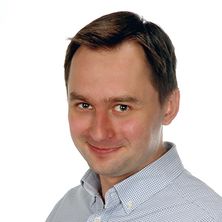
Dr Nikodem Rybak is a researcher specialising in advanced machine learning techniques that drive data-informed decision-making in complex and dynamic systems. His work spans multiple domains, including sustainable resource management, critical infrastructure resilience, and health, safety, and environmental risk assessment.
Dr Rybak's background combines expertise in developing transparent machine learning approaches with a strong focus on interpretability, enabling stakeholders to understand and trust the insights generated. His work leverages cutting-edge natural language processing methods to transform vast amounts of textual data into clear, actionable information. This approach fosters evidence-based strategies and supports effective governance, policy development, and organisational leadership.
Over the past decade, Dr Rybak has collaborated with industry partners, government agencies, and interdisciplinary research teams to address pressing challenges such as decarbonisation, resource allocation, and operational risk mitigation. By integrating robust predictive analytics, complex systems modelling, and innovative data visualisations, his research enables the uncovering of patterns, improvement of forecasting accuracy, and support of the sustainability of diverse systems.
Dr Rybak's work ultimately aims to empower decision-makers with tools that offer transparency, foster trust, and encourage responsible innovation. Through research on refinement of algorithms, methods, and applications, he strives to ensure that artificial intelligence serves as a reliable catalyst for positive social, economic, and environmental outcomes.
Affiliate of Centre for Social Responsibility in Mining
Centre for Social Responsibility in Mining
Faculty of Engineering, Architecture and Information Technology
Research Fellow
Sustainable Minerals Institute
Faculty of Engineering, Architecture and Information Technology
Availability:
Not available for supervision
Julia Keenan is a Research Fellow at the Centre for Social Responsibility in Mining (CSRM), Sustainable Minerals Institute, The University of Queensland. She has over 15 years' experience working on the social dimensions of resource development.
Julia's work explores the interface between resource development and communities, especially in contexts involving Indigenous rights, customary land systems and community governance institutions. She investigates how organisations, practitioners and partnerships translate high-level commitments and policy frameworks into practice and outcomes for people affected by extractive industries.
As an applied social scientist, Julia works closely with research partners to understand how resource development intersects with locally defined aspirations, development pathways and community futures. She has maintained long-term relationships with practitioners and stakeholders across the extractive sector and has worked across Australia and internationally.
Her work spans agreement-making and benefit sharing, consultation and consent, Indigenous self-determination, gender, community development, corporate social performance, social impact assessment, mine closure and post-mining transitions. Through comparative research across jurisdictions and sustained engagement with operations and communities over time, she examines how responsibility, accountability and authority shape the distribution of benefits, burdens and decision-making authority associated with resource development.
Julia contributes to research, training and advisory projects with industry, governments, community organisations and international institutions. Recent work includes implementation of United Nations Environment Assembly Resolution 4/19 on Mineral Resource Governance, involving consultations with more than 1,200 participants across 23 global meetings; and the Social, Cultural and Economic Studies of the Strategic Regional Environmental and Baseline Assessment for the Beetaloo Sub-basin.
Since 2023, Julia has coordinated CSRM’s involvement in the Community Smart Consultation and Consent Project (CSCC), which focuses on improving natural resource governance through community-based consultation and FPIC.
Julia holds a Bachelor of Science/Bachelor of Arts (Hons in Linguistics) from The University of Queensland.
Faculty of Engineering, Architecture and Information Technology
Availability:
Available for supervision
Wenqiang is a Research Fellow at the Centre for Environmental Responsibility in Mining (CERM), Sustainable Minerals Institute, The University of Queensland. His research focuses on the hydrogeochemistry and hydrogeology of mine waste, particularly acid and neutral metalliferous drainage (AMD/NMD). He has led projects for BHP/BMA on spoil and tailings management and contributed to projects with CRC TiME and RTCM Trailblazer on long-term monitoring of mine waste behaviour, mine closure and rehabilitation. He completed his PhD at The University of Queensland, focusing on desiccation of tailings and salt migration in cover systems. His expertise includes hydro-geochemical and geotechnical characterisation of mine waste, multi-scale kinetic test design, soil cover system monitoring and performance assessment, environmental risk assessment of mine waste, as well as numerical modelling of water, solute, and heat transport in unsaturated soil.
Faculty of Engineering, Architecture and Information Technology
Availability:
Available for supervision
Dr Pia Lois-Morales is Senior Research Fellow at The University of Queensland's Sustainable Minerals Institute, where she recently joined to advance research in geometallurgy, advanced ore characterisation using data analysis, physics frameworks and AI. She previously served as Assistant Professor at the University of Chile, leading research in geometallurgy, process mineralogy and mineral processing while developing innovative methodologies, industry collaborations and training. Her research focuses on integrating advanced characterisation techniques, geometallurgical modelling and AI to better understand and predict ore behaviour across the mining value chain, supporting more efficient, sustainable and data-driven mineral resource development.
Faculty of Engineering, Architecture and Information Technology
Availability:
Available for supervision
Prof. Saleem Ali served as the Director of the Centre for Social Responsibility in Mining (CSRM) from 2012 to 2014 and is currently Blue and Gold Distinguished Professor of Energy and the Environment at the University of Delaware (USA). He retains an affiliate research professorship at UQ and has also held the Chair in Sustainable Resource Development at UQ's Sustainable Minerals Institute. As an environmental planner, his research and practice is highly interdisciplinary and aims to inform social management with rigorous science.
Former Professional Experience
Prof. Ali was a Professor of Environmental Studies at the University of Vermont's Rubenstein School of Environment and Natural Resources from 2002 to 2012 and the founding Director of the Institute for Environmental Diplomacy and Security at UVM's James Jeffords Center for Policy Research. He was also on the adjunct faculty of Brown University’s Watson Institute for International Studies and the visiting faculty for the United Nations mandated University for Peace (Costa Rica).
Before embarking on an academic career, Prof. Ali worked as an environmental health and safety professional at General Electric (based at GE headquarters in Fairfield, CT, and at silicone resin manufacturing sites in New York). He has served as a consultant for the U.S. Environmental Protection Agency, U.S. Fish and Wildlife Service and Health Canada. He has also been an Associate at the Boston-based consulting firm Industrial Economics Inc. Some of his pro bono projects include a mining impact prospectus for the Crowe Tribe of Montana and research assistance to Cultural Survival (an indigenous rights NGO).
Past Research
Prof. Ali's primary research interests have been in the causes and consequences of environmental conflicts in the research sector, and the process of using ecological factors to promote peace. Some of Prof. Ali’s former research appointments include a visiting fellowship at the Brookings Institution's research center in Doha, Qatar; a Public Policy Fellowship at Griffith University in Brisbane, Australia, a Baker Foundation Research Fellowship at Harvard Business School and a parliamentary internship at the U.K. House of Commons. Dr Ali has teaching experience in courses on environmental planning, conflict resolution, industrial ecology, research methods and technical writing.
Publications
Prof. Ali’s books include the Treasures of the Earth: Need, Greed and a Sustainable Future (Yale University Press, 2010) which received a cover endorsement from Nobel Laureate Muhammad Yunus for providing a "welcome link between environmental behaviour and poverty alleviation." Among his earlier works is the acclaimed comparative case-based research book Mining, the Environment and Indigenous Development Conflicts (University of Arizona Press). Prof. Ali has served as an editor in many publications including Earth Matters: Indigenous Peoples, The Extractive Industries and Corporate Social Responsibility (edited with Ciaran O'Fairchellaegh) and the widely acclaimed volume Peace Parks: Conservation and Conflict Resolution (MIT Press, September, 2007), which has received cover endorsements from environmental scientists E.O. Wilson, George Schaller and UNEP executive director Achim Steiner, and a foreword by IUCN Director General Julia Marton-Lefevre. He has also published in a wide range of peer-reveiwed journals including Nature, Science, Proceedings of the National Academy of Sciences, Resources Policy and Journal of Cleaner Production. A full list of publications can be found in the publication interface of thsi page or in Google Scholar.
Awards and Recognition
The World Economic Forum chose Prof. Ali as a "Young Global Leader" in 2011. He has also been selected by the National Geographic Society as an "Emerging Explorer" and was profiled in "Forbes magazine" in September, 2009 in an article titled "The Alchemist."
Other Interests and positions
Prof. Ali is a member of the World Commission on Protected Areas and the IUCN Taskforce on Transboundary Conservation. He is also a professional mediator and has conducted workshops on consensus-building for private and public interests. He has assisted in the peer review process for research publications with the World Bank, the International Institute for Sustainable Development, The Woodrow Wilson Center, the Journal of Environmental Management, the Journal of Environmental Planning and Management, the Natural Resources Forum and Yale University Press.
Prof. Ali is involved in numerous non-profit organizations to promote environmental peace-building. He currently serves on the board of The DMZ Forum for Peace and Nature Conservation and International Peace Park Expeditions in the United States and on the board of governors for LEAD-Pakistan. He has also been involved in promoting environmental education in madrassahs (Islamic religious schools) and using techniques from environmental planning to study the rise of these institutions in his ethnic homeland, Pakistan. This prompted Prof. Ali to publish a sole-authored book in January 2009 titled Islam and Education: Conflict and Conformity in Pakistan's Madrassahs (Oxford University Press)
Professor Ali received his doctorate in Environmental Planning from the Massachusetts Institute of Technology (MIT), an M.E.S. in environmental law and policy from Yale University, and his Bachelors in Chemistry from Tufts University (summa cum laude).
Faculty of Engineering, Architecture and Information Technology
Affiliate of Centre for Environmental Responsibility in Mining
Centre for Environmental Responsibility in Mining
Faculty of Engineering, Architecture and Information Technology
Affiliate of W.H. Bryan Mining and Geology Research Centre
WH Bryan Mining Geology Research Centre
Faculty of Engineering, Architecture and Information Technology
Postdoctoral Research Fellow
Sustainable Minerals Institute
Faculty of Engineering, Architecture and Information Technology
Availability:
Available for supervision
Dr. Elin Jennings is an environmental geochemist specialising in mine waste transformation, metal(loid) contaminants, and sustainable mining practices. She is currently a Postdoctoral Research Fellow at the Sustainable Minerals Institute (SMI), University of Queensland, working within the Mine Waste Transformation Through Characterisation group and affiliated with the Centre for Environmental Responsibility in Mining. Currently, she is working on projects investigating the fate of indium in chalcopyrite (with successful Synchrotron Beamtime at ANSTO) and creating Metal-Organic Frameworks from Acid Mine Drainage (AMD). She also serves as project coordinator for the OreSand Knowledge Hub under the Global Centre for Mineral Security, where she leads communications, stakeholder engagement, and international collaboration.
Elin earned her PhD in Mining and Mineral Engineering from the University of Exeter’s Camborne School of Mines (2020–2025). Her doctoral research investigated the spatial and temporal fluxes of contaminants in acid mine drainage-impacted rivers, employing advanced analytical techniques including synchrotron-based XAS, SEM-EDX, ICP-OES, and GIS modelling. She has conducted beamline experiments at Diamond Light Source and ANSTO, receiving multiple competitive grants to explore critical mineral incorporation in chalcopyrite and arsenic transformations in sediments.
Following her PhD, Elin worked as a Graduate Research Assistant on the PAMANA project at the University of Exeter. This initiative examined the environmental and ecological impacts of mining on Philippine River systems. Her role focused on creating geochemical profiles of soils in the Agno Catchment, analysing how land use and geology influence contaminant distribution, and contributing to international collaborations on mining’s environmental footprint.
Her academic journey began with a BSc (First Class Honours) in Environmental Earth Science at Aberystwyth University, where she received the Rudler Exhibition Prize and the Mineralogical Society Student Award for outstanding achievement. She also secured the Walter Idris Bursary to conduct independent research on adsorption properties of coal and ochre.
Beyond research, Elin is passionate about teaching and outreach. She has taught hydrogeology and mine waste geochemistry at undergraduate and master’s levels, supervised student projects, and contributed to public engagement initiatives such as Engaging the Public with Environmental Science and Spark in STEM. She has presented at international conferences including Goldschmidt and MINEWA, and co-organised the Next Generation Resources conference, fostering collaboration among early-career researchers worldwide. She is also a collection editor for the special issue ES3 Geoscience and Circular Economy. In addition, she also works on the ECA committee at SMI.
Affiliate of Centre for Environmental Responsibility in Mining
Centre for Environmental Responsibility in Mining
Faculty of Engineering, Architecture and Information Technology
Senior Research Fellow
Sustainable Minerals Institute
Faculty of Engineering, Architecture and Information Technology
Availability:
Available for supervision
I have over 10 years of research and work experience in the field of mining land rehabilitation, acquiring a total of>3.5 million in fund support from the Australian government, research council and mining companies. My extensive experience in industrial engagement, field trial design and application also increased my growth as the leader in sustainable mining waste management.
I am an Advanced Queensland research fellow in the leading global research group of Ecological Engineering of Mine Wastes at the Sustainable Mineral Institute (SMI). My research interest is investigating important molecular and cellular processes in eukaryotes that first arose in bacteria and archaea, and microbial metabolic activities control numerous geochemical cycles in soil formation for sustainable mineral waste management. I have intensive work experience on multiple representative mining wastes, including Cu-Au, Pb-Zn, Iron ore, Uranium mine waste rock and bauxite tailings and residues.
My research strength lies in my multidisciplinary work and research program spans the interface between environmental microbiology, geochemistry, and plants. My expertise includes 1) mineral characterization, 2) soil and rhizosphere element cycling, 3) next-generation sequencing and online-controlled bioreactor techniques. Through the integrated application of environmental 'omics approaches, stable isotope analysis and imaging would give new insights into the fundamental element cycling processes of mined land mining wastes, and upon which I could develop novel biotechnology and methodology to prime sustainable mined land management and bioinoculum product with the field validated designated performance.
Professorial Research Fellow - Industry Safety and Health
Sustainable Minerals Institute
Faculty of Engineering, Architecture and Information Technology
Availability:
Available for supervision
Media expert
Marcus Cattani is a researcher focussing on the prevention of workplace injuries, disease and fatalities. Marcus is a Professorial Research Fellow in the Sustainable Minerals Institute's, Minerals Industry Safety and Health Centre at the University of Queensland. His expertise concerns the management of organisational injury and incident risk, managing exposure to workplace hazards and modeling safety data and information to improve the communication of risk.
Marcus has worked for half his career in industry, in corporate and operational leadership health and safety roles, and technical roles in occupational hygiene. For the olther half of his career he has worked in academia, in lecturing, course coordination and research roles.
Marcus is an Australian Institute of Health and Safety Board member and Chair of the College of Fellows.
Affiliate of Centre for Social Responsibility in Mining
Centre for Social Responsibility in Mining
Faculty of Engineering, Architecture and Information Technology
Associate Professor
School of Chemical Engineering
Faculty of Engineering, Architecture and Information Technology
Availability:
Available for supervision
Media expert
Associate Professor Liguang Wang is an internationally recognised researcher and research leader in mineral processing, with expertise in flotation science and process intensification to enable the efficient recovery of critical minerals essential to the energy transition. His research group has developed patented and patent-pending technologies for flotation process intensification, monitoring and control, translating fundamental scientific advances into practical industrial solutions.
A committed research mentor and training leader, he has supervised more than ten PhD candidates to completion and mentored five postdoctoral research fellows, contributing to the development of highly skilled researchers for academia and industry. His international experience includes a visiting PhD position at the Max Planck Institute of Colloids and Interfaces in 2002 and a visiting academic appointment at the University of Cambridge in 2020.
He received his PhD from Virginia Tech in 2006 under the supervision of Professor Roe-Hoan Yoon and was awarded the 2022 ACARP Research and Industry Excellence Award in recognition of his contributions to research and industry.
Affiliate of Minerals Industry Safety and Health Centre
Minerals Industry Safety and Health Centre
Faculty of Engineering, Architecture and Information Technology
Emeritus Professor
Sustainable Minerals Institute
Faculty of Engineering, Architecture and Information Technology
Availability:
Not available for supervision
Media expert
David Cliff was Professor of Occupational Health and Safety in Mining and Director of MISHC from 2011 to 2016. In January 2017 he was appointed Professor of Risk and Knowledge Transfer, reverting to Professor of Occupational Health and Safety in Mining in 2018. He retired in 2026 and was appointed Emeritus Professor of OHS in MIning. His primary role is providing education, applied research and consulting in health and safety in the mining and minerals processing industry. He has been with MISHC over twenty five years.
Previously David was the Safety and Health Adviser to the Queensland Mining Council, and prior to that Manager of Mining Research at the Safety In Mines Testing and Research Station. In these capacities he has provided expert assistance in the areas of health and safety to the mining industry for over twenty three years. He has particular expertise in emergency preparedness, gas analysis, spontaneous combustion, fires and explosions, including providing expert testimony to the Moura No.2 Warden’s inquiry, the Hazelwood Mine Fire Inquiry and the Pike River Royal Commission. In recent times he has also devoted a lot of energy to fitness for duty issues particularly fatigue management. He has been a member of the organising committee for the level one emergency exercises in Queensland underground coal mines since their inception in 1998 till 2023. He has also attended or provided assistance in over 40 incidents at mines. He has developed expertise in the development of Trigger Action Response Plans, critical controls and principal hazard management plans.
David has also extensive experience in providing training and education in OHS in mining to in many countries.
He has published widely in the area of occupational health and safety in mining including not just the physical hazards but also on the processes for the effective management of these issues. Examples of this include reviews of the annual safety performance report for the Queensland Department of Natural Resources and Mines and assistance to the Mine Safety Advisory Council of NSW in developing Health Management Plans (HMP) and key performance indicators for HMP.
In recent years he has collaborated closely with Nikky LaBranche researching respirable dust particularly coal dust and silica.
Affiliate of Julius Kruttschnitt Mineral Research Centre
Julius Kruttschnitt Mineral Research Centre
Faculty of Engineering, Architecture and Information Technology
Research Officer
Sustainable Minerals Institute
Faculty of Engineering, Architecture and Information Technology
Availability:
Available for supervision
Saeid Zare is an expert in troubleshooting and optimizing mineral processing plants. He is currently a research officer of the Julius Kruttschnitt Mineral Research Center (JKMRC) at the University of Queensland's Sustainable Minerals Institute.
He graduated as a top student with Bachelor’s and Master's degrees in mining engineering-mineral processing from Shahid Bahonar University of Kerman, Iran. His Bachelor’s and Master’s thesis projects were on flotation and comminution, in Sarcheshme Sarcheshmeh Copper Complex, and in the Gol-E-Gohar iron ore company, the largest mines in the Middle East, respectively. He was also chosen as elite member by Iran's National Elites Foundation in 2019 and 2023. Over the past nine years, he has successfully contributed to numerous funded industrial projects focused on troubleshooting, optimization and designing, mostly in comminution, separation and dewatering fields at the mineral processing plants in more than eight of the largest Mining and Industrial Companies in Iran, which helped him to apply his knowledge in real industrial settings.
Saeid is currently a researcher at the Julius Kruttschnitt Mineral Research Center (JKMRC), working within the Advanced Process Prediction and Control group. His research focuses on the optimization of mineral processing techniques to enhance operational efficiency and sustainability.
Affiliate of Minerals Industry Safety and Health Centre
Minerals Industry Safety and Health Centre
Faculty of Engineering, Architecture and Information Technology
Affiliate of Centre for Social Responsibility in Mining
Centre for Social Responsibility in Mining
Faculty of Engineering, Architecture and Information Technology
Senior Research Fellow
Sustainable Minerals Institute
Faculty of Engineering, Architecture and Information Technology
Availability:
Available for supervision
Media expert
Julia Loginova is a dedicated researcher passionate about sustainability and justice in the minerals and energy sectors in an era of energy transitions, climate change, and geopolitical volatility. Growing up in northern Russia (Komi Zyrian) sparked her interest in socioeconomic, environmental and political transformations in regions affected by resource extraction. She has academic qualifications in economics and law, natural resource management, and human geography, and completed her PhD at the University of Melbourne on Indigenous community responses to climate change and resource extraction in the Arctic. Julia is highly skilled in qualitative research, data science, network analysis, and spatial research, providing unique mixed-method insights on complex challenges.
Since joining the University of Queensland in 2018, she has focused her research on globalization of the resources sector, governance of energy transitions, socioeconomic redistributions, and Indigenous and non-Indigenous community participation in multiple geographies, including Australia, China, Russia, Ecuador, and the Arctic region. Julia's current research projects include Indigenous co-ownership of renewable energy projects, coal transitions in multiple geographies, and assessment of risks in resource extraction regions. She is a Chief Investigator on the ARC Discovery project that aims to improve the sustainability of copper global production networks in Australia, Zambia, and Chile, and is a collaborator on a research project on the geopolitics of critical minerals. At UQ, Julia contributes to teaching courses on global change, sustainable cities and regions, and geopolitics. She is an Associate Editor for The Extractive Industries and Society journal.