Director of Teaching and Learning of School of Dentistry
School of Dentistry
Faculty of Health, Medicine and Behavioural Sciences
Associate Professor
School of Dentistry
Faculty of Health, Medicine and Behavioural Sciences
Availability:
Available for supervision
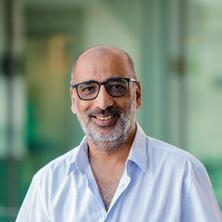
Ratilal Lalloo is an Associate Professor, Teaching and Research, in the School of Dentistry, University of Queensland (2016 - ); and was the Teaching & Learning Director (2020 - 2024) and Higher Degree Research Director (2016 - 2019). He was an Adjunct Professor in the Australian Research Centre for Population Oral Health (ARCPOH), University of Adelaide. He held an academic title of Professor in the School of Dentistry and Oral Health, Griffith University from 2014-2019. He is a dental public specialist, with an undergraduate degree in dentistry (1986), honours degree in Epidemiology (1992), Masters degree in Community Dentistry (1994) and PhD in Dental Public Health from the University College London (2002). After almost 20 years as a dental academic in South Africa he took up the position of Colgate Chair & Professor: Rural, Remote and Indigenous Oral Health, in the School of Dentistry & Oral Health, Griffith University, for 5-years from January 2009. He was then a Senior Research Fellow at ARCPOH for a year (2014-2015). He was an Associate Professor, on a short contract position, in the Faculty of Dentistry, University of Sydney (2015). He has been involved in the training of under- and post-graduate dental students, dental public health related research and various management roles. He has published widely and his main research interests vary across many dental public health issues including evidence-based dentistry, oral health-related quality of life and health inequalities.
Faculty of Health, Medicine and Behavioural Sciences
Availability:
Available for supervision
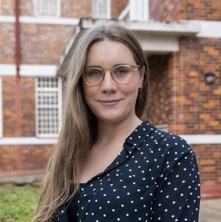
Dr Mia Langguth is a Research Fellow at the Queensland Brain Institute at the University of Queensland, in Brisbane, Australia. Together with Professor Darryl Eyles and Dr Xiaoying Cui at the Queensland Centre for Mental Health Research, her research explores the metabolic side effects of anti-psychotic drugs (APDs) and if intranasal, rather than oral, administration of clozapine and other APDs might mitigate the severity of the debilitating side effects of drugs used to treat symptoms of schizophrenia.
Affiliate of UQ Poche Centre for Indigenous Health
UQ Poche Centre for Indigenous Health
Faculty of Health, Medicine and Behavioural Sciences
Affiliate of Centre of Architecture, Theory, Culture, and History
Centre of Architecture, Theory, Culture and History
Faculty of Engineering, Architecture and Information Technology
Associate Professor
School of Public Health
Faculty of Health, Medicine and Behavioural Sciences
Availability:
Available for supervision
Media expert
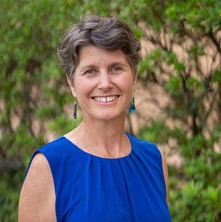
Associate Professor Nina Lansbury (also published as Nina Hall) is an environmental public health research and teaching academic at The University of Queensland’s School of Public Health. Her current research at UQ examines environmental health aspects that support the health and wellbeing of remote Indigenous community residents (as a non-Indigenous Australian) on both mainland Australia and in the Torres Strait in terms of housing, water and sanitation, and women's health. She also investigates the impacts of climate change on human health; at a global level, this involves a role as Coordinating Lead Author on the Intergovernmental Panel on Climate Change (IPCC AR7 WG II Ch 9, and formerly as a Lead Author in AR6) as well as a focus on remote Indigenous communities in Australia. In her teaching of undergraduate and postgraduate health students, she covers wicked health problems, integrative and interdisciplinary thinking in health, environmental health, and climate change impacts on health. Within the research sector, she was a senior research scientist at CSIRO, manager of the Sustainable Water program at The University of Queensland, and senior research consultant at the Institute for Sustainable Futures, UTS. Within the non-government sector, she was the director of the Climate Action Network Australia and research coordinator at the Mineral Policy Institute.
Prof Colleen Lau is an NHMRC Fellow and Professorial Research Fellow at the UQ Centre for Clinical Research. Her areas of expertise include emerging infectious diseases, neglected tropical diseases, and clinical travel medicine. Her wide range of research interests include infectious disease epidemiology, spatial epidemiology and disease mapping, infectious disease surveillance and elimination, vaccinations, travel health, environmental health, and digital decision support tools. Professor Lau’s research projects focus on answering practical questions in clinical management of infectious diseases and operational questions on improving strategies to solve public health problems. She leads UQ's HERA program on Operational Research and Decision Support for Infectious Diseases (ODeSI).
Faculty of Health, Medicine and Behavioural Sciences
Availability:
Available for supervision
Dr Ken Law is an obstetrician and gynaecologist based at Greenslopes Private Hospital, with special interests in fertility, endometriosis, fibroids and pelvic pain. He is actively involved in clinical research, and is passionate in teaching medical students and trainees.
Faculty of Health, Medicine and Behavioural Sciences
Availability:
Not available for supervision
Sheleigh Lawler is a health psychology expert, with research interests in understanding and intervening on health behaviours, particularly the psychosocial sequelae in relation to disease and intervention outcomes. Her breadth of knowledge across public health, health promotion and health psychology allows for a unique perspective, particularly on understanding the importance of communication. Her work involves multi-disciplinary teams of researchers, industry partners, and government organisations.
Faculty of Health, Medicine and Behavioural Sciences
Availability:
Available for supervision
Professor Layton is a national leader in innovative ophthalmology, with expertise in macular disease, lens surgery and minimally invasive glaucoma interventions. He completed ophthalmology training in Queensland, Oxford and London, subspecialty training in retinal disease at the Royal Brisbane Hospital and holds a PhD in diabetic retinopathy from Oxford University. Professor Layton is a Rhodes Scholar and founding director of the LVF Ophthalmology Research Centre in Brisbane, Australia. He is also CEO of Ocugene, a Queensland based biotech start-up which is commercialising his gene therapy technology targeting macular degeneration, uveitis and choroidal melanoma. Professor Layton is the listed inventor of multiple ophthalmic patent applications currently under review in the USA, the EU, Japan, Israel, Australia and Singapore. He has published extensively in the international literature and his work has been recognised by awards from international eye research organisations.
Faculty of Health, Medicine and Behavioural Sciences
Availability:
Available for supervision
Dr Yoo Young (Dominique) Lee is a Senior Lecturer in the Faculty of Medicine at The University of Queensland and a consultant radiation oncologist at Princess Alexandra Hospital. A specialist in hepatobiliary malignancies, she is nationally recognised for her leadership in physician wellbeing and professional culture.
Her work spans research, education, coaching, and system-level engagement, examining burnout, moral distress, and organisational drivers of clinician distress, and delivering evidence-informed programs that support doctors to navigate workplace challenges and build sustainable, values-aligned careers.
She is also a leader in stereotactic body radiation therapy (SBRT) research, focused on advanced technologies for liver and pancreatic cancers, and is deeply committed to advancing both precision cancer care and healthier medical workplaces.
She is deeply committed to medical education, supervision, and leadership, and to advancing both precision cancer care and healthier, more sustainable medical workplaces. Her work in physician wellbeing and coaching can be found at www.heyboss.org
Faculty of Health, Medicine and Behavioural Sciences
Affiliate of Centre for Motor Neuron Disease Research
Centre for Motor Neuron Disease Research
Faculty of Health, Medicine and Behavioural Sciences
Availability:
Available for supervision
Media expert
Dr John Lee is the Ross Maclean Senior Research Fellow and a Group Leader at the Queensland Brain Institute (QBI). He holds a joint appointment at UQ’s School of Biomedical Sciences. A mid-career researcher with training in neuroscience, pharmacology, and inflammatory pathways, including the complement system and inflammasomes in motor neuron disease (MND), Huntington’s disease, and Parkinson’s disease.
Dr. Lee completed his PhD at UQ in 2014, before pursuing postdoctoral research in neuroinflammation and neurodegeneration. His translational studies have demonstrated the therapeutic potential of anti-inflammatory compounds to reduce neuronal cell death in animal models, with one candidate advancing to Phase 1B clinical trials. He is also collaborating on novel liquid drug formulations to meet the needs of MND patients who lose the ability to swallow.
Supported by the Ross Maclean Fellowship, which was established in memory of Ross Maclean, who lost his battle with MND in 2005, Dr Lee is working to accelerate drug programs towards the clinic and improve the quality of life for people living with MND.
Faculty of Health, Medicine and Behavioural Sciences
Availability:
Available for supervision
Dr Odette Leiter is a postdoctoral research fellow in the research group of Dr Tara Walker, investigating systemic brain rejuvenation. She was awarded a PhD in Neuroscience in 2018 by the Technische Universität Dresden in Germany. Her research focus lies on the regulation of adult hippocampal neurogenesis by physical exercise, a process critically involved in learning and memory.
To support her research at the Queensland Brain Institute, Dr Odette Leiter has received two postdoctoral fellowships, a postdoctoral fellowship from the German Academic Exchange Service, followed by a Walter Benjamin Fellowship awarded by the German Research Foundation, allowing her to investigate the role of platelets in mediating neurogenesis-related learning and memory, and the capacity of platelet-released factors to restore cognitive function in ageing. More recently, Dr Leiter has been awarded a Discovery Early Career Researcher Award (DECRA) to investigate the precise mechanisms through which platelets interact with adult hippocampal neural stem cells following exercise.
Faculty of Health, Medicine and Behavioural Sciences
Availability:
Available for supervision
Dr. Sherman Leung is the Head of Research Operations at Wesley Research Institute - the research partner of UnitingCare. UnitingCare is the largest private employer in Queensland, encompassing four hospitals (The Wesley Hospital, St. Andrew's War Memorial Hospital, Buderim Private Hospital and St. Stephen's Hospital), as well as significant community-based offerings through Lifeline, Blue Care, Family and Disability Services, and ARRCS.
Dr. Leung is a PhD trained scientist, conducting his research training at Mater Research Institute, The University of Queensland, during which his research was published in highly regarded peer-reviewed journals, including in 'Diabetes', receiving the Cover Image, an 'In This Issue' feature, and shared across the Australian-wide 7 Network news.
He has extensive experience in clinical trials, having worked at Microba Life Sciences, an ASX-listed biotechnology start-up, and Nucleus Network, Australia’s largest early phase clinical trial site having overseen the conduct of several high-profile COVID-19 projects including Nuvaxovid by Novavax that has been granted emergency authorisation in 40 countries including by the TGA, EMEA & FDA.
He contributes his spare time to the greater good through numerous initiatives in the industry including being a Board Director of the Australian Clinical Trials Alliance (ACTA), Co-Chair to the Clinical and Consumer Advisory Group of the $75m Australian Teletrials Program, Co-Chair to the Clinical Trials Advocacy Working Group of the Queensland Clinical Trials Consortium (QCTC), former member of the Metro North Human Research Ethics Committee (HREC), Editorial Board for 'Trials' – a journal promoting all aspects of trials including methods, processes and non-significant outcomes for transparency in the field – and offers regular guest classrooms on clinical trials, informed consent and ethics at The University of Queensland.
Affiliate of Centre of Research Excellence on Achieving the Tobacco Endgame
Centre of Research Excellence on Achieving the Tobacco Endgame
Faculty of Health, Medicine and Behavioural Sciences
Affiliate of National Centre for Youth Substance Use Research
National Centre for Youth Substance Use Research
Faculty of Health, Medicine and Behavioural Sciences
Principal Research Fellow
School of Psychology
Faculty of Health, Medicine and Behavioural Sciences
Availability:
Available for supervision
Media expert
Dr Janni Leung is an epidemiologist of addiction, substance use and mental health, and NHMRC Emerging Leadership Fellow at the National Centre for Youth Substance Use Research, at The University of Queensland. She is studies how substance use and mental health affect people and communities, and how research can help prevent harm.
Janni has published more than 200 papers, attracting over 15,000 citations, with 30% of her research among the world’s top 1% most cited. Expertscape ranks her among the top three cannabis researchers in Australia and the top 10 globally. She was jointly named Queensland’s 2025 Young Tall Poppy of the Year, —the award’s highest honour across all scientific fields—and was recognised by The Australian’s Research Magazine as one of 40 early-career researchers to watch.
Her research spans cannabis, alcohol, nicotine and vaping, mental health, and digital addictions such as gaming disorder. She uses epidemiological studies, systematic reviews and statistical methods to understand emerging problems and inform policy and prevention. Janni values strong partnerships with communities and meaningful involvement of consumers and people with lived experience, including co-designing innovative public health interventions with young people and parents.
Research supervision
Janni has experience supervising students from public health, psychology, medicine and diverse cultural and life backgrounds. She can supervise coursework research projects, master’s theses and PhD research. She welcomes students who are self-motivated, reliable, open to feedback and with a strong comitment to rigorous high-quality research. Prospective students should email a brief cover letter and CV; international applicants should also provide their IELTS English-language test results. Supervision is considered based on research fit, preparedness and available capacity.
Lived experience
In addition to my academic expertise, I bring lived experience perspectives in perinatal wellbeing. I also bring lived experience of problematic digital technology use, including video gaming and mobile phone use.
I welcome opportunities to contribute these perspectives to research projects, proposals and co-design activities, and am happy to collaborate with researchers seeking meaningful lived experience input.
Faculty of Health, Medicine and Behavioural Sciences
Availability:
Available for supervision
Dr. Joan Li is a Senior Lecturer and a Research Fellow with an established national and international reputation at The University of Queensland. She holds both an MD and a PhD, blending clinical and scientific expertise, which provides her with a unique perspective on research and education. While establishing an emerging profile in medical education, she maintains engagement in discipline-related biomedical research through collaboration and supervision.
With over seven years of teaching experience, Joan has actively engaged in face-to-face teaching in biomedical science and medicine courses, contributed to curriculum design, development, and course coordination for both undergraduate and postgraduate programs. She brings her strong analytical skills and critical thinking abilities, honed through her medical and biomedical research background, to her teaching practices. Driven by a genuine passion for teaching, Joan continuously strives for excellence, with specific interests in assessment, curriculum design, development and student learning experience. She has implemented innovative teaching methods, designed diverse and inclusive curricula, created new learning activities, and fostered student engagement as learning partners, with a consistent goal of improving curriculum quality and enhancing student learning outcomes.
Leveraging her medical knowledge, extensive experience in biomedical research, and growing understanding of medical education, Joan is committed to developing medical students into critical thinkers and lifelong learners with a genuine appreciation for medical practice and medical research, enabling them to better serve an ever-changing society. Drawing upon her extensive experience in developmental biology and physiology, particularly in cardiac and renal research, Joan actively supervises higher degree research students and continues to make significant contributions to discipline-related research through publications and collaborations.
Dr. Joan Li is a versatile academic professional with a rich background in biomedical research and an emerging presence in medical education research. Her dedication to teaching and learning, combined with her impressive track record in both disciplines, makes her a valuable asset to The University of Queensland and the broader academic community.
Faculty of Health, Medicine and Behavioural Sciences
Availability:
Available for supervision
Zhiqi Liang is a Specialist Musculoskeletal Physiotherapist and Lecturer at the University of Queensland, where she teaches on the Master of Physiotherapy (Musculoskeletal) Program and holds a clinical role at the University of Queensland Physiotherapy Headache Clinic. Her research focuses on the mechanisms of neck pain in headache — particularly migraine — and on identifying treatment directions, including patient preferences, for individualised management.
In 2024, Zhiqi was awarded the David Lamb Award by the International Federation of Manual and Musculoskeletal Physical Therapists (IFOMPT), recognising high-quality research that has made an international impact on musculoskeletal physiotherapy. She is a founding member of the Physiotherapy Special Interest Group within the International Headache Society, where she helps lead international research on physiotherapy management of headache and the development of headache curricula for physiotherapists.
With more than 20 years of clinical experience, Zhiqi's expertise is recognised through Fellowship of the Australian College of Physiotherapists. She remains actively involved in the College as an examiner and facilitator for the Specialisation Training Program and currently serves on the Board of Censors.
Affiliate of Centre for Living Experience Research
Centre for Living Experience Research
Faculty of Health, Medicine and Behavioural Sciences
Affiliate of Centre for Neurorehabilitation, Ageing and Balance Research
Centre for Neurorehabilitation, Ageing and Balance Research
Faculty of Health, Medicine and Behavioural Sciences
Conjoint Associate Professor
School of Health and Rehabilitation Sciences
Faculty of Health, Medicine and Behavioural Sciences
Availability:
Available for supervision
Jacki Liddle is a research fellow and occupational therapist researching quality of life, participation and life transitions. She uses innovative technology, along with qualitative and quantitative research methods to investigate the needs and experiences of people living with neurological conditions (dementia, Parkinson's disease, stroke), older people and their caregivers. She has worked with a multi-disciplinary team co-designing technology with people living with dementia and their care partners to support communication. Currently, she is in a conjoint position with Princess Alexandra Hospital, supporting the development, conduct and application of research that improves outcomes for patients.
She has also been involved in developing technology to measure outcomes including lifespace, time use, and activity and role participation to help monitor and improve community outcomes. Dr Liddle's PhD focused on researching the experiences related to retirement from driving for older people, which led to the development of the CarFreeMe program to improve outcomes related to driving cessation. Versions of the program for older drivers, people living with dementia and people with traumatic brain injury have been developed and trialled.