Faculty of Engineering, Architecture and Information Technology
Availability:
Available for supervision
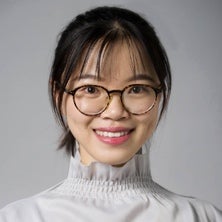
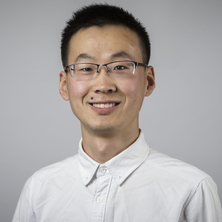
Xiaolin is a Lecturer in Civil Engineering at The University of Queensland. Her research focuses on transport modelling, predictive analytics, and the integration of emerging vehicle technologies into urban mobility.
Her current research examines autonomous modular vehicles and the design of integrated transport systems. She develops modelling and optimisation methods for door-to-door feeder services connected to high-capacity modular transit corridors, with the aim of improving transport efficiency, accessibility, sustainability and equity.
Before joining UQ, Xiaolin was a Postdoctoral Associate at the Center for Interacting Urban Networks at New York University Abu Dhabi. She received her PhD in Transport Modelling from the University of Sydney and holds a Master’s degree in Transportation Systems from the Technical University of Munich.
Xiaolin also has industry experience at the BMW AG Research and Innovation Centre in Munich. She has published in leading transport journals, including Transportation Research Part B and Transportation Research Part E, and serves as a reviewer for Transportation Letters, Transportmetrica A and Transportmetrica B.
Faculty of Engineering, Architecture and Information Technology
Affiliate of Centre for Social Responsibility in Mining
Centre for Social Responsibility in Mining
Faculty of Engineering, Architecture and Information Technology
Professor, TMR Chair in Structural Engineering
School of Civil Engineering
Faculty of Engineering, Architecture and Information Technology
Availability:
Available for supervision
Media expert
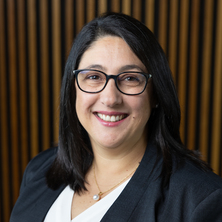
Rebecca Gravina is Professor and TMR Chair of Structural Engineering at the University of Queensland in Brisbane. The TMR Chair position is endowed by the Queensland Government Department of Transport and Main Roads (TMR). Rebecca also held the position of Professor in Civil and Infrastructure Engineering at RMIT University, Melbourne, Australia. She obtained her PhD in Structural Engineering from the University of Adelaide and prior to joining academia, worked as a consulting Structural Engineer with ARUP. Professor Gravina is an established researcher with over 25 years of experience in academia and consulting engineering. Her research field concerns the long-term performance and durability of reinforced concrete (RC) and prestressed concrete (PC) structures, sustainability of infrastructure, rehabilitation of existing structures with Fibre Reinforced Polymers (FRP), multi-functional self-healing cementitious composites, recycled materials in concrete, and engineering education. Professor Gravina is the co-author of the textbook 'Prestressed Concrete' by Warner, Foster and Gravina, she has published more than 100 research papers, has won numerous competitive research grants valued over $6 Million and teaching awards. Professor Gravina is the Editor in Chief of the Australian Journal of Civil Engineering, Immediate President of the American Society of Civil Engineers (ASCE) Australian Section, Executive Committee Member of the International Institute for FRP in Construction (IIFC), and Member of the Concrete Institute of Australia. Her research is well recognised by industry, and she continuously collaborates with civil infrastructure companies and agencies to support innovation and technology transfer.
Faculty of Engineering, Architecture and Information Technology
Director of Research of School of Civil Engineering
School of Civil Engineering
Faculty of Engineering, Architecture and Information Technology
Availability:
Not available for supervision
Media expert
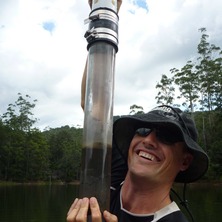
Monitoring and understanding of greenhouse gas emissions and sediment dynamics in shallow water bodies.
My primary interests are in monitoring and understanding biogeochemical processes within shallow water ecosystems. My formal training was in biochemistry and marine biology focusing on Southern Ocean food webs. Subsequently, I have focused on monitoring sediment loading and greenhouse gas emissions from sub-tropical coastal and freshwater systems.
I joined the School of Civil Engineering in 2007 to work in the area of sediment biogeochemical cycling in freshwater storages and coastal lagoons. In order to better understand these processes it is critical to monitor overlying water column processes as well as catchment interactions. Therefore, my primary research activities have been in the developing novel monitoring systems of catchments and their receiving water bodies.
since 2023: Honorary Associate Professor, School of Mathematics and Physics, The University of Queensland.
2017-2023: Associate Professor, School of Earth and Environmental Sciences, The University of Queensland.
2003-2017: Deputy Director (Software), Earth System Sciences Computational Center (ESSCC) & School of Earth Sciences, The University of Queensland.
2001-2003: Computational Scientist, CSIRO Mathematical and Information Sciences Division, Melbourne, Australia.
2000-2001: Lecturer, Institute of Information and Mathematical Sciences, Massey University at Albany, Auckland, New Zealand.
1996-1999: Research Fellow, Center for Mathematics and its Applications, School of Mathematical Sciences, Australian National University (ANU), Canberra.
1989-1996: Research Scientist, Computing Center, University of Karlsruhe/Germany.
Links:
LinkedIn
researchgate.net
Editor: Geoscientific Model Development Journal (GMD), http://www.geoscientific-model-development.net & EGUsphere https://www.egusphere.net/
Faculty of Engineering, Architecture and Information Technology
Research Fellow
Australian Institute for Bioengineering and Nanotechnology
Availability:
Available for supervision
Dr. Wenyi Gu’s early education was conducted in China which include his undergraduate and master’s degrees in veterinary medicine. In 1996, he migrated to Australia and pursued his PhD study in biochemistry & molecular biology at the Australian National University (ANU). After a short period of work at John Curtin Medical School ANU as a junior scientist, he moved to Brisbane in 2001 for his post-doc at the University of Queensland and currently a post-doctoral research fellow at AIBN. He held a Peter Doherty Fellowship (2006-2009) and was further supported by NHMRC to spend 7 months at Harvard University as a visiting fellow in 2008. Since his post-doctoral research he has been working in the area of using RNAi to treat viral diseases and cancers. He also has a strong background in immunology and vaccine development.
Faculty of Health, Medicine and Behavioural Sciences
Availability:
Available for supervision
Dr Karan Gulati is a Research Group Leader and the Deputy Director of Research at the School of Dentistry, UQ. He is also the Deputy Director of Centre for Orofacial Regeneration, Reconstruction and Rehabilitation (COR3) at UQ Dentistry.
Dr Gulati is a pioneer in electrochemically nano-engineered dental implants with over 13 years of extensive research experience using nano-engineering towards various bioactive and therapeutic applications. Dr Gulati completed his PhD from the University of Adelaide (Australia) in 2015 and was awarded the Dean’s Commendation for Doctoral Thesis Excellence. His career has been supported by prestigious fellowships from NHMRC (National Health and Medical Research Council, Australia), JSPS (Japan Society for the Promotion of Science, Japan), Erasmus+ (Germany) and the University of Queensland. At 10 years post-PhD, Dr Gulati has edited 3 books, published 7 chapters and >79 publications (h-index 44), and presented >110 times in various reputed conferences.
School of Electrical Engineering and Computer Science
Faculty of Engineering, Architecture and Information Technology
Availability:
Available for supervision
Dr Xiao Guo is a Postdoctoral Research Fellow at The University of Queensland. He received his PhD from UQ in 2022. His research focuses on scanning near-field optical microscopy (s-SNOM) and light–matter interactions in nanomaterials and nanostructures across the mid-infrared to terahertz spectrum. Since 2022, he has completed 70+ independent peer reviews for internationally recognised journals, including Nature Communications, Light: Science & Applications, and ACS Photonics. He lectures ELEC3100: Fundamentals of Electromagnetic Fields and Waves at UQ. He has delivered invited talks at NFO-17 and a 50-minute invited seminar at IRMMW-THz 2024.
His community service includes interim session chair (THz) at ISUPTW 2024 (IEEE Photonics Society), Technical Program Committee member for the 4th and 5th International Conference on Advanced Optics & Photonics Research in Engineering, Youth Editorial Board member of PhotoniX Life, and external grant reviewer for a European funder. His invited review on terahertz near-field optical microscopy in Applied Physics Reviews was recognised as an ESI Highly Cited Paper (top 1%) in 2024 and 2025. He is a member of the Institute of Physics (IOP), the American Chemical Society (ACS), and the Australian Institute of Physics (AIP).
Faculty of Engineering, Architecture and Information Technology
Emeritus Professor
School of Mechanical and Mining Engineering
Faculty of Engineering, Architecture and Information Technology
Availability:
Not available for supervision
Media expert
Professor Gurgenci's current research interests include energy systems analysis; geothermal and concentrating solar thermal power plant technologies; development of intelligent tutoring and compterised assessment systems for teaching machine design.
Hal Gurgenci, Professor of Mechanical Engineering, has many years of industry and academic experience in solar energy, manufacturing and mining. Professor Gurgenci is the Founding Director of the Queensland Geothermal Energy Centre of Excellence (QGECE).
Dr Adrien Guyot is an environmental scientist whose research focuses on the impacts of climate variability on ecosystems. His current role at the School of Civil Engineering within the University of Queensland is to manage projects, in the different aspects of their lifetime: from attracting fundings to support research, designing methods to address fundamental or practical issues, implementing and following up everyday life of projects, to the delivery and the communication of the results. He is using a combination of cutting edge environmental sensors and advanced numerical models to address the complexity of the processes. He is currently working on a few applied projects (details below), with a particular focus on specific issues related to Australian landscapes: droughts and wildfires. He is particularly interested in developing methods to characterise processes to further improve environmental management.
Adrien is also involved in teaching, giving some guest lectures in catchment hydrology courses, or sustainable designs at The University of Queensland. He is always keen to work with undergraduate and postgraduate students and regularly proposes some projects. Feel free to contact him!
Affiliate of Dow Centre for Sustainable Engineering Innovation
Dow Centre for Sustainable Engineering Innovation
Faculty of Engineering, Architecture and Information Technology
Affiliate of ARC Training Centre for Bioplastics and Biocomposites
ARC Training Centre for Bioplastics and Biocomposites
Faculty of Engineering, Architecture and Information Technology
Affiliate of Centre for Marine Science
Centre for Marine Science
Faculty of Science
Professor
School of Chemical Engineering
Faculty of Engineering, Architecture and Information Technology
Availability:
Available for supervision
Media expert
BIO:
Noun (n): I am a Professor in polymer processing in Chemical Engineering, a chief investigator in Advanced Materials Processing and Manufacturing (AMPAM) centre, a chief investigator/director of external links of the ARC industrial transformation training centre (ITTC) in bioplastics and biocomposites, a chief investigator in food and beverage accellerator (FaBA).and a chief investigator in the solving plastic waste cooperative research centre (spwCRC).
Verb (v): I work at the translational research interface between universities and industry. Specifically my research involves rheology, processing and product design of bio-based materials, polymers and nanocomposite materials. I lead translational research projects in biopolymers and biofluid platforms for agrifood, biomedical and high-value manufacturing sectors which attract government and industry funding; and produce patents, licences. industrial know-how as well as fundamental papers.
History (h): I have worked in industry (SRI international, Sola Optical, Moldflow), have worked in five cooperative research centres (CRCs -Food Packaging, Sugar Innovation, Polymers, Fighting Food Waste, Solving Plastic Waste), have acquired and managed continuous government and industry research projects since 1994, was heavily involved in the spinoff of Plantic Technologies from the CRC food packaging in 2002 (and ongoing research support with them until 2016), and was involved in the research that led to the TenasiTech (TPU nanocomposite) spinoff from UQ in 2007.I am a fellow of the institute of chemical engineers (IChemE) and a fellow of the Royal Australian Chemical Institute (RACI). I am on the editorial board of the Plastics, Rubbers and Composites, Starch, the Journal of Renewable Materials, Green Materials and Functional Composite Materials-Springer-Nature. I have experience on the boards of the UQ Dow Centre, the UQ RTA Centre, and the UQ-HBIS Sustainable Steel Innovation Centre. I won IChemE Shedden Uhde Award and Prize for excellence in Chemical Engineering (2004), the CRC Sugar innovation award (2008), the CRCPolymers Chairman’s award for research and commercialisation (2011), and have received the CRC Association Technology Transfer Award, twice, in 2002 and 2015.
Research:
Current projects are focused on developing new sustainable and bio-based polymers and biochemicals from formulation through to degradation/disposal, understanding processing of nanostructured polymers, developing smarter biopolymers and materials for biomedical, drug delivery, food and high value applications, understanding rheology and processing of a range of polymer, foods and liquids and is involved in new initiatives in circular plastics.
Teaching and Learning:
My teaching has spanned Introduction to Engineering Design, Engineering Thermodynamics, Polymer Engineering, Process Economics, Research Thesis and Engineering Management. I am developing new courses in Sustainability and the Circular Economy. My overall teaching goal is to be a relevant, well organised, enthusiastic and empathetic enabler of learning using multiple teaching and learning modes, and be highly connected to current industrial practices and cutting edge research.
International links
I have been a visiting or invited professor at ENSICAEN-University, Caen, Normandy, University of Nottingham, Queen’s University Belfast, the University of Strasbourg and Institut national des sciences appliquées (INSA) de Lyon in France. I have strong international collaborations with the US Department of Agriculture, Albany, USA; Colorado School of Mines, USA; AnoxKaldnes, Sweden; University of Bradford, University of Warwick, University of Nottingham, University of Sheffield, UK, SCION, NZ; Michigan State University, USA, and many Australian universities.
Dr Anthony Halog: Expert in Circular Economy, Life Cycle Thinking, and Sustainable Systems
Dr. Anthony B. Halog is a professor at the University of Queensland specialising in circular economy, sustainability engineering, industrial ecology, and life cycle assessment (LCA/LCSA). His current work focuses on designing low-carbon, net-zero, and resource-efficient systems to address climate change, waste reduction, and sustainable development.
Dr. Halog works across energy, materials, food, waste, and policy systems, applying systems thinking, life cycle sustainability assessment, digital twins, and artificial intelligence for sustainability. His research helps governments, industries, and communities make evidence-based decisions that reduce emissions, improve resource efficiency, and avoid unintended environmental impacts.
A core focus of his work is transforming linear value chains into circular value chains, supporting green hydrogen, bioenergy, circular bioeconomy, agricultural waste valorisation, waste-to-energy, and sustainable materials. These solutions contribute to decarbonisation, climate resilience, sustainable supply chains, and the green economy.
Key areas of expertise
Circular economy and industrial ecology
Life cycle assessment and sustainability metrics
Green hydrogen, bioenergy, and clean energy transitions
Sustainable waste management and circular bioeconomy
Systems modelling, AI-enabled tools, and sustainability policy
Dr. Halog collaborates with policymakers, industry partners, SMEs, and Indigenous communities in Australia and internationally to deliver practical climate solutions and support the transition to decarbonised circular economies.
Faculty of Health, Medicine and Behavioural Sciences
Affiliate Research Fellow of School of Pharmacy and Pharmaceutical Sciences
School of Pharmacy and Pharmaceutical Sciences
Faculty of Health, Medicine and Behavioural Sciences
Research Fellow
School of Health and Rehabilitation Sciences
Faculty of Health, Medicine and Behavioural Sciences
Affiliate of Centre for Innovation in Pain and Health Research (CIPHeR)
Centre for Innovation in Pain and Health Research
Faculty of Health, Medicine and Behavioural Sciences
Availability:
Available for supervision
Media expert
I am a Research Fellow and Leader in Pain Relief Innovation at AIBN, UQ. My research interests sit at the interface of drug delivery and the pain field. My overarching research goal is to improve the quality of day to day life of patients suffering from chronic pain, by applying nanotechnology to the development of novel highly effective pain-killer products for improving chronic pain management. I am looking for highly motivated postgraduate students.
I also enjoy volunteering within the academic community, most notably as Head of the SBMS ECR Committee and Treasurer for The Queensland Chinese Association of Scientists and Engineers (QCASE). I am currently serving as guest editor of Pain Research and Management.and JoVE Methods Collection.
Research Interests
My research is focusing on nano-based drug formulation and development to improve chronic pain management. I have a broad and unique background in both pharmacology and drug delivery systems, with specific expertise in the development of novel drug products and testing their analgesic efficacy and safety including pharmacokinetic and pharmacodynamic studies. To date, I have established five different techniques to produce painkiller–loaded nanoparticles and nanofibers aimed at improving pain relief for patients where currently available pain-killers either lack efficacy or produce dose-limiting side-effects. For example, there is a small and very potent peptide that has been on the market as a chemical for over 10 years but which cannot be used as a therapeutic due to its short half-life and poor oral bioavailability. In the form of my nanoparticles, that peptide has the potential to become an oral treatment for improving pain management in patients whose pain is currently poorly alleviated by clinically used pain-killers. I have significant expertise in the use of rodent pain models to assess novel analgesics, and I have received excellent training in conducting research in accordance with the stringent requirements of the Quality Management System (quality accreditations (GLP and ISO17025) from NATA). Together, my knowledge, skills and experience will facilitate the efficient translation of my research from the bench to the clinic.
The current focus of the lab is on the development of drug-products to solve one of the largest unmet medical needs in the pain field through use of sustainable materials. 1) We are developing multifunctional sutures including biodegradable pain relief sutures. 2) We are developing my innovative novel nanoparticles, which deliver innate-immune targeting peptides for the treatment of cancer and cancer-related pain. We are establishing a platform for the development of safe, effective delivery for other small molecule peptide drugs in general to pave their way to clinical trials. 3) Our research also investigates the role of C5a and C3a, estrogen, etc. in the pathogenesis of chronic pain including neuropathic pain, cancer-related pain, low back pain and OA pain.
We work in collaboration with other leading Australian and international researchers to stay at the forefront of the drug delivery systems field and the pain field. We also provide preclinical evaluation of novel compounds and formulations.
Faculty of Health, Medicine and Behavioural Sciences
Affiliate of Centre for Extracellular Vesicle Nanomedicine
Centre for Extracellular Vesicle Nanomedicine
Faculty of Health, Medicine and Behavioural Sciences
Affiliate of Centre for Orofacial Regeneration, Reconstruction and Rehabilitation (COR3)
Centre for Orofacial Regeneration, Reconstruction and Rehabilitation
Faculty of Health, Medicine and Behavioural Sciences
Availability:
Available for supervision
Media expert
Dr Pingping Han currently leads the Epigenetic Nanodiagnostics and Therapeutics Group within the Centre for Orofacial Regeneration, Reconstruction and Rehabilitation (COR3) at the UQ School of Dentistry. She received her PhD in Biomedical Engineering from the Queensland University of Technology (QUT) in 2014.
Dr Han’s current research focuses on three main areas: (a) salivary diagnostics for periodontal disease and (b) “cell-free” regenerative therapies for periodontal tissue engineering.
Affiliate of Centre for Environmental Responsibility in Mining
Centre for Environmental Responsibility in Mining
Faculty of Engineering, Architecture and Information Technology
Affiliate of W.H. Bryan Mining and Geology Research Centre
WH Bryan Mining Geology Research Centre
Faculty of Engineering, Architecture and Information Technology
Affiliate of Centre for Social Responsibility in Mining
Centre for Social Responsibility in Mining
Faculty of Engineering, Architecture and Information Technology
Affiliate of Julius Kruttschnitt Mineral Research Centre
Julius Kruttschnitt Mineral Research Centre
Faculty of Engineering, Architecture and Information Technology
Affiliate of Leading for High Reliability Centre
Leading for High Reliability Centre
Faculty of Engineering, Architecture and Information Technology
Centre Director of Minerals Industry Safety and Health Centre
Minerals Industry Safety and Health Centre
Faculty of Engineering, Architecture and Information Technology
Professorial Research Fellow and Centre Director, MISHC
Sustainable Minerals Institute
Faculty of Engineering, Architecture and Information Technology
Availability:
Available for supervision
Media expert
Maureen Hassall is Professor and Director of the Sustainable Minerals Institute's Industrial Safety and Health Centre at the University of Queensland. Her expertises crosses the fields of industrial risk management, safety engineering and human factors. Maureen works collaboratively with industry professionals to develop better human-centred risk management and safety engineering approaches that improve companies’ operational performance and competitiveness. Maureen also develops and delivers process safety, systems safety engineering, risk management and human factors training, education and expert advice to students and to industry. Her industry-focused research is motivated by 18 years of industry experience working in a number of different countries and in a variety of roles including specialist engineering, line management, organisational change and business performance improvement roles.
Affiliate of Centre for the Business and Economics of Health
Centre for the Business and Economics of Health
Faculty of Business, Economics and Law
Senior Research Fellow
School of Business
Faculty of Business, Economics and Law
Affiliate of Centre for Online Health
Centre for Online Health
Faculty of Health, Medicine and Behavioural Sciences
Availability:
Available for supervision
Media expert
Dr Helen Haydon is a Senior Research Fellow and Registered Psychologist at the University of Queensland. She has national standing, and an emerging international reputation, as a digital health researcher with a focus on aged and palliative care, psycho-oncology and carer wellbeing. She has led 3 applied nationwide digital health research programs: 1/ Palliative Care ECHO that connects services and upskills health professionals across Australia in palliative care; 2/ Elder ECHO, a telementoring program to support the National Aboriginal Community Controlled Health Organisation’s (NACCHO) Elder Care Support workforce in the delivery of Culturally safe aged care and; 3/ Caring for the Carer, an online intervention for carers of people with brain tumour. http://caringforthecarer.org.au/
Other research includes: evaluation of telepalliative care services (e.g. patient/ carer outcomes and perceptions and staff perceptions); voluntary assisted dying; technology supported grief and bereavement support and; digital mental health.
She is a Registered Psychologist with clinical experience working with a range of issues and diverse populations and has over ten years’ experience teaching and facilitating workshops on psychology and health communication.
Faculty of Engineering, Architecture and Information Technology
Availability:
Not available for supervision
Biography:
Prof Hayes is Emeritus Professor of Metallurgical Engineering within the School of Chemical Engineering. He is curently a senior researcher in the Pyrometallurgy Innovation Centre (PYROSEARCH). He received his PhD in Metallurgy from the University of Strathclyde in Glasgow, Scotland, in 1974. He has a BSc (1970) and MSc (1972) in Metallurgy from the University of Newcastle on Tyne, England.
Research:
Prof Hayes was founding Director of the Pyrometallurgy Innovation Centre (PYROSEARCH). Prof Hayes' research is focused on the high temperature processing of minerals and materials, with particular application to the pyrometallurgical production and refining of metals. His interests include chemical equilibria, reaction kinetics and mechanisms.
His current research projects encompass:
High temperature phase equilibrium measurements and determination of liquidus isotherms in complex industrial slag systems relevant to the smelting of copper, ferro-chromium, ferro-manganese, iron, ferro-nickel, lead and zinc production and metal recycling.
The development of thermodynamic databases, and their use in conjunction with FactSage, to predict phase equilibria and thermodynamic properties in oxide systems.
Reaction kinetics and mechanisms in metal and materials processing, smelting and refining; in particular, gas/solid reactions.
Prof Hayes has over 450 research publications.
Teaching and Learning:
Prof Hayes’ teaching interests include pyrometallurgy, chemical thermodynamics, and physical and chemical processing of minerals.
He is author of the undergraduate textbook “Process Selection in Minerals and Materials Production” by P.C. Hayes, Hayes Publishing Co, Sherwood, Brisbane, the 4th ed. is currently available and downloadable from the web as a e-book. Prof Hayes introduced the dual major BE Chemical and Metallurgical to the UQ curriculum and has been activity involved in program and curriculum development in the field of metallurgical engineering over a several decades.
Projects:
Reaction mechanisms and kinetics of high temperature gas/solid/liquid reaction kinetics relevant to metals production.
Fundamental experimental studies of phase equilibria in metal smelting, refining and metals recycling processes.
Faculty of Engineering, Architecture and Information Technology
Availability:
Available for supervision
Baojie is a (Full) Professor of Urban Climate and Sustainable Built Environment with the School of Architecture and Urban Planning at Chongqing University, China.
Email: baojie.he@uq.edu.au; baojie.he@cqu.edu.cn
He is currently leading the Centre for Climate-Resilient and Low-Carbon Cities with the focus on Heat-Resilient and Low-Carbon Urban Planning and Design. Baojie has published more than 200 peer-reviewed papers in high-ranking journals and delivered more than 100 invited talks in reputable conferences/seminars. Baojie has a SCOPUS H-index of 57 (Scopus). Baojie has been involved in several large research projects on urban climate and built environment in China and Australia. Baojie has been invited to act as Editor-in-Chief and Associate Editors of several international reputuable journals. Baojie received the received the Most Cited Chinese Researchers Title in 2024 and 2025, Highly Cited Researcher Title (Clarivate) in 2022, 2023, 2024, and 2025, the Sustainability Young Investigator Award in 2022, the Green Talents Award (Germany) in 2021, and National Scholarship for Outstanding Study Abroad Students (China) in 2019. Baojie was ranked as one of the Top 2% Scientists by the Mendeley from 2020 onwards.
Affiliate of Dow Centre for Sustainable Engineering Innovation
Dow Centre for Sustainable Engineering Innovation
Faculty of Engineering, Architecture and Information Technology
Deputy Head of School of Civil Engineering
School of Civil Engineering
Faculty of Engineering, Architecture and Information Technology
Professor & Chair of Transport Eng
School of Civil Engineering
Faculty of Engineering, Architecture and Information Technology
Availability:
Available for supervision
Media expert
Dr. Mark Hickman is the TAP Chair and Professor of Transport Engineering within the School of Civil Engineering at the University of Queensland. Prof. Hickman has taught courses and performed research in public transit planning and operations, travel demand modelling, and traffic engineering. His areas of research interest and expertise include public transit planning and operations, urban transportation planning and modelling, and the development of sustainable transport innovations and policies.