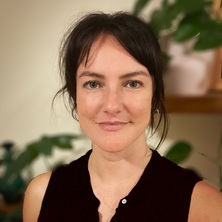
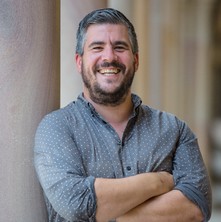
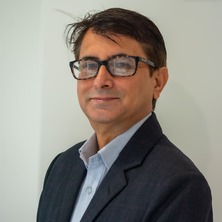
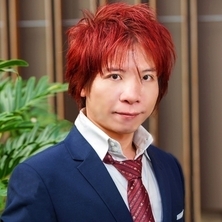
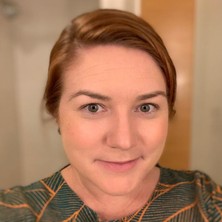
Zoe Staines (she/her) is Senior Lecturer and Director of Research in the School of Social Science at The University of Queensland. Her deeply interdisciplinary research spans social policy, sociology, and criminology, examining gender and work, care, welfare conditionality, and (de)coloniality with particular attention to structural injustice. She has published four books (including with leading publishers, Routledge and Policy Press) and dozens of journal articles, 85% of which are in Q1 journals and 21% of which are in journals ranked well within the top 10% globally (e.g., Policy Studies–top 2%, Sociology–top 4%). Her research has received multiple prizes and awards, including an ARC DECRA (2020-2023), the Australian and New Zealand Society of Criminology's 'best book in criminology' prize (2025), the John Mayer best article in Aus Journal of Political Science prize (2022), a Whitlam Institute Research Fellowship (2023), and UQ's competitive Foundation Research Excellence Award (2023).
Zoe is an elected board member for Australia's national Council for Humanities, Arts, and Social Sciences (CHASS), Chair of the Organising Committee for the 2026 Australian Social Policy Conference, Deputy Chair of the Australian Basic Income Lab, and an invited mentor for the International Association for Feminist Economics where she works with a group of eight mentees from across the Asia-Pacific region. She also served as Associate Editor and then Co-Editor of the Australian Journal of Social Issues (Q1) between 2019-2025. Before entering academia, Zoe held senior research and policy roles in government and the non-profit sector, and she remains committed to research with translational impact on policy and practice.
Zoe is recipient of a 2024 Australian Award for University Teaching (AAUT) and a 2023 UQ Citation for Outstanding Contributions to Student Learning, for 'co-creating imaginative, innovative, and engaging new resources for social science students to become effective social change agents'. She teaches into UQ's Bachelor of Social Science, Bachelor of Arts, and Bachelor of Criminology and Criminal Justice, while also sitting on the Bachelor of Social Science Program Committee. Zoe also currently supervises nine PhD students undertaking projects that span welfare conditionality, social policy, social housing, gender and work, work platformisation, artificial intelligence and future of work, and international human rights and law. She has been twice nominated for a UQ School of Social Science Excellence in Research Mentorship award.
School of Political Science and International Studies
Faculty of Humanities, Arts and Social Sciences
Availability:
Available for supervision
Alastair is a public policy scholar, a crisis management expert and has an ongoing interest in the institutionalization of participatory modes of governance. His current policy research examines the role that institutional amnesia plays in the policy process, his crisis management research has been focused upon the relationship between public inquiries and lesson-learning, and in relation to participatory governance, he is currently examining the validity of different forms of deliberative democracy in the context of Australian environmental policy. Alastair has published widely in high-ranking international journals and is the recipient of the Mayer Prize (best paper in the Australian Journal of Political Science) and the Lasswell Prize (best paper in Policy Sciences). He has authored three books, won three large-scale Australian Research Council Discovery grants and is always looking for outstanding students who may be interested in completing PhDs in relation to the topics outlined above.
School of Political Science and International Studies
Faculty of Humanities, Arts and Social Sciences
Availability:
Available for supervision
Media expert
DB’s research interest includes conflict transformation and peacebuilding, the intersection of religion and politics, and populism and nationalism in the Asia Pacific region. Currently, his research is focused on exploring the dilemmas and complexities associated with peacebuilding in authoritarian, populist and nationalist states across South and Southeast Asia. He has conducted research fieldwork across South and Southeast Asia, especially Nepal, Sri Lanka, India, and Myanmar.
He is the author of Combatants to Civilians: Rehabilitation and Reintegration of Maoist Fighters in Nepal's Peace Process (Palgrave, 2018) and co-editor of The Routledge Handbook of Populism in the Asia Pacific (Routledge, 2024) and Reconciliation in Conflict-Affected Communities: Practices and Insights from the Asia Pacific. He has also published his research in scholarly journals such as World Development, Contemporary South Asia, Religion & Politics, Asian Studies Review, Journal of Human Rights, Conflict, Security & Development and Contemporary Politics. He is a Research Member in the ‘Addressing Violent Extremism and Radicalisation into Terrorism’ (AVERT) Research Network at the Deakin University in Melbourne.
Before coming to the academia, he worked with several international organisations for more than ten years in Nepal, Sri Lanka and Viet Nam. Since 2010, he has been actively collaborating with government and non-government organizations and has provided research and consultancy service to several agencies including United Nations Development Programme (UNDP), UN Women, ActionAid Myanmar, UNICEF, International Alert UK, Care International and Mercy Corps. In 2022, he supported the Connected Communities team in NSW Department of Premier and Cabinet to develop and implement the evaluation framework and plan for NSW’s Countering Violent Extremism Programme.
Ken Tann is an in-house linguist at the UQ Business School. He specializes in applying linguistic and semiotic techniques to interdisciplinary research, and helps industry professionals add value to their professions through effective communication. His analytical framework has been applied across media, forensic, education and workplace contexts. He is currently supervising PhD research in marketing, finance and aged care.
School of Political Science and International Studies
Faculty of Humanities, Arts and Social Sciences
Availability:
Available for supervision
Dr Sarah Teitt is Director of the Asia Pacific Centre for the Responsibility to Protect and Senior Lecturer in Peace and Conflict Studies in the School of Political Science and International Studies at the University of Queensland.
Her expertise centres on the intersection of atrocity prevention, civilian protection, and peacebuilding in the Asia Pacific region, with a particular interest in China’s impact and evolving roles in these areas. Her work has been published in journals such as Cooperation and Conflict, International Peacekeeping, the Australian Journal of International Affairs, Survival, the Journal of Intervention and Statebuilding, and Global Governance. She is co-editor of the volumes China-North Korea Relations: Between Development and Security (2020) and Responsibility to Protect and Women, Peace and Security: Aligning the Protection Agendas (2013), and she currently serves on the editorial team of the Journal of Intervention and Statebuilding. From 2019 to 2025, she was an Australian Research Council DECRA Senior Research Fellow.
Sarah’s work is grounded in a commitment to ensuring research is relevant, accessible, and useful for improving atrocity prevention policy and practice. She has extensive experience in designing and delivering training, executive education and policy dialogue programs, including for the United Nations (UN) Office on Genocide Prevention and the Responsibility to Protect, UN Women, the UN Staff System College, the ASEAN Intergovernmental Commission for Human Rights, the ASEAN Commission on the Promotion and Protection of the Rights of Women and Children, as well as numerous government-affiliated think tanks and research institutes across the Asia Pacific region.
She was founder and lead convenor of the annual Australia-China Dialogue on the Responsibility to Protect from 2014-2020, co-hosted by the Asia Pacific Centre for the Responsibility to Protect and the China Institute of International Studies--a think tank affiliated with the Chinese Foreign Ministry.
In 2016, Sarah co-founded the Asia Pacific Partnership for Atrocity Prevention (APPAP), an alliance of organizations from across the Asia Pacific region working toward the prevention of atrocity crimes and the protection of vulnerable populations. From 2017-2020, she served as the Co-Chair of APPAP's Gender Working Group, and currently is the lead convenor of the APPAP Secretariat.
Affiliate of ARC COE for Children and Families Over the Lifecourse
ARC COE for Children and Families Over the Lifecourse
Faculty of Humanities, Arts and Social Sciences
Affiliate of Child Health Research Centre
Child Health Research Centre
Faculty of Health, Medicine and Behavioural Sciences
ARC Australian Laureate Fellow - Group Leader
Queensland Brain Institute
Faculty of Health, Medicine and Behavioural Sciences
Availability:
Available for supervision
Media expert
Karen Thorpe is Australian Research Council, Laureate Professor and Group Leader in Child Development, Education and Care at the Queensland Brain Institute, University of Queensland. Her research is grounded in the understanding that early learning experiences shape brain development and are critical in establishing trajectories of health, social inclusion and learning across the lifespan. A particular focus of her work is early care and education environments including parenting, parent work, quality of care and education, and the early years workforce.
Karen leads a multi-disciplinary team of developmental scientists undertaking large scale longitudinal studies with embedded studies to explicate mechanisms that enable or limit children’s life chances. She was Foundation Psychologist on the Avon Longitudinal Study of Parents and Children at the University of Bristol, UK; led the evaluation of the Preparing School Trial for Queensland Government; led the Queensland team of the E4Kids study of quality in Australian Early Education and Care and a recent data linkage project with Queensland Government to track participants through their school journey. In partnership with Queensland Government, Goodstart Early Learning and the Creche and Kindergarten Association she led a large population study of the Australian ECEC workforce (ARC Linkage). Her current research, as a chief investigator on the ARC Centre of Excellence for Children and Families across the life course, and through an ARC Laureate fellowship, is to examine barriers to providing high quality early learning services in developmentally vulnerable communities.
In 2013 and again in 2019 Karen was named by the Australian Financial Review as among Australia's 100 Women of Influence for the impacts of her research on educational and family policy. In 2020 she was recognised by Australian Government, Advance Global Awards for her international contribution to education. Karen chairs the Australian Early Years Reference Council for Evidence for Learning, Australia whose remit is to build a strong evidence-base in early childhood education and care with focus on translation into policy and practice. She is also director on the board of the Australian Research Council for Children and Youth and advisor to the national board of Beyond Blue – Be You.
Affiliate of ARC COE for Children and Families Over the Lifecourse
ARC COE for Children and Families Over the Lifecourse
Faculty of Humanities, Arts and Social Sciences
Deputy Director (Research) of Institute for Social Science Research
Institute for Social Science Research
Faculty of Humanities, Arts and Social Sciences
Professorial Research Fellow
Institute for Social Science Research
Faculty of Humanities, Arts and Social Sciences
Availability:
Not available for supervision
Professor Wojtek Tomaszewski is Professorial Research Fellow and a Research Group Leader at the Institute for Social Science Research. He is the Director of the Social Science Research Infrastructure Network (SSRIN), and is also Chief Investigator and Program Leader in the Australian Research Council (ARC) Centre of Excellence for Children and Families over the Life Course (the Life Course Centre).
Wojtek holds a BSc and MSc in Mathematics, as well as an MA in Sociology from the University of Warsaw, Poland and a PhD in Social Sciences from the European University Institute in Florence, Italy. Prior to joining UQ, Wojtek worked at the National Centre for Social Research in London. He has specialist expertise in quantitative research methods and advanced statistical analysis.
Wojtek has a strong research interest in the impact of disadvantage on educational and labour market outcomes in young people. He has undertaken a number of research projects for the State and Commonwealth Governments in Australia, and previously for the British Government. He has published in high-profile international academic journals across the fields of social sciences, education, and beyond.
David Trigger works on the different meanings attributed to land and nature across diverse sectors of society and in different countries. His research encompasses academic studies of how land and sense of place inform the cultural identities of citizens with diverse ancestries. His research is mostly focused on Australian society. In Australian Aboriginal Studies, Professor Trigger has carried out more than 35 years of anthropological study on Indigenous systems of land tenure, including applied research on resource development negotiations and native title claims. In collaboration with colleagues he has in recent years sought understanding of the overlaps and divergences of senses of place among those with Euro-Australian, Asian and Aboriginal ancestries. This work includes projects focused on a comparison of pro-development, environmentalist and Aboriginal perspectives on land and nature. Of particular interest are the issues of ‘nativeness’ and ‘invasiveness’ as understood in both nature and society, with implications for issues of land, cultural identity and environmental management.
Affiliate Professor of School of Pharmacy and Pharmaceutical Sciences
School of Pharmacy and Pharmaceutical Sciences
Faculty of Health, Medicine and Behavioural Sciences
Affiliate of ARC Research Hub for Advanced Manufacture of Targeted Radiopharmaceuticals (AMTAR)
ARC Research Hub for Advanced Manufacture of Targeted Radiopharmaceuticals
Australian Institute for Bioengineering and Nanotechnology
Affiliate of Centre for the Business and Economics of Health
Centre for the Business and Economics of Health
Faculty of Business, Economics and Law
Affiliate of Centre for Innovation in Pain and Health Research (CIPHeR)
Centre for Innovation in Pain and Health Research
Faculty of Health, Medicine and Behavioural Sciences
Professorial Research Fellow
School of Business
Faculty of Business, Economics and Law
Availability:
Available for supervision
Media expert
I am the lead of the Effective and Efficient Healthcare program at the Centre for the Business and Economics of Health at The University of Queensland. I also lead Health Technology Assessment for the Centre, which involves evaluating submissions made to the Australian Government to reimburse new medicines and medical devices through the Pharmaceutical benefits Scheme (PBS) and the Medicare Benefits Schedule (MBS). My research is focused on the economic evaluation of health interventions to inform decision making and promote value-based health care. I have pioneered the application of Value of Information (Research) analysis to enhance the efficiency of clinical trials and maximise the return on investment from medical research.
I have extensive experience working with key stakeholders including consumers, clinicians, decision makers and researchers. I am chief investigator on over $45 million Category 1 grants from the NHMRC, MRFF and ARC. In addition, I lead several projects for the Department of Health and other peak organisations.
I chair the International Society for Pharmacoeconomics and Outcomes Research (ISPOR)-Oncology GroupI, and I am the past chair of the Clinical Oncology Society of Australia's (COSA)-Epidemiology Group and the Australian Clinical Trials Alliance (ACTA)-Research Prioritisation Group. I am an Associate Editor for Value in Health, and an Editorial Board Member for Medical Decision Making and PharmacoEconomics-open journals.
Affiliate of Centre for Digital Cultures & Societies
Centre for Digital Cultures & Societies
Faculty of Humanities, Arts and Social Sciences
Senior Lecturer
School of Social Science
Faculty of Humanities, Arts and Social Sciences
Availability:
Available for supervision
Media expert
Mair Underwood is an anthropologist in the School of Social Science who specialises in bodies. In particular she explores how body modifications (such as tattoo or bodybuilding) are used to create, reflect and disrupt social boundaries such as those of gender and class. She is especially interested in the social lives of image and performance enhancing drugs: how they acquire meaning through social interactions and how they alter social interactions.
She also has an interest in assessment practice and has conducted research into assessment techniques that promote student engagement and academic integrity and compiled them into a searchable database called the UQ Assessment Ideas Factory
Mair is passionate about community engagement and engages with the community through her YouTube profile and podcasts such as this one with VPA Australia https://www.vpa.com.au/podcast
Mair Underwood coordinates two courses:
SOSC2190 Human Bodies, Culture and Society
SOCY1060 Gender, Sexuality and Society: An Introduction
Faculty of Engineering, Architecture and Information Technology
Affiliate of Centre for Social Responsibility in Mining
Centre for Social Responsibility in Mining
Faculty of Engineering, Architecture and Information Technology
Availability:
Available for supervision
Media expert
Corinne seeks to understand the organizing practices and processes that gradually and invisibly create risks that can worsen over time to become catastrophic. These ‘insidious risks’ were the focus of Corinne’s PhD in the UQ Business School where she identified three ways, on a spectrum of ways these risks are managed: blinkered, law-abiding and attentive. With more than 30 years’ experience in the mining sector, government, consulting and research, Corinne built upon her earth sciences background in mine rehabilitation and closure to become a qualitative researcher through her PhD. This provided a new lens and insights on how organisations manage elongated insidious risks, not only for mine affected water and land disturbance in mining but also during the progressive failure of the insurance market for extreme weather, in her postdoctoral research. In a voluntary capacity Corinne formed and led an ISO standards working group to finalise ISO 24419 Managing Mining Legacies in 2023 providing the first international standard on this topic together with case studies and a bibliography. She represents AusIMM in her standards work. Since 2019 Corinne has been a Board Member of the Victorian Government’s Mine Land Rehabilitation Authority providing oversight for three brown coal mine closures in the Latrobe Valley. Prior to her PhD Corinne developed the field of research in managing abandoned/legacy mines in the Centre for Mined Land Rehabilitation, SMI following her Churchill Fellowship research in 2009.
Discipline Lead for Agribusiness, International Development and Economics of School of Agriculture a
School of Agriculture and Food Sustainability
Faculty of Science
Affiliate of ARC Training Centre for Bioplastics and Biocomposites
ARC Training Centre for Bioplastics and Biocomposites
Faculty of Engineering, Architecture and Information Technology
Associate Professor in Rural Dev. & Agriculture
School of Agriculture and Food Sustainability
Faculty of Science
Availability:
Available for supervision
Media expert
Bio: Dr. Severine van Bommel is a Senior Lecturer at the University of Queensland's School of Agriculture and Food Sustainability. With a keen interest in rural development and agricultural extension, her research focuses on understanding the role of experts and expertise in orchestrating effective governance performances for systemic transformation of natural resource dilemmas and competing claims. Through an interpretive lens, her research aims to support experts in communicating and collaborating with farmers and communities in situations of social learning, multi-stakeholder partnerships, farmer field schools, community-based NRM or co-inquiry and co-design.
Research Interests:
Rural development
Agricultural extension
Sustainable development
Indigenous engagement
Environmental credentials verification
Current Projects:
- the co-design of a virtual platform for verifying environmental credentials for Australian beef producers
- developing indigenous engagement methods (storian) for Australian researchers working with Ni-Vanuatu livestock farmers
- making visible and challenging gender norms in transdisciplinary research and development practice
- facilitating more-than-human participatory research and practice
Publications: Dr. van Bommel has contributed to significant works in her field, including:
"Rural Development for Sustainable Social-Ecological Systems: Putting Communities First" (Palgrave)
"Forest and Nature Governance: A Practice-Based Approach" (Springer)
Her research contributions have been published in prestigious journals and presented at international conferences such as IPA, MOPAN, IFSA, and APEN.
Teaching: In addition to her research, Dr. van Bommel teaches courses on:
Leadership in rural industries (MSc)
Effective stakeholder engagement (MSc)
Human-wildlife interactions (MSc and BSc)
Mentorship and Community Engagement: Dr. van Bommel is dedicated to mentoring early career researchers interested in interpretive methods within the APSA mentoring program. She also runs an International Virtual Community of Practice for Interpretive Practitioners, fostering collaboration and knowledge exchange in the field.
Associate Professor Elske van de Fliert leads the Communication and Social Change Researcg Group and facilitates the Communication for Social Change field of study of the Master of Communication program. She obtained a PhD in Communication & Innovation in 1993 from Wageningen University, The Netherlands. She joined the UQ School of Journalism and Communication (now School of Communication and Arts) in July 2006. Prior to this, Elske worked for two decades in research, development and teaching positions in Indonesia, Vietnam and Sri Lanka, with work also across China, Kenya, Uganda, Philippines and Kyrgyzstan.
Elske’s research interests include participatory development communication, facilitation of transdisciplinary research for sustainable development, and impact assessment of social change processes. Over the years at UQ, she has been conducting research projects in Indonesia, Timor Leste, Philippines and Mongolia. She has published widely on a range of topics related to participatory research and communication in sustainable rural development.
Affiliate of ARC COE for Children and Families Over the Lifecourse
ARC COE for Children and Families Over the Lifecourse
Faculty of Humanities, Arts and Social Sciences
Associate Professor
School of Nursing, Midwifery and Social Work
Faculty of Health, Medicine and Behavioural Sciences
Availability:
Not available for supervision
Associate Professor Jemma Venables is a social work academic and the Program Lead for the Master of Social Work (Qualifying) program. She teaches into the undergraduate and postgraduate social work programs. Jemma's interdisciplinary and industry-engaged programs of research is focused on transforming child and family welfare. Her work spans the continuum from early intervention through to her primary focus – young people’s transition from out-of-home care to adulthood. The research teams she leads and contributes to aim to build knowledge to inform more responsive policies and practices that enhance the wellbeing, connection and outcomes for marginalised and disadvantage children, young people and their families.
Rebecca Wallis is a Senior Lecturer at the TC Beirne School of Law. Rebecca’s teaching and research interests fall broadly within the areas of criminal law and procedure, the law of evidence, and criminal justice system structure and operation. She is concerned with how criminal law theories and principles play out in policy and practice, and how these shape the operation of the criminal justice system in intended and unintended ways.
Rebecca holds a Bachelor of Arts and a Bachelor of Laws from the University of Queensland, a Master of Arts in Criminology and Criminal Justice (Hons) and PhD from Griffith University. She is admitted to the Supreme Court of Queensland and the High Court of Australia (non-practising).
School of Political Science and International Studies
Faculty of Humanities, Arts and Social Sciences
Availability:
Available for supervision
Media expert
My research concerns the relationship between politics and economics and how that nexus has been shaped by the rise of economists as a new class of prestigious intellectual c. 1800-present. This concerns the skill sets and ethics of economists, above all, in relation to empirical evidence and their own political beliefs.
I wrote my PhD on the history of economic thought in Britain, focusing on how the rise of political economy changed political discourse. My current research continues this inquiry but in relation to the emergence of the political economist as a distinctive intellectual persona, focusing on Adam Smith, Thomas Robert Malthus, and David Ricardo. A major result has been to clarify the nature of the opposition that greeted the first economists. In short, 'theorising' had not been established as a prestigious activity; the presumption of intellectuals to reform their societies on the basis of 'theory' was perceived as an instance of philosophical enthusiasm, an intellectual pathology thought to underlie the French Revolution. Political economists responded to this opposition in divergent ways, producing fractiousness within their own ranks.
The long-range hypothesis to test in future work is that these teething issues were never resolved, with the result that the office of the economist in relation to government has never been stabilised by the development of a set of professional ethics and disciplines internal to economics of the type that lawyers and doctors innovated. If correct, this suggests that, while some economists have been domesticated by the imposition of bureaucratic offices, as for those working in central banks and treasury departments, most economists continue to roam wild, leaving our political institutions as exposed to their enthusiasm/truth as they were 200 years ago. The key statement of the initial stage of this research is Before Method and Models (Oxford, 2021). A series of subsidiary findings are published in Modern Intellectual History, Journal of the History of Ideas, Historical Journal, and Intellectual History Review.
I am an urban sociologist and an expert in urban community in all its forms. My research encompasses the outer suburbs in Australia, the gentrifying inner city and informal communities in cities in the Global South. My work focuses on how different urban places and spatial logic in the city impact our opportunities to form attachments to neighbourhoods and each other.
Internationally, I have written extensively on urban poverty in Bangladesh, India and Indonesia and I am currently involved in work on climate change and its effects on the urban poor in collaboration with colleagues in Indonesia, Brazil and Solomon Islands. My latest research concerns the impact of climate change and natural disasters on the urban poor. More than 1 billion people live in informal urban settlements or slums. These people are among the most vulnerable to the impact of climate change. However, adaptation and mitigation policies are being formulated at multiple scales, often without considering the voices of the poor.
I am the Bachelor of Arts Sociology program convenor and an award-winning teacher. I teach courses at all levels in our undergraduate sociology program, including Introduction to Sociology (SOCY1050), An Urban World (SOCY2340) and Advanced Studies in Social Thought: Getting the Big Picture (SOCY3345).
I am also an award-winning photographer (you can see some of my work on my Flickr page.
I am open to proposals from potential Honours and PhD students who share my passion for understanding the social life of cities. Whether you're from Australia, the Global South, or anywhere else in the world, I look forward to the possibility of working together.
Dr Walters has published on Cavendish, Shakespeare, Milton, and Renaissance women in relation to gender, science, philosophy, sexuality and political thought. She welcomes research proposals relating to these topics.
She is author of Margaret Cavendish: Gender, Science and Politics (Cambridge University Press, hardback 2014, paperback 2017) and is editor of The Blazing World and other Writings, Oxford World's Classics (Oxford University Press, 2025), which is the first edition to modernise the spelling and grammar of Cavendish’s prose fiction.
Her co-edited volume, Margaret Cavendish: An Interdisciplinary Perspective (2022), was published by Cambridge University Press and won Co-Honorable Mention for the 2022 Collaborative Project Award from the Society for the Study of Early Modern Women and Gender.She is also co-editor of the Restoration section of the Palgrave Encyclopedia of Early Modern Women’s Writing (2021-2026); the General Editors won the 2025 Digital Scholarship, New Media, & Art Award from the Society for the Study of Early Modern Women and Gender. In addition, she is co-editor of Cavendish and Milton, which is forthcoming with Oxford University Press. Currently, she is co-editing Cavendish's Philosophy of Literature, which is under contract with Routledge.
Dr Walters is the managing and founding editor of Margaret Cavendish: A Multidisciplinary Journal. Currently, she serves on the Editorial Board of ANQ: A Quarterly Journal of Short Articles, Notes and Reviews, Anthem Press, and was President of the International Margaret Cavendish Society.
Dr Walters is also Deputy Chair of the Equity, Diversity and Inclusion Committee for the Faculty of Humanities and Social Sciences (HASS) and is the Honours Thesis Coordinator for the Western Civilisation Centre.
She obtained her doctorate and masters degree from the University of Edinburgh, Scotland and her BA from the University of California Santa Cruz. Previously, she was a postdoctoral research fellow at Ghent University, Belgium. She has also held academic positions in England, America, and Scotland and was a visiting professor at Université Catholique de Lille, France. Between studies, she worked in Tokyo, Japan.
Books
Lisa Walters. Margaret Cavendish: Gender, Science and Politics (Cambridge University Press, hardback 2014, paperback 2017)
Lisa Walters and Brandie Siegfried, eds. Margaret Cavendish: An Interdisciplinary Perspective (Cambridge University Press, 2022).
Lisa Walters, ed. The Blazing World and other Writings, Oxford World's Classics (Oxford University Press, 2025)
Suzanne Trill, Natasha Simonova, and Lisa Walters, eds. "Restoration."Palgrave Encyclopedia of Early Modern Women's Writing (Palgrave 2020-2025).
Ann Coiro, Lara Dodds, and Lisa Walters, eds. Cavendish and Milton (Oxford University Press, forthcoming)
Daniel Whiting and Lisa Walters, eds. Cavendish's Philosophy of Literature (under contract with Routledge)
Yibo Wang is a Postdoctoral Research Fellow at the URBANiQ node within the Institute for Social Science Research (ISSR) at UQ. His current research focuses on urban mobility in relation to public health, with particular emphasis on carbon emissions, socio-demographic patterns, travel modes, heat exposure, and accessibility to health services and infrastructure.
Yibo has a strong interdisciplinary background spanning geographic information systems and mechatronic engineering. He obtained a BEng from BUAA, where he was involved in the design and development of LiDAR systems. He subsequently completed a MEng at ANU, further developing technical expertise in machine learning and computer vision. More recently, he was awarded a PhD from UQ with research focusing on the statistical characteristics of carbon emissions generated by urban travel activities and how these emissions are jointly shaped by household characteristics and the built environment.
Yibo’s combined experience in science and engineering has equipped him with expertise in the design, fabrication, and validation of advanced remote sensing systems, as well as in the analysis of large-scale datasets to inform applied research and policy. At ISSR, he continues to integrate and extend these skills, contributing to improved everyday mobility and public health outcomes in urban contexts.