Faculty of Health, Medicine and Behavioural Sciences
Availability:
Available for supervision
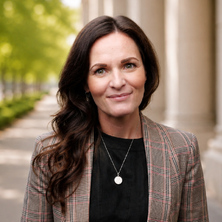
Dr Tracey DiSipio is a teaching and research academic and cancer epidemiologist in the School of Public Health. Her program of research is focused on women’s cancers and health equity by conducting epidemiological research and behavioural interventions that address survivorship issues. Her research has a strong emphasis on under-researched groups including women diagnosed with rare gynaecological cancers and advanced disease.
Deputy Associate Dean (Research) and Associate Professor
Faculty of Health, Medicine and Behavioural Sciences
Director of HDR Students of School of Biomedical Sciences
School of Biomedical Sciences
Faculty of Health, Medicine and Behavioural Sciences
Affiliate of Centre for Motor Neuron Disease Research
Centre for Motor Neuron Disease Research
Faculty of Health, Medicine and Behavioural Sciences
Affiliate of Centre for Innovation in Pain and Health Research (CIPHeR)
Centre for Innovation in Pain and Health Research
Faculty of Health, Medicine and Behavioural Sciences
Affiliate of Centre for Sensorimotor Performance
Centre for Sensorimotor Performance
Faculty of Health, Medicine and Behavioural Sciences
Associate Professor
School of Biomedical Sciences
Faculty of Health, Medicine and Behavioural Sciences
Availability:
Available for supervision
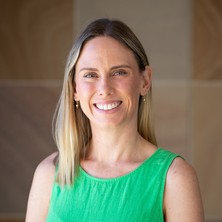
Taylor Dick is an Associate Professor in The School of Biomedical Sciences and Director of the Neuromuscular Biomechanics Laboratory within the School of Biomedical Sciences. She leads a highly interdisciplinary research program at the nexus of biomechanics, bio-inspired assistive devices, and neuromuscular physiology. Using a combination of experimental and modelling tools, her research answers fundamental questions about how movement underpins evolution, health, and disease.
Upon completing her PhD in 2016 (Simon Fraser University, Canada), in collaboration with Harvard’s Concord Field Station, she undertook post-doctoral training in biomedical engineering (University of North Carolina, 2016-17) where she combined her expertise in biomechanics and muscle physiology to discover how bio-robotic devices influence locomotor energetics and the neuromechanical mechanisms that enable stability during unexpected perturbations. This has since provided inspiration for the optimization of bio-robotic assistive devices, in response to the behaviour of their physiological targets. In 2017, she was appointed a research and teaching academic at the University of Queensland (UQ) where she has developed a uniquely integrative and multi-disciplinary approach to studying locomotion and neuromuscular function with applications across discovery and translation. Her research program integrates musculoskeletal anatomy, neural control, and biomechanics to understand the diverse movements of humans and animals. By combining high-resolution and innovative experimental paradigms with modelling and simulation techniques, her team, a rich blend of biomechanists, physiologists, mathematicians, engineers, and computer scientists, investigates the complex interactions between biological systems that enable the remarkable diversity in human and animal movement.
Taylor has established herself internationally as an emerging leader in biomechanics research. This reputation is supported by prestigious awards, invited talks and review papers, and media attention. Her research has been funded through competitive grant schemes and industry partnerships, with total research support exceeding $3.6 million. Her contributions to research and mentorship have been recognized with a 2024 Queensland Tall Poppy Award, 2024 International Union of Physiologists Junior Faculty Award; 2024 International Society of Electrophysiology and Kinesiology Kevin P. Granata Award, and the 2021 International Society of Biomechanics Jaquelin Perry Emerging Scientist Award. Taylor has been nominated (2020 and 2021) for the Faculty of Medicine Rising Star of the Year Award. Taylor is an elected Executive Council member of the International Society of Biomechanics (ISB) and the elected Chairperson of the Comparative Neuromuscular Biomechanics Technical group. She is a passionate promotor of STEM for young girls—having co-developed the led a government-funded nationwide program to boost girls’ engagement in STEM, BRInC https://www.canberra.edu.au/about-uc/faculties/health/brinc
She currently advises 12 PhD candidates, 1 Master’s student, and 5 Honours students. She has successfully advised 5 PhD, 2 Master’s and 9 Honours students to completion since commencing her faculty position at UQ in 2017.
For more information about her program of research, visit her lab website: https://biomedical-sciences.uq.edu.au/research/groups/neuromuscular-biomechanics
Affiliate of Research Centre in Creative Arts and Human Flourishing
Research Centre in Creative Arts and Human Flourishing
Faculty of Humanities, Arts and Social Sciences
Affiliate of Centre for Health Outcomes, Innovation and Clinical Education (CHOICE)
Centre for Health Outcomes, Innovation and Clinical Education
Faculty of Health, Medicine and Behavioural Sciences
Professor
School of Psychology
Faculty of Health, Medicine and Behavioural Sciences
Availability:
Not available for supervision
Professor in Clinical Psychology at UQ and affiliate Professor at Nottingham Trent University (UK). Her research focuses on social (non-medical) interventions for mental health such as music, arts and nature based programs.
Course Convenor:
PSYC7291 Cognitive Behaviour Therapies for Adults
PSYC3102 Psychopathology
Journals:
Associate Editor, Psychology of Music
Professional Roles:
Cuture and the Arts on Prescription lead, Australian Social Prescribing Institute for Research and Education (ASPIRE)
Affiliate of Centre for Innovation in Pain and Health Research (CIPHeR)
Centre for Innovation in Pain and Health Research
Faculty of Health, Medicine and Behavioural Sciences
Lecturer in Physiotherapy
School of Health and Rehabilitation Sciences
Faculty of Health, Medicine and Behavioural Sciences
Availability:
Available for supervision
Alana is an experienced physiotherapist, researcher and lecturer at The University of Queensland. She has a strong clinical background in private practice physiotherapy, with a particular interest in the physiotherapy management of temporomandibular disorders. Alana is a guest member of the Australian and New Zealand Academy of Orofacial Pain, and is an active member of the Neck and Head Research Unit (NAHRU), Professional Education Research Engagement Theme and Knowledge Translation Research Engagement Theme at The University of Queensland. Alana's PhD explored disability associated with persistent intra-articular temporomandibular disorders in adults. She has achieved numerous high-quality research outputs and has an increasing national and international research profile in the areas of temporomandibular disorders and clinical education. Alana is experienced across a variety of research methodologies and paradigms, including qualitative and quantitative approaches, with a keen interest in knowledge translation across intra-professional, inter-professional, academic and industry settings.
Faculty of Health, Medicine and Behavioural Sciences
Availability:
Available for supervision
Media expert
Professor Nadeeka Dissanayaka is a UQ Amplify Professorial Research Fellow. She is founder and director of the Dementia & Neuro Mental Health Research Unit at the University of Queensland Centre for Clinical Research. She is also the director of the UQ Dementia Friendly University Initiative. Her expertise include multidisciplinary areas ranging from basic science (eg: pharmacology, genetics, cognitive neuroscience, neuroimaging) to clinical science and medicine (eg: psychology, psychiatry, neurology, clinical trials and implementation science).
Ageing, Mental Health, and Neurodegenerative diseases such as Dementia and Parkinson's disease are key areas of Prof. Dissanayaka's research. Her primary research themes include:
1. Evaluation and Treatment of Behavioural and Psychological Symptoms in Dementia (BPSD), with a special focus on anxiety and depression.
2. Development of a Mental Health Benchmarking Industry Specific Tool for Residential Aged Care (MHICare Project)
3. Pychotherapeutic Interventions including artificial intelligence, virtual reality and telehealth guided by biofeedback systems for persons with cognitive impairment and Parkinson's disease
4. Neuropsychiatric Manifestations in Parkinson's disease including anxiety, depression, cognitive dysfunction, sleep and impulse control disorders.
5. Neurobiological Underpinnings of Cognitive and Emotional Impairment in Dementia and Parkinson's disease (neuroimaging studies) and drug repurposing.
Affiliate of Centre of Research Excellence on Achieving the Tobacco Endgame
Centre of Research Excellence on Achieving the Tobacco Endgame
Faculty of Health, Medicine and Behavioural Sciences
Director of Research of School of Dentistry
School of Dentistry
Faculty of Health, Medicine and Behavioural Sciences
Research Director & Professor in Dental Public Health
School of Dentistry
Faculty of Health, Medicine and Behavioural Sciences
Availability:
Available for supervision
Media expert
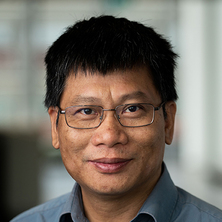
Professor Loc Do is a dentist and an oral epidemiologist with special interest in social and clinical oral epidemiology. He completed his PhD in Oral Epidemiology at the University of Adelaide. He was a lead investigator in the National Child Oral Health Study 2012-14 and the National Study of Adult Oral Health 2017-19.
Loc is currently Director of Research at the School of Dentistry, University of Queensland.
Research funding: Currently, he is the Chief Investigator A of five major NHMRC- and MRFF-funded research projects: a population-based birth cohort study investigating impact of socioeconomic inequality on child oral health, a longitudinal study investigating effect of early life exposure to fluoride, a study to investigate effectiveness of water fluoridation in Queensland, a study to develop and implement a package to improve oral health in residents of Aged Care Facilities in Queensland and NSW, and a study to develop and implement an intervention package to improve oral health of young people with intellectual disabilities.
Qualifications: BDS, MScDent, PhD
Research Interests: Oral epidemiological measurement of dental diseases. Quantitative analysis of oral epidemiological data including multilevel analysis. Risk and benefit trade-off in the use of fluorides in children. Natural history of dental fluorosis. Socio-economic inequality in oral health. Oral health-related quality of life. Smoking as a risk factor for periodontal diseases. Effectiveness and safety of water fluoridation in children. Complex systems science in dental research.
Awards and Honours: In 2025, Loc is the recipient of the International Association for Dental Research (IADR) Distinguished Scientist John Greenspan Global Oral Health Research Award. In 2022, Loc is the recipient of the International Association for Dental Research (IADR) Distinguished Scientist H Trendley Dean Award 2022. In 2023, his paper in Journal of Dental Research was awarded the IADR Abrey Sheiham Award for Distringuished Research in Dental Public Health.
Affiliate of Australian Women's and Girls' Health Research Centre
Australian Women and Girls' Health Research Centre
Faculty of Health, Medicine and Behavioural Sciences
Professor of Biostatistics
School of Public Health
Faculty of Health, Medicine and Behavioural Sciences
Availability:
Not available for supervision
Media expert
Professor Annette Dobson's research interests are in: Biostatistics (generalised linear modelling, clinical biostatistics, statistical methods relevant to longitudinal studies), and Epidemiology (tobacco control, cardiovascular disease, women's health).
Affiliate of Centre for Neurorehabilitation, Ageing and Balance Research
Centre for Neurorehabilitation, Ageing and Balance Research
Faculty of Health, Medicine and Behavioural Sciences
Conjoint Senior Research Fellow
Faculty of Health, Medicine and Behavioural Sciences
Availability:
Available for supervision
Emmah is an experienced occupational therapist and researcher in the field of brain injury rehabilitation. Emmah's PhD, completed in 2010, compared the effectiveness of an outpatient brain injury rehabilitation program in home and hospital settings.
Research Interests
Emmah has conducted collaborative research in the field of neurorehabilitation, partnering with consumers and clinicians to develop and trial rehabilitation approaches to enhance person-centred care, goal setting and cognitive rehabilitation. Other research interest areas include metacognitive and occupation-based treatment approaches, the use of technology in rehabilitation, outcome measurement, and community-based rehabilitation.
Research Expertise
Emmah has conducted research using quantitative and qualitative methodologies including randomised controlled trials and single case experimental design. Emmah has an interest in knowledge translation, has conducted implementation research using a range of implementation frameworks, and codesigned with end-users including consumers and clinicians.
Faculty of Health, Medicine and Behavioural Sciences
Availability:
Available for supervision
Maria is a Principal Research Fellow with the Primary Care Clinical Unit and Associate Professor Research Strategy affiliated with the Centre for Health System Reform and Integration (CHSRI). Her research uses a collaborative framework to investigate scalable and transformative primary health care interventions to improve patient health outcomes.
Maria has over twenty-five years’ experience in evaluating health innovations and health services research. She is an experienced implementation scientist with a strong background in primary care research, and skilled in operationalising pragmatic RCTs in general practice. She has an emerging track record researching long-term antidepressant prescribing in general practice with two successful research grants commencing in 2022 (CIB in collaboration with CIA Professor Katharine Wallis) https://medical-school.uq.edu.au/release:
NHMRC Partnership Project. RELEASE+: REdressing Long-tErm Antidepressant uSE in general practice (2022-2027)
Medical Research Future Fund (MRFF) 2020 Clinician Researchers: Applied Research in Health. RELEASE: REdressing Long-tErm Antidepressant uSE in adults. A cluster RCT effectiveness-implementation hybrid type 1 design in general practice. (2022-2025)
She is a highly experienced mixed methods researcher whose academic career has involved public health research, health psychology, primary care, mental health, integrated GP-specialist care, chronic disease prevention and management, and sexual health. Prior to taking up her current positions, between 2012 and 2018, she was Senior Research Fellow with UQs NHMRC CRE in Quality & Safety in Integrated Primary-Secondary Care where she directed the evaluation (RCT of effectiveness, cost-analysis, and implementation) of a GP-based primary-secondary integrated model of care (the ‘Beacon model). Before that she was teaching and researching with The University of Queensland’s School of Public Health where she was a Senior Lecturer between 2006 and 2012. She also spent seven years in teaching and research at The University of Queensland’s Centre for Primary Health Care and five years before that as a researcher with the National Centre for HIV Social Research.
Affiliate Professor of School of Chemistry and Molecular Biosciences
School of Chemistry and Molecular Biosciences
Faculty of Science
Affiliate of Centre for Superbug Solutions
Centre for Superbug Solutions
Institute for Molecular Bioscience
Availability:
Available for supervision
Professor Denise Doolan is Director of Research at the Institute for Molecular Bioscience. She joined IMB in 2022 and was previously Deputy Director of the Australian Institute of Tropical Health and Medicine, and Director of the JCU Centre for Molecular Therapeutics, at James Cook University.
She is a molecular immunologist, working on the development of vaccines, diagnostics and host-directed therapeutics for infectious and chronic diseases that impact global public health, with a particular focus on malaria. Her cross-disciplinary research program spans host-pathogen immunity, antigen discovery, vaccine engineering, and biomarker discovery. A particular interest is the application of state-of-the-art genome-based technologies and human models of disease system to identify novel targets for intervention against disease or that predict risk of disease.
She is a recognized world expert in malaria immunology, vaccinology, and omic-based approaches for therapeutic and diagnostic development. She has been honoured as a Fellow of the International Society for Vaccines (2017) and a Fellow of the Australian Society of Parasitology (2019) in recognition of her leadership and contribution to health and medical science in Australia and internationally.
Professor Doolan serves on a number of Executive Boards and Advisory Boards. Most recently, she has been elected as President of the International Society for Vaccines (2021-2023), and has been appointed to the Federal Government’s Australian Medical Research Advisory Board (AMRAB; 2021-2026) to provide specialist insights into Australia’s medical research and innovation priorities.
Editorial Boards: People and Animals: The International Journal of Research and Practice (PAIJ); Animals
Reviewer: International Journal of Audiology; European Journal of Neurology; International Journal of Pediatric Otorhinolaryngology; Journal of the American Academy of Audiology; BMC Health Services Research Journal; Journal of Hearing Science; Audiology Research; Journal of Speech, Language and Hearing Research; Ear & Hearing; Pediatrics - The Official Journal of the American Academy of Pediatrics; Journal of Educational, Pediatric, and (Re)habilitational Audiology; American Journal on Intellectual and Developmental Disabilities; International Archives of Otorhinolaryngology.
Professional Memberships: Audiological Australia; Animals & Society Institute; UQ Partnership in Animal Wellbeing (UQ PAW); Human-Animal Interaction Section 13 Division 17 of the American Psychological Association.
Originally from Ireland, Rebecca Dunlop completed her BSc (Honours) degree in Environmental Biology followed by her PhD in fish neuroethology, both from The Queen’s University of Belfast. She migrated Australia in 2004 to undertake a post-doc in humpback whale social communication at UQ. This research resulted in a number of highly cited papers, solidifying her international reputation as a leader and expert in large whale communication and social behaviour. She then began lecturing in the School of Veterinary Science in 2010, mainly in animal physiology and moved to the School of the Environment in 2021 to take up a lecturing position in animal behaviour and physiology.
Research
Rebecca's research interests are in animal physiology, behaviour, and communication. She mainly works on humpback whales, though has worked on bottlenose dolphins, beaked whales, pilot whales, and false killer whales. Her lab focuses on four main research areas: cetacean acoustic communication, hearing, and behaviour; the effects of noise on humpback communication, behaviour, and physiology; humpback whale social behaviour; and endocrine physiology in cetaceans. Her past and current PhD students and honours students all work within these core research areas.
She has been a P.I in several large collaborative projects aimed at determining the effects of noise on large whale behaviour and hearing in large whales. Understanding underwater noise impacts on marine mammals is a scientific area that is growing due to interest from the Navy, Oil and Gas companies, the vessel industry and from other ocean stakeholders such as whale watching companies. As part of this, she led the first humpback whale hearing experiments funded by the U.S Navy.
Her current work relates to offshore wind farm developments and their potential effects on recovering marine mammal populations, developing a reliable acoustic whale deterrent device for shark and fishing nets, and assessing, and mitigating for, the collision risk between migrating humpback whales and shipping.
Faculty of Health, Medicine and Behavioural Sciences
Senior Lecturer
School of Public Health
Faculty of Health, Medicine and Behavioural Sciences
Availability:
Available for supervision
Media expert
Dr Amalie Dyda is an infectious disease epidemiologist working as a teaching and research academic in the School of Public Health. In 2009 she completed a Master of Applied Epidemiology at the Australian National University, followed by a PhD investigating vaccine preventable diseases in adults at the University of New South Wales in 2017. She has experience working as a field epidemiologist in numerous health departments throughout Australia and has research experience in infectious diseases, data linkage and public health informatics. She is currently working on projects investigating the use of technology and machine learning methods to assist the public health response to infectious diseases, and links between social media use and health. Additionally, Amalie does a lot of work to improve gender equity in health and medical research, including working as part of the peer advisory committee for Franklin Women.
We are using the genetic model organism, C. elegans, do investigate the genetic basis of both normal and disordered behaviour. Our current interests are identifying the genes responsible for anxiety and depression as well as the genes for eating disoders and addiction. Using C. elegans as a model organism will also allow us to study gene function as it relates to behaviour.
Molecular mechanisms of phosphine resistance (other research)
Genetic mapping of oxidative stress resistance genes. The fumigant phosphine disrupts oxidative metabolism, resulting in the production of reactive oxygen intermediates. This causes the premature ageing and death of targeted pests. Insect pests of stored grain in Australia now exhibit resistance to phosphine at levels more than 200 times the normal lethal dose.
We have genetically mappedf and identified the genes responsible for phosphine resistance in tall major insect pests of stored grain. We are using a systems biology approach in the model organism C. elegans to understand the molecular basis of phosphine action. Our genetic studies have recently shown that resistance to phosphine is associated with an extension of lifespan
Faculty of Health, Medicine and Behavioural Sciences
Availability:
Available for supervision
Media expert
Emerita Professor Diann (Di) Eley is the former Director of MD Student Research and Director of Research Training in the Faculty of Medicine. She is the Chair of the UQ Human Research Ethics Committee (HREC B) and she serves on the Board of Directors for the International Association of Medical Science Educators (IAMSE).
Research career began with 20 years as a bench scientist in bio-medical laboratories in Kenya and the UK. Academic career began in 2000, receiving a PhD in health psychology from University of Bristol. Moved to the School of Medicine at UQ in 2003.
Primary research focus is research training and rural health workforce. Developed and implemented the Clinician-Scientist Track (MD-PhD and MD-MPhil) in the UQ Medical School.
Over 150 peer reviewed journal publications and received UQ and national awards for programs that enhance learning.
2015: The University of Queensland Awards for Excellence in Teaching and Learning
2015: The University of Queensland Award for Excellence in Leadership
2014: Faculty of Medicine and Biomedical Sciences Senior Teaching Excellence Award
2014: Dean’s Award for Innovation in Curriculum Development. School of Medicine
2013: The University of Queensland Faculty of Health Sciences Award for Teaching Excellence.
2006: National Carrick Award for Australian University Teaching – Innovation in curricula,
2005: The University of Queensland Awards for Enhancement of Student Learning
Affiliate of Centre for Innovation in Pain and Health Research (CIPHeR)
Centre for Innovation in Pain and Health Research
Faculty of Health, Medicine and Behavioural Sciences
Affiliate of RECOVER Injury Research Centre
RECOVER Injury Research Centre
Faculty of Health, Medicine and Behavioural Sciences
Senior Research Fellow
School of Health and Rehabilitation Sciences
Faculty of Health, Medicine and Behavioural Sciences
Availability:
Available for supervision
Dr Rachel Elphinston is a Senior Research Fellow at Recover Injury Research Centre at The University of Queensland and clinical psychologist with more than a decade of industry-related experience. Her research interests focus on the psychological risk factors for pain and disability following injury, integrated pain treatments, pain medicines use, and the influence of social media. She has designed and implemented research projects examining factors associated with perceived injustice following road traffic crashes, psychosocial factors associated with prescription opioid use in individuals with chronic pain, the effectiveness of brief psychological risk-targeted telehealth interventions, and the role of social media messaging in policy implementation following the up-scheduling of codeine. She has received industry funding to co-design, develop and test feasibility of a psychological brief intervention to reduce risk of prescription opioid-related harm in patients with chronic pain. Dr Elphinston has a current appointment with Addiction and Mental Health Services in Metro South Health and has experience in working in multidisciplinary clinical and research teams to translate research into practice and design and implement new models of care. She also has experience in delivering education and training to a wide range of health professionals and supervising undergraduate and postgraduate students.