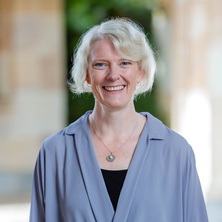
Dr Naydenova is an emerging early-career researcher in the field of quantum biotechnology with a rare cross-disciplinary expertise in quantum biotechnology and molecular biology. She specialises in single-molecule detection and optical trapping of proteins using biomolecular optomechanics approaches at the University of Queensland’s Quantum Optics Lab led by Prof. Warwick Bowen. She is interested in fundamental research questions such as the relationship between function-dynamics-structure in proteins, as well as applications of biomolecular optomechanics for sensing in sport (e.g. anti-doping) and in biosecurity contexts (e.g. plant pathogens).
Dr Naydenova holds a PhD in Pharmacognosy and Phytochemistry by the Medical University-Sofia, Bulgaria, where her research focused on plant biotechnology, epigenetics and plant-derived chiral metabolites with anti-cancer properties. Chiral metabolites have a property called chirality, also known as handedness, that underpins many interactions between molecules, including drugs binding to molecular targets such as proteins and enzymes to modulate activity. Her work was recognised with the Medical University – Sofia’s Award for best research in pharmacy, an annual distinction for outstanding doctoral and early-career researchers.
In 2023, she was awarded a Postdoctoral Research Grant to investigate protein dynamics using molecular optomechanics approaches. She joined Prof. Bowen's lab and successfully transitioned to the field of quantum biotechnology, securing over $1.2M in external research funding from Australian and Queensland Governments in the past two years. Previous experience in industry engagement and program management in Australia's higher education sector further provides a strong foundation for translating cutting-edge science into real-world applications, bridging academic innovation with practical impact.
In addition to her research development, Dr Naydenova is also committed to her leadership development. Through her affiliation with the Centre of Excellence in Quantum Biotechnology (QUBIC), she served as the inaugural co-Chair of the centre's EMCR Committee and is an active member of the centre's Outreach and Engagement Portfolio, engaging in STEM outreach to school students.
Dr Naydenova's goal is to harness and continue building skills and expertise to drive impactful cross-disciplinary research that can drive both applied and cutting-edge fundamental research.
Affiliate of ARC COE for Children and Families Over the Lifecourse
ARC COE for Children and Families Over the Lifecourse
Faculty of Humanities, Arts and Social Sciences
Senior Research Fellow
School of Human Movement and Nutrition Sciences
Faculty of Health, Medicine and Behavioural Sciences
Availability:
Available for supervision
Dr Martin O’Flahertyis a research fellow in the ARC Centre of Excellence for Children and Families over the Life Course located in the Institute for Social Science Research. Martin has made important contributions to the evaluation of nationally significant social policy, often working with the Department of Social Services. Notable highlights include designing the impact evaluation for the $90 million Try, Test, and Learn Fund and leading the evaluation of the Building Capacity in Australia’s Parents trial and the National Community Awareness Raising initiative. He is the quantitative lead for recently announced Community Refugee Integration and Sponsorship Pilot, funded by the Department of Home Affairs, which is investigating the feasibility of alternative settlement pathways for unlinked humanitarian migrants.
Martin’s broader research centres on the intersection of family, health, and disadvantage over the life course, using advanced quantitative methods to unlock causal and longitudinal perspectives on important social problems. Recent work has investigated patterns and determinants of children’s and adolescents’ time-use, including for adolescents with disability and LGBTQ adolescents. He has also led research using state-of-the-art machine learning methodology to study heterogeneous effects of teenage motherhood on later life mental health. Martin’s current research is primarily focussed on understanding the nature, causes of, and solutions to, poverty and financial insecurity among children with disabilities and their families. His work has appeared in leading international journals including Demography, Child Development, and The Lancet Child and Adolescent Health among others.
Faculty of Engineering, Architecture and Information Technology
Lecturer in Management & Leadership
School of Business
Faculty of Business, Economics and Law
Availability:
Available for supervision
I study how people lead, decide, and organize under the most demanding conditions imaginable, and what those environments reveal about leadership and practice more broadly. My research examines how leaders make consequential decisions under uncertainty and time pressure, how embodied skill and expertise develop in operational settings, and how teams sustain coordinated performance when conditions are most demanding. My central argument is that organizations at the edge of their capability show us things about leadership and human coordination that ordinary settings conceal. This work sits at the intersection of practice-process theory and phenomenology, and draws on my twenty-three years of service across the US Army Infantry, the 75th Ranger Regiment, and Special Forces, experience that affords access to empirical settings and practitioner networks rarely available to management researchers. I bring this research and experience directly into the classroom and engagements with industry, government, defense, and law enforcement partners, using what extreme contexts reveal about leadership to help practitioners in any organizational setting decide, lead, and act more effectively.
Affiliate of ARC COE for Children and Families Over the Lifecourse
ARC COE for Children and Families Over the Lifecourse
Faculty of Humanities, Arts and Social Sciences
Affiliate of Parenting and Family Support Centre
Parenting and Family Support Centre
Faculty of Health, Medicine and Behavioural Sciences
Availability:
Available for supervision
Media expert
Cameron is an Australian Research Council Industry Fellow in partnership with Micah Projects.
Cameron’s research spans three linked areas of society. The first theme examines social problems. Cameron is interested in how social problems are framed, experienced, and contribute to the alienation of people affected and social dislocation. Cameron’s second theme of enquiry engages the myriad things society does about social problems. He is interested in the link between the framing and experience of social problems and the funded and practice solutions delivered. This includes both formal human services and voluntary and ground up community actions. The third theme of Cameron’s research seeks to uncover and extend empirical, theoretical, and ethical ideas for what a society that ends and prevents social problems would look like. This body of work is interested in not only how competing ideas for social cohesion can co-exist, but also how people holding competing ideas can come together to progress social cohesion through a diversity of disagreement.
In his first book, The Homeless Person in Contemporary Society, Cameron sought to highlight how the representation of people who are homeless as distinct informs a policy and practice agenda that he characterised as a poverty of ambition. Cameron's second book with Andrew Clarke and Francisco (Paco) Perales, Charity and Poverty in Advanced Welfare States, takes on the question how can we be just by soothing the consequences of poverty without addressing the causes of poverty.
Cameron's most recent book published by Polity Press, Homelessness, demonstrates that homelessness is a punishing, predictable, yet solvable social problem.https://www.politybooks.com/bookdetail?book_slug=9781509554492
Faculty of Health, Medicine and Behavioural Sciences
Availability:
Not available for supervision
Associate Professor Maree Petersen is a social work academic in the School of Nursing, Midwifery, and Social Work. Maree's program of research centres on older people experiencing disadvantage. Underpinning her research is the recognition of the rights of older people to participate in healthy ageing, and as such be housed well with access to community aged care services. Her work incorporates a number of themes but the central aim is to use research to improve the delivery of health and welfare services in the context of elder abuse, housing, homelessness with particular emphasis on the intersection of the policy areas of housing, health and income security necessary for ensuring wellbeing as people as they age. A key focus is understanding how economic abuse across the life course results in housing precarity for women in later life. The results from her research have implications for how we think about older people without access to their rights, and living in poverty and at risk of homelessness with restricted access to community aged care and support.
Maree has taken on a leadership role with the National Older Women's Housing and Homelessness Working Group advocating for policy change and more effective strategies to enable older women to access affordable, safe, secure and appropriate housing. Maree engages in evaluation of housing and homelessness programs within the community sector, and reviews of retirement village legislation.
Maree's teaching draws on her research and practice experience to teach undergraduate courses that explain and critique welfare structures in Australia, and foundational practice courses in health and ageing. Maree supervises higher degree students in the fields of elder abuse, loneliness amongst older migrants, and vulnerable people experience of aged care reforms. She has supervised in areas of housing and homelessness.
Deputy Director (Training) of Institute for Social Science Research
Institute for Social Science Research
Faculty of Humanities, Arts and Social Sciences
Principal Research Fellow
Institute for Social Science Research
Faculty of Humanities, Arts and Social Sciences
Availability:
Available for supervision
Media expert
Jenny leads the Wellbeing, Equity, and Inclusion Research Group: Transforming education, employment and human service systems through evidence, innovation and partnership at the Institute for Social Science Research at the University of Queensland. She is a Psychologist and obtained her BA Honors, MA and PhD from the Nelson Mandela Metropolitan University in South Africa. Before coming to ISSR, Jenny worked as a Chief Researcher at the Human Sciences Research Council in South Africa in the area of education effectiveness.
Jenny’s research focuses on advancing wellbeing, equity and inclusion across education, employment, and human service systems. She evaluates programs and policies that support marginalised populations navigating complex service systems. Jenny’s work integrates lived experience with rigorous analysis of the services, institutions, and policy environments that shape life trajectories, identifying evidence-based levers for change within families, organisations, and government systems. She is a mixed-methods researcher with expertise in integrating large-scale population and administrative data with survey and in-depth qualitative data to generate nuanced, practice-relevant insights. Through large-scale evaluations and long-term research partnerships with government and community organisations, Jenny produces generalisable knowledge with demonstrable real-world impact, while strengthening research and evaluation capability within the human services sector. Her research is grounded in participatory and co-production approaches, ensuring that people with living or lived experience are meaningfully involved in shaping research design, interpretation, and impact.
Jenny has worked closely with Government Departments and Ministries both in Australia (e.g., Tasmania DHHS; Australian DoE; Qld DoE; CESE NSW; Australian DSS; Qld DCSSD; Department of Home Affairs) and internationally (e.g., South Africa, Eritrea, Cambodia and the Solomon Islands) to gather research evidence from a wide range of disadvantaged communities to inform policy. Jenny is a Chief Investigator on an ARC Linkage project which investigates how Aboriginal and Torres Strait Islander and non-Indigenous children experience Out-of-Home Care (OOHC) using elicitation methods and a longitudinal qualitative research design to provide evidence to improve service agencies’ understanding of children’s experiences in OOHC and how agencies can best support families, carers and communities to promote the social, emotional, and cultural well-being of Aboriginal and Torres Strait Islander and non-Indigenous children in OOHC. This research will improve service provider capability and test Government reform interventions. Jenny leads large-scale complex commissioned evaluations and is currently leading the following evaluations: FamilyLinQ Evaluation and the Journi Online Road Safety Education Program Evaluation.
In addition to leading a research group and complex evaluation, Jenny delivers hands-on professional training and capability-building in evaluation, statistical, and social research methods for policymakers, practitioners, and service leaders, contributes as an Associate Investigator to research for the ARC Centre of Excellence on Families and Children over the Life Course (the Life Course Centre), and supervises HDR and placement students.
Faculty of Engineering, Architecture and Information Technology
Associate Professor
School of the Environment
Faculty of Science
Availability:
Available for supervision
Media expert
Sonia Roitman is an urban sociologist and planner by training. Her contributions to the field of development planning and urban sociology include influential research on urban inequalities and how they manifest in cities. Her research interests include housing and poverty alleviation policies; the role of grassroots organisations in urban planning; disaster planning and informal practices; and, gated communities, segregation and planning instruments in Global South cities. Her main research locations are Indonesia, Samoa, Uganda, Argentina and Australia. Her most recent book is: Rukmana, D. and Roitman, S. (Eds), 2026, Growth of a megacity: Planning Jakarta in the Post-Suburban Era, University of Hawaii Press, Honolulu.
Teaching responsibilities
PLAN1101 Teamwork and negotiation for planners (Course coordinator and lecturer - 2021 and 2022)
PLAN3005/7121 Community planning and participation (Course coordinator and lecturer - 2019 to date)
PLAN3200/7200 Understanding development complexities: Indonesia fieldtrip course (Course coordinator and lecturer - 2015 to date)
PLAN4001/7120 Planning theory (Guest lecturer 2014-2019)
PLAN7010 Planning project (Course coordinator and lecturer - 2015-2016)
PLAN7612 Global South Cities (Course coordinator and lecturer - 2014 to date)
PLAN7614 Urban management and governance (Guest lecturer 2013-2016)
PLAN7638 Assessment of development projects (Course coordinator and lecturer 2013-2015 and lecturer 2016)
SOSC7140 Development effectiveness (Lecturer 2017)
ENVM2100/7100 Sustainable Development (Guest lecturer 2013)
GEOS3102 Global change: Problems and prospects (Guest lecturer 2022-2023)
Service and Engagement
UQ Academic Board (2025 to date) and Academic Board Executive Committee (2026-2027)
Deputy Director Teaching and Learning, School of Architecture, Design and Planning (2026 to date)
Master of Urban Planning Student Advisor (2025-2026)
Planning Program Convenor Bachelor of Regional and Town Planning and Master of Urban and Regional Planning (2023- 2024)
Planning Program Lead, UQ (2019-2023)
Student Advisor Bachelor of Urban and Regional Planning (BRTP) and Master of Urban and Regional Planning (MURP), UQ (Jan 2019- Dec 2020)
Planning Institute of Australia UQ Representative (since 2019)
Full Member of Planning Institute of Australia
Board Member RC21 Committee (Research Committee of the Sociology of Urban and Regional Development), International Sociological Association (2014-2023)
Specialty Chief Editor Urban Sociology, Frontiers in Sociology Journal (2025 - to date)
Scientific Committee Member of Prospectiva Journal (Revista Prospectiva, Universidad del Valle, Colombia) (since 2015)
Scientific Committee Member of Bitácora Urbano-Territorial Journal (Revista Bitácora Urbano-Territorial, Universidad Nacional de Colombia (since 2012)
Editorial Member of Journal of City and Regional Development (Jurnal Penbangunan Wilayah & Kota, Universitas Diponegoro, Indonesia) (since 2018)
School of Political Science and International Studies
Faculty of Humanities, Arts and Social Sciences
Availability:
Available for supervision
Honorary Professor, Centre for the Government of Queensland, School of History, Philosophy, Religion and Classics.
Professional Activities:
Executive Director, T.J.Ryan Foundation (2013 onwards)
Project Director, "Queensland Speaks" Oral History web-site, (2009 onwards)
Board Member, Youth + Marlene Moore Flexi-learning Centre Network, Edmund Rice Education Australia (2013 onwards).
National Fellow of the Institute of Public Administration Australia (since 1990).
Former editor of The Public Interest (Brisbane).
Former co-editor of the Australian Journal of Public Administration.
Former Review Editor for Politics (now AJPS).
Member/chair of several Quality Assessment Panels of the Queensland Office of Higher Education and formerly member of similar bodies operating in several states during the CAE era.
Member of several Federal Government committees of enquiry into education, including management education (Ralph Committee), aboriginal education (Yunipingu Committee) and university management (Linke Committee).
Former panel member of the Commonwealth Government Review Tribunal on Non-state Schooling.
Former consultant to international aid organizations, providing advice on public sector reform - Uganda, Kazakstan and Nepal.
Background:
1962-1965 : Rhodes Scholar at the University of Oxford; fieldwork for thesis on the development of trade unions in Uganda completed while Rockefeller Teaching Fellow at the University of East Africa, Kampala.
1965-1977 : Lecturing at University of Sydney, the Queen's University of Belfast, and the Canberra College of Advanced Education (Principal Lecturer in Politics in the School of Administrative Studies).
1977-1987: J.D.Story Professor of Public Administration, University of Queensland. President of the Academic Board, 1986-1987.
1987-1990: Principal of the Canberra CAE, Foundation Vice-Chancellor of the University of Canberra.
1990-1994 : Director General of Education, State Government of Queensland.
1994 : Visiting Professor, Graduate School of Management, Griffith University.
1994 - 2000: Dean of Arts, Queensland University of Technology.
2000 - 2002: Professor of Public Management, Faculty of Business, QUT.
2003 - 2011: Professor Emeritus and Teaching Fellow, School of Political Science and International Studies.
Deputy Associate Dean (Academic) - StudentsDeputy Associate Dean (Academic) - Students
Faculty of Humanities, Arts and Social Sciences
Director of Teaching and Learning of School of Social Science
School of Social Science
Faculty of Humanities, Arts and Social Sciences
Associate Professor
School of Social Science
Faculty of Humanities, Arts and Social Sciences
Availability:
Not available for supervision
Associate Professor Lynda Shevellar has over 20 years in tertiary education. She joined The University of Queensland in 2009. Based in the School of Social Science, Lynda is the winner of an Australian Award for University Teaching Excellence (AAUT) in Society and Culture (2025). Previously she has won an early career award for teaching excellence in 2011, a University of Queensland Award for Teaching Excellence in 2019, and an Australian Award for University Teaching (AAUT) Citation for Outstanding Contributions to Student Learning (2019). She is a Senior Fellow of the Higher Education Academy, the Principal Practitioner - Participation and Engagement (Institute for Teaching and Learning Innovation), and is one of the Deputy Associate Deans (Academic) - Students, for the HASS Faculty. Lynda has previously held roles in government and the community sector and is influenced by over thirty years of experience in community development, the disability sector, mental health, education, and psychology.
Lynda's research explores three closely aligned agendas: understanding the experience of people who live with heightened vulnerability; developing the awareness, agency and capacity of communities to respond to social disadvantage and inequality; and aligning community development theory and education to inform practice in working alongside people who live with heightened vulnerability. Lynda has a particular interest in the development of inclusive learning communities, through creative teaching practices, participative research strategies, and engaged citizenship.
Lynda currently coordinates the courses SOSC2288: Community Development - Local and International Practice; and SOCY1070: Inequality, Society and the Self.
Faculty of Engineering, Architecture and Information Technology
Affiliate of Centre for Social Responsibility in Mining
Centre for Social Responsibility in Mining
Faculty of Engineering, Architecture and Information Technology
Affiliate of Centre for Biodiversity and Conservation Science
Centre for Biodiversity and Conservation Science
Faculty of Science
Adjunct Associate Professor
School of the Environment
Faculty of Science
Availability:
Available for supervision
Media expert
Reconciling biodiversity conservation with development pressures is one of the world’s greatest sustainability challenges. This is particularly true given the myriad ways that human wellbeing directly depends on well-functioning ecosystems. My research seeks to understand where, when and how to manage and conserve landscapes, so as to beneift both nature and people. I use land use change models, coupled with remote sensing and GIS datasets, to predict how future development projects (e.g. mines, hydropower dams, transportation infrastructure) will impact biodiversity and ecosystem services. This information allows us to compare the costs and benefits of alternative management interventions and, ultimately, provides the knowledge needed to make more informed decisions. My research benefits from collaborating across disciplines (ecology, economics, engineering) and working alongside government and non-government organizations. I am currently conducting projects in Australia, Brazil and the USA.
Associate Member of Centre for Community Health and Wellbeing
Centre for Community Health and Wellbeing
Faculty of Health, Medicine and Behavioural Sciences
Affiliate of Centre for Sport and Society
Centre for Sport and Society
Faculty of Health, Medicine and Behavioural Sciences
Lecturer
School of Human Movement and Nutrition Sciences
Faculty of Health, Medicine and Behavioural Sciences
Availability:
Available for supervision
Dr Leigh Sperka is a Lecturer in the School of Human Movement and Nutrition Sciences. She graduated with First Class Honours from the Bachelor of Health, Sport and Physical Education in 2013 and completed her Doctor of Philosophy in 2018.
Her research focuses on the outsourcing of education. This includes investigating decision-making around the practice, how outsourcing impacts curriculum, pedagogy, and assessment, and student perspectives of outsourced lessons.
In her teaching, she emphasises the importance of creating an inclusive environment in Health and Physical Education that allows all students to participate and experience success. Students are at the centre of her teaching. She is a Fellow of the Higher Education Academy and has been awarded:
U21 Health Sciences Teaching Excellence Award (2021)
UQ Commendation for Outstanding Contributions to Student Learning (2020)
Faculty of Health and Behavioural Sciences Awards for Teaching Excellence (2020)
Zoe Staines (she/her) is Senior Lecturer and Director of Research in the School of Social Science at The University of Queensland. Her deeply interdisciplinary research spans social policy, sociology, and criminology, examining gender and work, care, welfare conditionality, and (de)coloniality with particular attention to structural injustice. She has published four books (including with leading publishers, Routledge and Policy Press) and dozens of journal articles, 85% of which are in Q1 journals and 21% of which are in journals ranked well within the top 10% globally (e.g., Policy Studies–top 2%, Sociology–top 4%). Her research has received multiple prizes and awards, including an ARC DECRA (2020-2023), the Australian and New Zealand Society of Criminology's 'best book in criminology' prize (2025), the John Mayer best article in Aus Journal of Political Science prize (2022), a Whitlam Institute Research Fellowship (2023), and UQ's competitive Foundation Research Excellence Award (2023).
Zoe is an elected board member for Australia's national Council for Humanities, Arts, and Social Sciences (CHASS), Chair of the Organising Committee for the 2026 Australian Social Policy Conference, Deputy Chair of the Australian Basic Income Lab, and an invited mentor for the International Association for Feminist Economics where she works with a group of eight mentees from across the Asia-Pacific region. She also served as Associate Editor and then Co-Editor of the Australian Journal of Social Issues (Q1) between 2019-2025. Before entering academia, Zoe held senior research and policy roles in government and the non-profit sector, and she remains committed to research with translational impact on policy and practice.
Zoe is recipient of a 2024 Australian Award for University Teaching (AAUT) and a 2023 UQ Citation for Outstanding Contributions to Student Learning, for 'co-creating imaginative, innovative, and engaging new resources for social science students to become effective social change agents'. She teaches into UQ's Bachelor of Social Science, Bachelor of Arts, and Bachelor of Criminology and Criminal Justice, while also sitting on the Bachelor of Social Science Program Committee. Zoe also currently supervises nine PhD students undertaking projects that span welfare conditionality, social policy, social housing, gender and work, work platformisation, artificial intelligence and future of work, and international human rights and law. She has been twice nominated for a UQ School of Social Science Excellence in Research Mentorship award.
School of Political Science and International Studies
Faculty of Humanities, Arts and Social Sciences
Availability:
Available for supervision
Alastair is a public policy scholar, a crisis management expert and has an ongoing interest in the institutionalization of participatory modes of governance. His current policy research examines the role that institutional amnesia plays in the policy process, his crisis management research has been focused upon the relationship between public inquiries and lesson-learning, and in relation to participatory governance, he is currently examining the validity of different forms of deliberative democracy in the context of Australian environmental policy. Alastair has published widely in high-ranking international journals and is the recipient of the Mayer Prize (best paper in the Australian Journal of Political Science) and the Lasswell Prize (best paper in Policy Sciences). He has authored three books, won three large-scale Australian Research Council Discovery grants and is always looking for outstanding students who may be interested in completing PhDs in relation to the topics outlined above.
Affiliate of ARC COE for Children and Families Over the Lifecourse
ARC COE for Children and Families Over the Lifecourse
Faculty of Humanities, Arts and Social Sciences
Affiliate of Child Health Research Centre
Child Health Research Centre
Faculty of Health, Medicine and Behavioural Sciences
ARC Australian Laureate Fellow - Group Leader
Queensland Brain Institute
Faculty of Health, Medicine and Behavioural Sciences
Availability:
Available for supervision
Media expert
Karen Thorpe is Australian Research Council, Laureate Professor and Group Leader in Child Development, Education and Care at the Queensland Brain Institute, University of Queensland. Her research is grounded in the understanding that early learning experiences shape brain development and are critical in establishing trajectories of health, social inclusion and learning across the lifespan. A particular focus of her work is early care and education environments including parenting, parent work, quality of care and education, and the early years workforce.
Karen leads a multi-disciplinary team of developmental scientists undertaking large scale longitudinal studies with embedded studies to explicate mechanisms that enable or limit children’s life chances. She was Foundation Psychologist on the Avon Longitudinal Study of Parents and Children at the University of Bristol, UK; led the evaluation of the Preparing School Trial for Queensland Government; led the Queensland team of the E4Kids study of quality in Australian Early Education and Care and a recent data linkage project with Queensland Government to track participants through their school journey. In partnership with Queensland Government, Goodstart Early Learning and the Creche and Kindergarten Association she led a large population study of the Australian ECEC workforce (ARC Linkage). Her current research, as a chief investigator on the ARC Centre of Excellence for Children and Families across the life course, and through an ARC Laureate fellowship, is to examine barriers to providing high quality early learning services in developmentally vulnerable communities.
In 2013 and again in 2019 Karen was named by the Australian Financial Review as among Australia's 100 Women of Influence for the impacts of her research on educational and family policy. In 2020 she was recognised by Australian Government, Advance Global Awards for her international contribution to education. Karen chairs the Australian Early Years Reference Council for Evidence for Learning, Australia whose remit is to build a strong evidence-base in early childhood education and care with focus on translation into policy and practice. She is also director on the board of the Australian Research Council for Children and Youth and advisor to the national board of Beyond Blue – Be You.
Faculty of Engineering, Architecture and Information Technology
Affiliate of Centre for Social Responsibility in Mining
Centre for Social Responsibility in Mining
Faculty of Engineering, Architecture and Information Technology
Availability:
Available for supervision
Media expert
Corinne seeks to understand the organizing practices and processes that gradually and invisibly create risks that can worsen over time to become catastrophic. These ‘insidious risks’ were the focus of Corinne’s PhD in the UQ Business School where she identified three ways, on a spectrum of ways these risks are managed: blinkered, law-abiding and attentive. With more than 30 years’ experience in the mining sector, government, consulting and research, Corinne built upon her earth sciences background in mine rehabilitation and closure to become a qualitative researcher through her PhD. This provided a new lens and insights on how organisations manage elongated insidious risks, not only for mine affected water and land disturbance in mining but also during the progressive failure of the insurance market for extreme weather, in her postdoctoral research. In a voluntary capacity Corinne formed and led an ISO standards working group to finalise ISO 24419 Managing Mining Legacies in 2023 providing the first international standard on this topic together with case studies and a bibliography. She represents AusIMM in her standards work. Since 2019 Corinne has been a Board Member of the Victorian Government’s Mine Land Rehabilitation Authority providing oversight for three brown coal mine closures in the Latrobe Valley. Prior to her PhD Corinne developed the field of research in managing abandoned/legacy mines in the Centre for Mined Land Rehabilitation, SMI following her Churchill Fellowship research in 2009.
Discipline Lead for Agribusiness, International Development and Economics of School of Agriculture a
School of Agriculture and Food Sustainability
Faculty of Science
Affiliate of ARC Training Centre for Bioplastics and Biocomposites
ARC Training Centre for Bioplastics and Biocomposites
Faculty of Engineering, Architecture and Information Technology
Associate Professor in Rural Dev. & Agriculture
School of Agriculture and Food Sustainability
Faculty of Science
Availability:
Available for supervision
Media expert
Bio: Dr. Severine van Bommel is a Senior Lecturer at the University of Queensland's School of Agriculture and Food Sustainability. With a keen interest in rural development and agricultural extension, her research focuses on understanding the role of experts and expertise in orchestrating effective governance performances for systemic transformation of natural resource dilemmas and competing claims. Through an interpretive lens, her research aims to support experts in communicating and collaborating with farmers and communities in situations of social learning, multi-stakeholder partnerships, farmer field schools, community-based NRM or co-inquiry and co-design.
Research Interests:
Rural development
Agricultural extension
Sustainable development
Indigenous engagement
Environmental credentials verification
Current Projects:
- the co-design of a virtual platform for verifying environmental credentials for Australian beef producers
- developing indigenous engagement methods (storian) for Australian researchers working with Ni-Vanuatu livestock farmers
- making visible and challenging gender norms in transdisciplinary research and development practice
- facilitating more-than-human participatory research and practice
Publications: Dr. van Bommel has contributed to significant works in her field, including:
"Rural Development for Sustainable Social-Ecological Systems: Putting Communities First" (Palgrave)
"Forest and Nature Governance: A Practice-Based Approach" (Springer)
Her research contributions have been published in prestigious journals and presented at international conferences such as IPA, MOPAN, IFSA, and APEN.
Teaching: In addition to her research, Dr. van Bommel teaches courses on:
Leadership in rural industries (MSc)
Effective stakeholder engagement (MSc)
Human-wildlife interactions (MSc and BSc)
Mentorship and Community Engagement: Dr. van Bommel is dedicated to mentoring early career researchers interested in interpretive methods within the APSA mentoring program. She also runs an International Virtual Community of Practice for Interpretive Practitioners, fostering collaboration and knowledge exchange in the field.
Rebecca Wallis is a Senior Lecturer at the TC Beirne School of Law. Rebecca’s teaching and research interests fall broadly within the areas of criminal law and procedure, the law of evidence, and criminal justice system structure and operation. She is concerned with how criminal law theories and principles play out in policy and practice, and how these shape the operation of the criminal justice system in intended and unintended ways.
Rebecca holds a Bachelor of Arts and a Bachelor of Laws from the University of Queensland, a Master of Arts in Criminology and Criminal Justice (Hons) and PhD from Griffith University. She is admitted to the Supreme Court of Queensland and the High Court of Australia (non-practising).