Affiliate of Julius Kruttschnitt Mineral Research Centre
Julius Kruttschnitt Mineral Research Centre
Faculty of Engineering, Architecture and Information Technology
Senior Research Fellow
Sustainable Minerals Institute
Faculty of Engineering, Architecture and Information Technology
Availability:
Available for supervision
Media expert
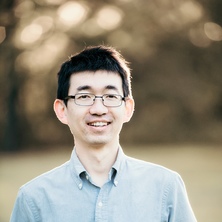
Dr Xiaodong Ma obtained his Bachelor's Degree in 2006 and a Master's Degree in 2009 from Dalian University of Technology, China, then graduated with a PhD in 2012 from The University of Tokyo, Japan, supported by the Japanese Government (Monbukagakusho: MEXT) Scholarship.
Dr Ma joined The University of Queensland in 2012, right after his PhD graduation, starting as a postdoctoral research fellow.
Dr Ma is now the group leader of the High-Temperature Processing (HTP) group and leading the HTP Program at JKMRC, SMI of UQ. He is an expert in experimental and modelling research on thermodynamics and kinetics of high-temperature materials processing for ferrous, non-ferrous and advanced materials. He has extensive hands-on experience in fundamental study and applied research, including solar cell silicon purification, ironmaking, steel secondary refining, copper smelting, metal extraction from low-grade complexed ores, and waste treatment, etc. His research activities also extend to the development of high-strength and high-end specials steels by sophisticated control of second phase particles. Along with the research, he is also good at materials characterization by operating the analytical facilities of SEM, EPMA, TEM, XRD, ICP, etc.
His current research interests span the decarburization of ironmaking and steelmaking with hydrogen metallurgy and lower CO2 emission technologies in the metallurgical sector and high temperature processing of critical minerals, aiming to bridge the gap between conventional metal production and the emerging circular, sustainable economy..
Affiliate of Centre for Social Responsibility in Mining
Centre for Social Responsibility in Mining
Faculty of Engineering, Architecture and Information Technology
Professor
School of Chemical Engineering
Faculty of Engineering, Architecture and Information Technology
Availability:
Available for supervision
Yongjun Peng is a Professor at School of Chemical Engineering, The University of Queensland. He obtained his PhD under the supervision of Profs Stephen Grano, John Ralston and Daniel Fornasiero from the Ian Wark Research Institute of the University of South Australia in 2002. This study was part of a large international project, AMIRA P260C regarding grinding and flotation chemistry in fine particle flotation with application of complementary solution and surface analytical techniques. He studied the galvanic interactions between grinding media and base metal sulphide minerals, mineral oxidation and dissolution, the activation of iron sulphide minerals, and surface contamination in improving mineral flotation. He was the 1st researcher developing the well-known Magotteaux Mill which allows the control of chemical reactions during grinding. His research work also guides the industry to use high chromium media in primary grinding mills and inert grinding media in regrinding mills to minimize the negative effect of galvanic interactions.
From 2002 to 2006, Yongjun Peng worked at the COREM Research Centre in Canada which is supported by the Canadian government and eleven international member mining companies. During his time there, he developed technologies for member mining companies to improve base metal, gold and niobium flotation. He was awarded an expert certificate for five years in Canada by the Quebec government, and also awarded NSERC (Natural Sciences and Engineering Research Council of Canada)-Industry Research Fellowship. From 2006 to 2009, Yongjun Peng worked at BHP Billiton Perth Technology Centre in Australia as a Senior Metallurgist/Engineer responsible for fine nickel flotation in saline water, gold and uranium processing. He won a major BHP Billiton internal prize in 2008.
Yongjun Peng’s current research at the University of Queensland focuses on froth flotation and the underlying solution chemistry, colloid/surface chemistry and electrochemistry. In addition to solving problems for individual companies, the underlying theme is the particle interaction taking place during the processing of low quality and complex energy and mineral resources with low quality water to address key challenges that face the resource industry today. His research is supported by the Australia Research Council, the Australian Coal Industry’s Research Program (ACARP) and the resource industry. In 2022, he was awarded the ACARP Research Excellent Award recognising research and leadership excellence through long term commitment and impact.
New technologies developed
Depressing hydrophobic gangue minerals in the flotation of sulphide ores. Traditional prefloat to float and remove hydrophobic gangue minerals also floats and removes sulphide minerals due to the collectorless flotation of sulphide minerals upon surface oxidation. This technology introduces a prefloat cleaner stage where sulphide minerals recovered to the prefloat concentrate are depressed and separated from other hydrophobic gangue minerals at a low pulp potential using innovative reducing agents which do not affect the natural floatability of sulphide minerals. The prefloat cleaner tailings are then fed back to the main sulphide flotation circuit. Traditional reducing agents applied in prefloat require high consumptions and also interfere with the downstream flotation. Flotation tests using chalcopyrite and organic carbon show that the new approach can reduce the loss of chalcopyrite in the prefloat by over 40% without affecting the rejection of naturally hydrophobic gangue. This technology is commercialized by ALS.
GoldRecover. This technology improves the gold flotation recovery from comminution circuit and flotation circuit in gold processing operations using innovative chemicals to remove iron contamination from gold surfaces. Iron contamination prevents the adsorption of collectors on mineral surfaces. Based on a copper-gold ore, this technology achieved a gold recovery up to 30% and a copper recovery up to 12% higher than the base line. Based on a pyrite-gold ore, this technology achieved a gold recovery up to 10% higher than the base line. This technology is commercialized by Kinetic Group Worldwide.
Counteracting the adverse effect of cyanide in flotation. Cyanide added to depress gangue minerals or existing in process water can depress the flotation of sulphide and precious minerals. Cyanide can also complex with metal ions and form metal cyanide which can depress or activate mineral flotation depending on the pulp chemistry. The new technology involves the modification of pulp chemistry to make metal cyanide activate sulphide and precious minerals in flotation. This technology has been applied in the sponsor’s flotation plant to improve gold and silver recoveries since 2012.
Regrinding-flotation pre-treatment prior to CIL leaching. This technology has been applied in the sponsor’s plant to improve copper and gold recoveries while reducing cyanide consumption since 2012.
New sulphidisation to improve the flotation of oxidized minerals. Traditional sulphidisation suffers from drawbacks such as low efficiency, low pulp potential with a high reagent consumption and difficulty to sulphidise some minerals. The new sulphidisation we developed from the ARC Linkage Project LP160100619 supported by Newmont and Newcrest is conducted at higher pulp potential. Based on a stockpile copper ore, the new sulphidisation improves the copper recovery from 76% (base line) to 93% with even higher copper grade. Based on a stockpile pyritic ore containing gold, the new sulphidisation improves the recovery of total S from 48% (base line) to 68% and the recovery of sulphide S from 84% (base line) to 92%.
De-aerating froth products (patented technologies). Persistent froth in flotation concentrates presents operational challenges in downstream processing such as pumping in sumps and dewatering in filters and thickeners. In sumps where flotation concentrates are pumped to the dewatering process, the liquid level sensors often fail to detect the persistent froth which may lead to flooding of the processing area or even the entire plant. In dewatering to separate the solids in the concentrate from water, persistent froth significantly reduces both thickening and filtration efficiencies. The accumulated persistent froth floating on top of thickeners can also limit the capacity of the plant. Two types of physical froth de-aerators have been developed, one based on physical forces and another based on pressure changes. The de-aerator using physical forces is suitable for destabilising froth in sumps and filters, while the de-aerator using pressure changes is suitable for destabilising froth in thickeners. These technologies are commercialized by DADI (AUSTRALIA) Engineering Company.
Rapid measurement of coal oxidation (patented technology). This technology can be used in the plant to determine the degree of coal oxidation in natural environments within 5 minutes. The solvens used are environmentally friendly. Based on the degree of coal oxidation, a ratio of non-polar collector to polar collector can be determined to maximise the coal flotation while minimizing reagent consumptions. At one coal preparation plant this technology demonstrates an improvement of 5%-26% increase in the recovery of coal (based on applying optimised ratios of oily and polar collectors for the measured degree of coal oxidation).This technology is commercialized by interchem.
Apparatus and method for emulsifying oily collectors for use in flotation (patented technology). Oily collectors are widely used in the flotation of various commodities. Due to their low solubility in water, a large amount of oily collectors has to be used with a long conditioning time. A number of studies has demonstrated that chemical emulsifiers can significantly improve the efficiency of oily collectors by reducing their droplets. However, the application of chemical emulsifiers in flotation plants is limited due to their strong frothing abilities which can cause various problems. We have developed apparatus to physically emulsify oily collectors to droplets with a size ranging from 12.2 µm to 0.7 µm and found that the flotation performance increases with the decrease of droplet size until an optimal droplet size. Droplets smaller than the optimal size is not beneficial to flotation. The apparatus has a low equipment cost and low maintenance. Based on the test work on five different coal samples from 3 Australian coal preparation plants, the emulsified diesel could increase the yield by 2.5 to 15.3% at the same product ash content while reducing the diesel consumption by 97,412 L to 304,941 L per annum. This technology is commercialized by DADI (AUSTRALIA) Engineering Company.
Lamella plates to reduce fine gangue entrainment in flotation (patented technology). Fine gangue particles are readily entrained with water into flotation froth, particularly when processing fine ores, reducing concentrate quality and often forcing plants to sacrifice valuable mineral recovery to meet product specifications. This technology integrates inclined lamella plates directly into existing flotation cells to create an effective in-cell classification zone. The plates promote the separation and downward return of entrained fine gangue particles while allowing valuable mineral–bubble aggregates to rise to the froth. The technology is chemical-free, low-cost and readily retrofitted to existing flotation equipment without major modification. Laboratory trials in coal flotation have demonstrated up to 30% reduction in product ash while maintaining high combustible recovery, with successful application across mechanical, Jameson and column flotation cells. The technology has also demonstrated effectiveness in copper flotation and is being further developed for lithium and other critical minerals.
Affiliate of Centre for Environmental Responsibility in Mining
Centre for Environmental Responsibility in Mining
Faculty of Engineering, Architecture and Information Technology
Affiliate of Minerals Industry Safety and Health Centre
Minerals Industry Safety and Health Centre
Faculty of Engineering, Architecture and Information Technology
Affiliate of W.H. Bryan Mining and Geology Research Centre
WH Bryan Mining Geology Research Centre
Faculty of Engineering, Architecture and Information Technology
Affiliate of Future Autonomous Systems and Technologies
Future Autonomous Systems and Technologies
Faculty of Engineering, Architecture and Information Technology
Senior Lecturer
School of Mechanical and Mining Engineering
Faculty of Engineering, Architecture and Information Technology
Availability:
Available for supervision
Dr Micah Nehrings’ research interests are in: Mine Planning, Production Scheduling Optimisation, Optimal Ultimate Pit Limit (UPL) determination, planning for In-Pit-Crusher-Conveyor (IPCC) systems.
Micah is a Lecturer within the Division of Mining Engineering of the School of Mechanical and Mining Engineering. He leads the High Performance Surface Mining Research Group which is heavily focused on delivering high quality research outcomes in the planning and installation of In-Pit-Crusher-Conveyor (IPCC) systems.
Micah joined the School in 2011, after completing his PhD at The University of Queensland. Micah has since undertaken an early career academic program which has resulted in collaborations with European universities in Sweden, Germany and Kazakhstan. Micah has also developed an industry network that works with him in the implementation of some of his groups research outcomes.
Micah research outputs have been published in numerous high ranking journals including Minerals Engineering, Journal of the South African Institute of Mining and Metallurgy, Mining Technology and the International Journal of Mining, Reclamation and Environment.
Faculty of Engineering, Architecture and Information Technology
Affiliate of Julius Kruttschnitt Mineral Research Centre
Julius Kruttschnitt Mineral Research Centre
Faculty of Engineering, Architecture and Information Technology
Availability:
Available for supervision
Tania is interested in researching, developing and applying advanced control solutions, computational analysis, and process simulation to optimise processes in the mining industry. She joined the JKMRC as a member of the Advanced Process Prediction and Control (APPCo) group in 2023 and has since worked mainly on projects to develop soft sensors for mineral processing operations. Highlights include JK MillFIT to estimate mill content and charge trajectory, CycloPS to estimate cyclone performance and DMC soft sensor to estimate dense medium cyclone performance in coal operations.
Tania completed her undergraduate study in Chemical Engineering and a Master's degree in Chemical Engineering with a major in Process Control in 2015. For her master's thesis, she worked on the study and evaluation of mill power draw models; these studies contributed to the development of a vibration sensor and software to measure filling in tumbling mills.
Tania has over nine years of experience in the Chilean mining industry, where she has held several key roles as a Project Engineer, Process Engineer, Data Processing Specialist and Advanced Process Control Engineer. Throughout her career, she has maintained strong ties with academia, collaborating on publications and promoting collaborative research between the mining industry and Chilean universities.
Affiliate of Julius Kruttschnitt Mineral Research Centre
Julius Kruttschnitt Mineral Research Centre
Faculty of Engineering, Architecture and Information Technology
Postdoctoral Research Fellow/Research Officer
Sustainable Minerals Institute
Faculty of Engineering, Architecture and Information Technology
Availability:
Available for supervision
Flavio's research focuses on advancing the HVP technology to achieve pre-concentration, pre-weakening and improved liberation of different types of ore using the continuous high voltage pulse device developed at the Julius Kruttschnitt Mineral Research Centre (JKMRC).
Flavio's background includes computational simulation of comminution equipment using DEM, optimisation of crushing circuits, investigation and implementation of a novel classification approach using dry rare-earth magnetic separation for the production of manufactured sand, industrial surveys and laboratory and pilot scale test work. He is a Civil Engineer from the Federal University of Rio de Janeiro (UFRJ), Brazil. He holds a MSc in Metallurgical and Materials Engineering at COPPE/UFRJ (Instituto Alberto Luiz Coimbra de Pós-Graduação e Pesquisa de Engenharia), Brazil.
Centre Director of Centre for Environmental Responsibility in Mining
Centre for Environmental Responsibility in Mining
Faculty of Engineering, Architecture and Information Technology
Professorial Research Fellow
Sustainable Minerals Institute
Faculty of Engineering, Architecture and Information Technology
Affiliate of Centre for Environmental Responsibility in Mining
Centre for Environmental Responsibility in Mining
Faculty of Engineering, Architecture and Information Technology
Affiliate of Centre for Geoanalytical Mass Spectrometry
Centre for Geoanalytical Mass Spectrometry
Faculty of Science
Affiliate of Minerals Industry Safety and Health Centre
Minerals Industry Safety and Health Centre
Faculty of Engineering, Architecture and Information Technology
Affiliate of W.H. Bryan Mining and Geology Research Centre
WH Bryan Mining Geology Research Centre
Faculty of Engineering, Architecture and Information Technology
Availability:
Available for supervision
Media expert
Dr Mansour Edraki is a geo-environmental scientist specialising in the field of inorganic geochemistry. He joined UQ following completion of his PhD at the University of New England. Prior to that, and before immigrating to Australia, he was a lecturer in earth sciences. Since joining UQ, Dr Edraki has focused on developing innovative techniques for understanding and predicting geochemical processes that underpin sustainable management of mine waste and mine water, particularly acid and metalliferous drainage. Mansour’s research has direct applications for the resources and energy industries and the impact of his work is evident in a continuous flow of industry-funded projects in the last decade. Dr Edraki has initiated research collaborations in many international locations including Indonesia (South Kalimantan and Freeport), Iran (Mehdiabad Zinc) Papua New Guinea (Ok Tedi), Philippines (USEP and Mindanao Development Authority), Korea (MIRECO and KIGAM), Peru (INGEMET), and Chile (Fundación Chile, Universidad de Concepción). Dr Edraki represents SMI-UQ at the International Network for Acid Prevention (INAP), which is a global alliance for managing the issue of acid and metalliferous drainage. He leads SMI's Environmental Geochemistry Group.
Affiliate of Centre for Environmental Responsibility in Mining
Centre for Environmental Responsibility in Mining
Faculty of Engineering, Architecture and Information Technology
Affiliate of W.H. Bryan Mining and Geology Research Centre
WH Bryan Mining Geology Research Centre
Faculty of Engineering, Architecture and Information Technology
Affiliate of Centre for Social Responsibility in Mining
Centre for Social Responsibility in Mining
Faculty of Engineering, Architecture and Information Technology
Affiliate of Julius Kruttschnitt Mineral Research Centre
Julius Kruttschnitt Mineral Research Centre
Faculty of Engineering, Architecture and Information Technology
Professor
School of Chemical Engineering
Faculty of Engineering, Architecture and Information Technology
Availability:
Not available for supervision
Media expert
Biography:
Professor James Vaughan is the Chemical Engineering Metallurgy Major Lead and Leader of the Hydrometallurgy Research Group. He obtained a Bachelor’s degree in Metallurgical Engineering at McGill University followed by Master of Applied Science and PhD degrees in Materials Engineering at The University of British Columbia in Canada. James served as Director of the University of Queensland Rio Tinto Bauxite & Alumina Technology Centre. He is a member of the Australian Institute of Mining and Metallurgy (AusIMM) and Program Technical Lead for the new CRC "Critical Metals for Critical Industries".
Research:
James' research focuses on the fundamental aspects of leaching, ion exchange and precipitation reactions as well as membrane separations. Current research interests are in production of copper and gold, separating rare earth elements and improvements in production of vanadium which is the key ingredient in vanadium redox flow batteries.
Current Projects:
Rare earth co-processing (UniQuest)
Rere earth ion exchange resin separations (Bayan Mining and Minerals)
Affiliate of Minerals Industry Safety and Health Centre
Minerals Industry Safety and Health Centre
Faculty of Engineering, Architecture and Information Technology
Affiliate of W.H. Bryan Mining and Geology Research Centre
WH Bryan Mining Geology Research Centre
Faculty of Engineering, Architecture and Information Technology
Affiliate of Julius Kruttschnitt Mineral Research Centre
Julius Kruttschnitt Mineral Research Centre
Faculty of Engineering, Architecture and Information Technology
Senior Research Fellow
Sustainable Minerals Institute
Faculty of Engineering, Architecture and Information Technology
Availability:
Available for supervision
Gordon holds a PhD in Chemical Engineering from the University of Cape Town, South Africa, which focused on the application of machine vision, image processing and machine learning algorithms for modelling grade in froth flotation systems.
Gordon spent ten years working for the Victorian Government developing technical computing and modelling solutions. These included the development of the Environmental Systems Modelling Platform, a tool that aims to bring multiple environmental models and datasets into a single easy to use software package, and the development of the Native Vegetation Regulations Tool, to calculate the interactions between proposed clearings and models of rare and threatened species, and thereby determine the required offset credits. More recently, Gordon worked as a data scientist at the Victorian Centre for Data Insights, where he worked with a team focused on delivering innovative data driven solutions across the government sector.
Gordon now applies his data analytics, modelling and technical computing skills at the JKMRC where he works with the Advanced Process Prediction and Control group developing tools for improved time series analysis and visualisation of industrial data and comminution process models.
Affiliate of Minerals Industry Safety and Health Centre
Minerals Industry Safety and Health Centre
Faculty of Engineering, Architecture and Information Technology
Principal Research Fellow
Sustainable Minerals Institute
Faculty of Engineering, Architecture and Information Technology
Availability:
Available for supervision
Associate Professor Andrew Hill has conducted applied research across a range of industries (including transport, mining, and healthcare), with an emphasis on skills training, measurement/assessment, and the human factors and cognitive aspects of work tasks. A particular research interest has been the measurement and training of hazard perception skill. Andrew was a key member of the UQ team that developed and validated a video-based hazard perception test for Queensland Transport, which was part of the graduated licensing system in Queensland from 2008 to 2021 and was taken by around half a million drivers. Over that time, he continued to collaborate on the development and validation of a range of training methods for increasing drivers’ hazard perception skill. Training that he co-developed has been shown to lead to improvements in hazard perception and reductions in speeding and heavy braking during real-world driving. Since joining MISHC, Andrew has turned his attention to the development of novel methods for assessing and training workers’ hazard recognition skill in mining contexts (e.g., major shutdown operations).
In the healthcare sphere, Andrew contributed to the human factors design of standardised national charts for recording and responding to hospital inpatients’ vital sign observations, and for monitoring and treating diabetes in hospitals. These charts have been shown to yield improved user performance among novice chart-users and experienced clinicians alike. His other healthcare research has included work on the measurement and training of technical skills in laparoscopic surgery and colonoscopy (including contributing to a national curriculum), as well as measurement issues in relation to vital sign data.
Andrew has a PhD in cognitive psychology, as well as honours degrees in psychology and law from The University of Queensland.
Affiliate of Minerals Industry Safety and Health Centre
Minerals Industry Safety and Health Centre
Faculty of Engineering, Architecture and Information Technology
Professorial Research Fellow
Sustainable Minerals Institute
Faculty of Engineering, Architecture and Information Technology
Availability:
Available for supervision
Experienced human factors and ergonomics researcher and consultant across a range of industries particularly mining. Currently seconded to the BHP Think and Act Differently team with support from the Resources Technology and Critical Minerals Trailblazer and the Commonwealth Government through the Trailblazer Universities Program to undertake a Human Systems Integration project.
Robin Burgess-Limerick is Professorial Research Fellow in the Human Factors within the Minerals Industry Safety and Health Centre. He has been a member of academic staff since 1995, and prior to that has held research positions in a number of organisations including the Division of Workplace Health & Safety, and the Medical Research Council Applied Psychology Unit (UK). Prof Burgess-Limerick completed his Bachelor of Human Movement Studies, and Hons degrees at The University of Queensland, and returned to the University to undertake his PhD in the area of manual lifting coordination. He is a Certified Professional member, past-president, and elected Fellow, of the Ergonomics Society of Australia Inc.
Research Interests
Prof Burgess-Limerick has eclectic research interests ranging across the broad scope of human factors and ergonomics from visual perception and movement control, through workplace interventions to prevent injuries due to manual tasks, and the design of mining equipment to reduce injury risks. His research has been funded by grants from the National Occupational Health and Safety Commission, ARC, NHMRC, Workcover Queensland (QComp), the Coal Services Health and Safety Trust (NSW), and the Australian Coal Association Research Program.
Faculty of Engineering, Architecture and Information Technology
Affiliate of Centre for Social Responsibility in Mining
Centre for Social Responsibility in Mining
Faculty of Engineering, Architecture and Information Technology
Availability:
Available for supervision
Media expert
I have extensive research and teaching experience in the social aspects of mining and energy, focusing on social impact assessments, mine closure, community relations, and benefit-sharing mechanisms. My research interests also include socio-political developments in Mongolia. I hold a PhD from Hokkaido University in Japan and have worked in Mongolia, Japan, and Australia.
Affiliate of Centre for Environmental Responsibility in Mining
Centre for Environmental Responsibility in Mining
Faculty of Engineering, Architecture and Information Technology
Affiliate of Minerals Industry Safety and Health Centre
Minerals Industry Safety and Health Centre
Faculty of Engineering, Architecture and Information Technology
Professorial Research Fellow
Sustainable Minerals Institute
Faculty of Engineering, Architecture and Information Technology
Availability:
Available for supervision
Neil is civil engineer with expertise in hydrology and water resources. He splits his time between the Centre for Water in the Minerals Industry and the School of Civil Engineering. His current research interests include water resource systems modelling, understanding impacts of mining on water resources, remote sensing applications in hydrology and stochastic hydrology. Neil graduated with a BEng in Civil Engineering from Edinburgh University in 1990 and then worked for seven years in the Scottish pubic sector on wastewater treatment and disposal scheme design and construction. He obtained an MSc in Environmental Engineering in 1998 then a PhD in water quality modeling at Imperial College. Neil worked at Imperial as a Lecturer and Reader in Surface Water Hydrology between 2001 and 2013. This included teaching water quality, hydrometry, hydraulics, and water resources engineering; and a 5-year spell as Director of the Hydrology MSc program. His research there focused on surface water quality, uncertainty in modelling, land use management impacts, and hydrological up-scaling and regionalisation. While most of Neil’s research has been UK and Australia-based, international activity has included projects in Thailand, Uganda, Botswana, Peru, Chile, Colombia, Mongolia and China. He has been a member of the British Hydrological Society national committee, the ICE’s Water Expert Panel, and the NERC Peer Review College. He was won several awards, including the Institution of Civil Engineer’s Baker Medal and RA Carr Award for water resources research. He held an ARC Future Fellowship from 2014-2019.
Affiliate of Julius Kruttschnitt Mineral Research Centre
Julius Kruttschnitt Mineral Research Centre
Faculty of Engineering, Architecture and Information Technology
Research Fellow
Sustainable Minerals Institute
Faculty of Engineering, Architecture and Information Technology
Availability:
Available for supervision
Dr Qi Shao is a Postdoctoral Research Fellow at the Julius Kruttschnitt Mineral Research Centre (JKMRC), where his primary research focus is on modelling mineral separation processes using Computational Fluid Dynamics (CFD) simulations. His recent work has applied CFD to a range of mineral separation equipment, including the Teeter Bed Separator, CrossFlow, HydroFloat, conventional mechanical flotation cells, and the Jameson Cell. By examining hydrodynamics and performance across varying operating conditions and equipment designs, his research aims to enhance separation efficiency, reduce energy consumption, and boost productivity.
Dr Shao earned his PhD in Environmental Engineering from The University of Queensland, where he developed numerical models using Cellular Automata to simulate hydrological processes in mining landforms. Following his PhD, he continued at UQ as a Postdoctoral Research Fellow, investigating fluid-particle interactions in hydraulic erosion of granular structures through coupled CFD and Discrete Element Method (DEM) simulations.
Prior to his current role, Dr Shao conducted research at the University of Melbourne, focusing on numerical simulations of solute transport and multiphase flows in heterogeneous porous media. His work addressed critical environmental and engineering challenges, including contaminant transport, geological CO₂ sequestration, and groundwater flow dynamics.
Dr Shao’s expertise spans a wide array of numerical methods, including Finite Element Method (FEM), Finite Volume Method (FVM), DEM, Cellular Automata, and Discrete Event Simulation, which he applies to solve complex problems across environmental and mineral engineering domains.
Faculty of Engineering, Architecture and Information Technology
Availability:
Available for supervision
Media expert
Tony is an expert mining structural geologist who applies his skills to problems of deep earth mass mining, giant open pits, near-mine exploration, and the local and regional lithostructural controls on complex metalliferous mineral deposits. As a Senior Research Fellow in mining and engineering geology at the University of Queensland, Tony’s pioneering research focussed on the geological modelling and data inputs required for planning deep cave mining operations, an area that had received little previous consideration from geologists. He led the Geology and Mass Mining Project (GMM), which examined the geoscientific inputs required for exploring, defining, establishing, and mining block and sub-level caving operations that were being developed on giant porphyry copper-gold systems and IOCG deposits. While much research was being done in Australia to explore the deep earth environment, very little was being done to model the geology of large and deep mineralized systems, and then to use the new data and models to plan and extract any large discoveries made. Tony’s pioneering work was some of the first and most comprehensive to be done in this field.
Fellow and chartered professional (geology) of the Australasian Institute of Mining and Metallurgy
Fellow of the Society of Economic Geologists
Fellow of the Geological Society
Fellow of the Australian Institute of Geoscientists
Member, Geological Society of Australia
Member, Australasian Society for Historical Archaeology
Tony is presently a Principal Structural Geologist with a Brisbane-based geophysical and geological consulting group.