
Overview
Background
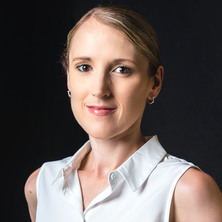
Dr Sally Mortlock is a genetic epidemiologist and NECST Research Fellow who leads the Genetic Epidemiology stream at the Australian Women and Girls Health Research (AWaGHR) Centre, University of Queensland. Her research integrates genomics with life course epidemiology to understand how genetic, environmental, and lifestyle factors shape women’s health across the lifespan.
Her work focuses on reproductive and menstrual health, particularly endometriosis and related conditions, with the aim of improving understanding of disease mechanisms, risk, diagnosis, and personalised approaches to care.
Research areas include:
- Genetic epidemiology and reproductive genomics
- Women’s health across the life course
- Endometriosis and reproductive disorders
- Longitudinal cohort studies and life course epidemiology
- Genetic risk prediction and causal inference methods (including Mendelian randomisation)
- Multi-omics and biological pathway analysis
Dr Mortlock previously spent seven years as lead computational biologist within the Genomics of Reproduction Disorders group at the Institute for Molecular Bioscience, contributing to internationally recognised research in reproductive genomics. She now combines this expertise with large-scale longitudinal health data, including genetic resources within the Australian Longitudinal Study on Women’s Health, to investigate women’s health trajectories over time.
Availability
- Dr Sally Mortlock is:
- Available for supervision
Fields of research
Qualifications
- Doctor of Philosophy, University of Sydney
Research impacts
Dr Morltock’s research aims to improve understanding, diagnosis, and management of endometriosis and women’s reproductive health by translating genomic and epidemiological research into knowledge, clinical, policy, and public health outcomes.
Her work has helped identify genetic risk factors, shared disease pathways, and biological mechanisms underlying endometriosis and related conditions. These discoveries support efforts toward earlier diagnosis, improved disease classification, and development of more personalised approaches to care.
Research contributions include:
- Identifying genetic risk regions and shared mechanisms linking endometriosis with other diseases
- Developing genomic resources (including endometrial eQTL and mQTL datasets) that are now widely used internationally to interpret disease biology and identify therapeutic targets
- Generating evidence from large longitudinal cohorts, including the Australian Longitudinal Study on Women’s Health (ALSWH), to understand how genetic, environmental, and lifestyle factors influence women’s health across the life course
This research has informed national and international policy and guideline development. Findings have contributed evidence cited in the WHO report Endometriosis: disease mechanisms and health disparities (2023), the ACOG Guideline No. 425a, European policy initiatives on women’s reproductive health, and the RANZCOG Australian Living Evidence Guideline for Endometriosis.
Works
Search Professor Sally Mortlock’s works on UQ eSpace
2019
Journal Article
Genotype-free demultiplexing of pooled single-cell RNA-seq
Xu, Jun, Falconer, Caitlin, Nguyen, Quan, Crawford, Joanna, McKinnon, Brett D., Mortlock, Sally, Senabouth, Anne, Andersen, Stacey, Chiu, Han Sheng, Jiang, Longda, Palpant, Nathan J., Yang, Jian, Mueller, Michael D., Hewitt, Alex W., Pébay, Alice, Montgomery, Grant W., Powell, Joseph E. and Coin, Lachlan J. M. (2019). Genotype-free demultiplexing of pooled single-cell RNA-seq. Genome Biology, 20 (1) 290, 290. doi: 10.1186/s13059-019-1852-7
2019
Journal Article
Should genetics now be considered the pre-eminent etiologic factor in endometriosis?
Montgomery, Grant W., Mortlock, Sally and Giudice, Linda C. (2019). Should genetics now be considered the pre-eminent etiologic factor in endometriosis?. Journal of Minimally Invasive Gynecology, 27 (2), 280-286. doi: 10.1016/j.jmig.2019.10.020
2019
Journal Article
Genome-wide association and epidemiological analyses reveal common genetic origins between uterine leiomyomata and endometriosis
Gallagher, C. S., Mäkinen, N., Harris, H. R., Rahmioglu, N., Uimari, O., Cook, J. P., Shigesi, N., Ferreira, T., Velez-Edwards, D. R., Edwards, T. L., Mortlock, S., Ruhioglu, Z., Day, F., Becker, C. M., Karhunen, V., Martikainen, H., Järvelin, M.-R., Cantor, R. M., Ridker, P. M., Terry, K. L., Buring, J. E., Gordon, S. D., Medland, S. E., Montgomery, G. W., Nyholt, D. R., Hinds, D. A., Tung, J. Y., Perry, J. R. B., Lind, P. A. ... Morton, C. C. (2019). Genome-wide association and epidemiological analyses reveal common genetic origins between uterine leiomyomata and endometriosis. Nature Communications, 10 (1) 4857, 4857. doi: 10.1038/s41467-019-12536-4
2019
Journal Article
Genome-wide association studies of 74 plasma metabolites of German shepherd dogs reveal two metabolites associated with genes encoding their enzymes
Soh, Pamela Xing Yi, Marin Cely, Juliana Maria, Mortlock, Sally-Anne, Jara, Christopher James, Booth, Rachel, Natera, Siria, Roessner, Ute, Crossett, Ben, Cordwell, Stuart, Singh Khatkar, Mehar and Williamson, Peter (2019). Genome-wide association studies of 74 plasma metabolites of German shepherd dogs reveal two metabolites associated with genes encoding their enzymes. Metabolomics, 15 (9) 123, 123. doi: 10.1007/s11306-019-1586-2
2019
Journal Article
Genetic regulation of methylation in human endometrium and blood and gene targets for reproductive diseases
Mortlock, Sally, Restuadi, Restuadi, Levien, Rupert, Girling, Jane E., Holdsworth-Carson, Sarah J., Healey, Martin, Zhu, Zhihong, Qi, Ting, Wu, Yang, Lukowski, Samuel W., Rogers, Peter A. W., Yang, Jian, McRae, Allan F., Fung, Jenny N. and Montgomery, Grant W. (2019). Genetic regulation of methylation in human endometrium and blood and gene targets for reproductive diseases. Clinical Epigenetics, 11 (1) 49, 49. doi: 10.1186/s13148-019-0648-7
2019
Journal Article
Copy number variation and variant discovery in Bullmastiff dogs
Mortlock, S.-A., Williamson, P. and Khatkar, M. S. (2019). Copy number variation and variant discovery in Bullmastiff dogs. Animal Genetics, 50 (2) age.12754, 177-181. doi: 10.1111/age.12754
2019
Journal Article
Generation of immortalized human endometrial stromal cell lines with different endometriosis risk genotypes
Holdsworth-Carson, S. J., Colgrave, E. M., Donoghue, J. F., Fung, J. N., Churchill, M. L., Mortlock, S., Paiva, P., Healey, M., Montgomery, G. W., Girling, J. E. and Rogers, P. A. W. (2019). Generation of immortalized human endometrial stromal cell lines with different endometriosis risk genotypes. MHR: Basic science of reproductive medicine, 25 (4), 194-205. doi: 10.1093/molehr/gaz006
2019
Conference Publication
Identifying Target Genes for Endometriosis through Integration of Genetic Effects on Transcription and Methylation in Human Endometrium
Mortlock, Sally, Fung, Jenny N., Girling, Jane E., Holdsworth-Carson, Sarah J., Healey, Martin, Lukowski, Samuel W., McKinnon, Brett D., Yang, Jian, McRae, Allan, Rogers, Peter A. W. and Montgomery, Grant W. (2019). Identifying Target Genes for Endometriosis through Integration of Genetic Effects on Transcription and Methylation in Human Endometrium. 66th Annual Scientific Meeting of the Society for Reproductive Investigation (SRI), Paris, France, 12-16 March 2019. Thousand Oaks, CA, United States: Sage.
2018
Journal Article
Genetic regulation of disease risk and endometrial gene expression highlights potential target genes for endometriosis and polycystic ovarian syndrome
Fung, Jenny N., Mortlock, Sally, Girling, Jane E., Holdsworth-Carson, Sarah J., Teh, Wan Tinn, Zhu, Zhihong, Lukowski, Samuel W., McKinnon, Brett D., McRae, Allan, Yang, Jian, Healey, Martin, Powell, Joseph E., Rogers, Peter A. W. and Montgomery, Grant W (2018). Genetic regulation of disease risk and endometrial gene expression highlights potential target genes for endometriosis and polycystic ovarian syndrome. Scientific Reports, 8 (1) 11424, 11424. doi: 10.1038/s41598-018-29462-y
2018
Journal Article
Genetic Variation at Chromosome 2q13 and Its Potential Influence on Endometriosis Susceptibility Through Effects on the IL-1 Family
Gajbhiye, Rahul, McKinnon, Brett, Mortlock, Sally, Mueller, Michael and Montgomery, Grant (2018). Genetic Variation at Chromosome 2q13 and Its Potential Influence on Endometriosis Susceptibility Through Effects on the IL-1 Family. Reproductive Sciences, 25 (9), 1933719118768688-1317. doi: 10.1177/1933719118768688
2018
Conference Publication
Dynamic changes in gene regulation in human endometrium
Fung, Jenny N., Mortlock, Sally, Girling, Jane E., Holdsworth-Carson, Sarah J., Teh, Wan Tinn, Healey, Martin, Rogers, Peter A. W. and Montgomery, Grant W. (2018). Dynamic changes in gene regulation in human endometrium. 65th Annual Scientific Meeting of the Society for Reproductive Investigation (SRI), San Diego CA, United States, 6-10 March 2018. Thousand Oaks, CA United States: Sage Publications.
2016
Journal Article
Visualization of genome diversity in german shepherd dogs
Mortlock, Sally-Anne, Booth, Rachel, Mazrier, Hamutal, Khatkar, Mehar S. and Williamson, Peter (2016). Visualization of genome diversity in german shepherd dogs. Bioinformatics and Biology Insights, 9, 37-42. doi: 10.4137/BBI.S30524
2016
Journal Article
Comparative analysis of genome diversity in bullmastiff dogs
Mortlock, Sally-Anne, Khatkar, Mehar S. and Williamson, Peter (2016). Comparative analysis of genome diversity in bullmastiff dogs. PLoS One, 11 (1) e0147941, e0147941. doi: 10.1371/journal.pone.0147941
2015
Journal Article
T-cell activation and early gene response in dogs
Mortlock, Sally-Anne, Wei, Jerry and Williamson, Peter (2015). T-cell activation and early gene response in dogs. PLoS One, 10 (3) e0121169, e0121169. doi: 10.1371/journal.pone.0121169
2015
Journal Article
Cluster Analysis of Tumor Suppressor Genes in Canine Leukocytes Identifies Activation State
Daly, Julie-Anne, Mortlock, Sally-Anne, Taylor, Rosanne M. and Williamson, Peter (2015). Cluster Analysis of Tumor Suppressor Genes in Canine Leukocytes Identifies Activation State. Bioinformatics and Biology Insights, 9 (S2), 59-67. doi: 10.4137/BBI.S30523
Funding
Current funding
Past funding
Supervision
Availability
- Dr Sally Mortlock is:
- Available for supervision
Looking for a supervisor? Read our advice on how to choose a supervisor.
Available projects
-
Understanding Endometriosis Heterogeneity Across the Life Course
Endometriosis is a heterogeneous condition characterised by wide variation in symptoms, comorbidities, lesion types, and treatment response, contributing to delayed diagnosis and poor outcomes. This PhD project will investigate the genetic and life course drivers of this heterogeneity, examining how symptom profiles and comorbidities cluster and vary across women.
Using large-scale datasets including the Australian Longitudinal Study on Women’s Health (ALSWH) and international genomic resources, the project will characterise disease subtypes, assess causal links between endometriosis, symptoms and comorbidities, and explore how genetic risk interacts with life course exposures to shape symptom trajectories. Advanced methods including longitudinal and trajectory modelling and causal inference will be applied.
The project will generate new insights into endometriosis subtypes, underlying mechanisms, and gene–environment interactions, with the goal of improving early diagnosis and informing more personalised, targeted care pathways.
-
Understanding Shared Mechanisms Across Reproductive and Menstrual Health
This project will apply genetic epidemiology and life course approaches to investigate the causes, overlap, and shared biological mechanisms underlying reproductive and menstrual disorders across women’s lives. Focusing on conditions including endometriosis, endometritis, infertility, polyendocrine metabolic ovarian syndrome (PMOS), fibroids, heavy menstrual bleeding, and related reproductive traits and milestones (e.g., age at menarche and menopause), the project will examine how co-occurring conditions interact and contribute to women’s health across the life course. Moving beyond a disease-centred approach, the research will adopt a person-centred framework to identify shared pathways and causal links between reproductive disorders, fertility outcomes, gynaecological cancers, and broader chronic disease risk. Using methods including Mendelian randomisation, polygenic risk modelling, and interaction analyses, the project will investigate how genetic susceptibility and life course exposures (e.g., BMI, contraceptive use, reproductive stage) influence disease risk, infertility, and condition overlap. Findings will support earlier identification of risk, targeted interventions, and improved women’s health outcomes.
Supervision history
Current supervision
-
Doctor Philosophy
Exploring the role of epidemiological and molecular factors in endometriosis risk
Principal Advisor
Other advisors: Professor Allan McRae
-
Doctor Philosophy
Leveraging multi-omic and epidemiological data to understand endometriosis and its symptomatology
Associate Advisor
Other advisors: Professor Naomi Wray, Professor Allan McRae
Completed supervision
-
2025
Doctor Philosophy
Leveraging Large Genomic and Health Record Datasets to Uncover Novel Insights into the Aetiology of Endometriosis
Principal Advisor
-
2024
Doctor Philosophy
Identifying genetic and epigenetic regulators of skin and hair follicle physiology and disease in mice: A systems-based approach using The Collaborative Cross
Associate Advisor
Other advisors: Professor Kiarash Khosrotehrani
-
2023
Doctor Philosophy
Regulation of transcription in human endometrium and endometriosis
Associate Advisor
-
2023
Doctor Philosophy
Investigation of both epidemiological and genetic risk factors for endometriosis: novel insights and important clinical implications
Associate Advisor
Media
Enquiries
For media enquiries about Dr Sally Mortlock's areas of expertise, story ideas and help finding experts, contact our Media team: