Director of HDR Students of School of Civil Engineering
School of Civil Engineering
Faculty of Engineering, Architecture and Information Technology
Associate Professor
School of Civil Engineering
Faculty of Engineering, Architecture and Information Technology
Availability:
Available for supervision
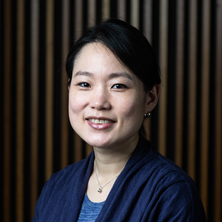
Jiwon Kim is an Associate Professor in Transport Engineering and the Director of Higher Degree by Research in the School of Civil Engineering at the University of Queensland. She was a DECRA Fellow (2019-2022) sponsored by the Australian Research Council. She joined UQ in 2014 after completing her PhD research at Northwestern University. Prior to joining Northwestern, she worked at Samsung C&T (Engineering & Construction Group). She received Bachelor’s and Master’s degrees in civil engineering from Korea University.
Her research interests broadly encompass the application of Artificial Intelligence and Machine Learning (AI/ML) to enhance prediction, automation, and insight generation in transportation and urban mobility. She is passionate about developing intelligent autonomous systems that facilitate real-time traffic management and control, mobility service optimization, and traveller support. Her current research explores the potential of deep learning, reinforcement learning, and other cutting-edge AI/ML approaches to achieve these objectives.
Affiliate of Research Centre in Creative Arts and Human Flourishing
Research Centre in Creative Arts and Human Flourishing
Faculty of Humanities, Arts and Social Sciences
Associate Professor
School of Music
Faculty of Humanities, Arts and Social Sciences
Availability:
Not available for supervision
Media expert
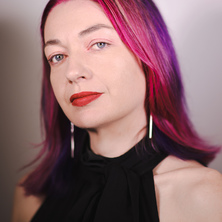
Associate Professor Eve Klein’s compositions have been called vivid, revolutionary, inclusive, moving and must-see. Winner of the 2023 Art Music Award for Experimental Practice, Klein brings orchestral music into dialogue with immersive and interactive technologies for screen, art music and mass festival audiences. Klein's work has been experienced by hundreds of thousands of people globally at Salisbury Cathedral, Burning Man, New York University, VIVID Sydney, MONA, GOMA, Brisbane Festival, World Science Festival, the Arts Centre Melbourne and the State Library of Queensland. As Lead Composer for Textile Audio, Eve crafts City Symphony, an interactive AR music experience overlaying Brisbane CBD (available via iOS and Android app stores).
Klein creates artworks in collaboration with community groups, festivals, researchers, and NGOs to achieve community transformation goals. Recent projects have explored gendered and racial violence, climate change, disaster recovery and refugee rights. Klein's work, Vocal Womb, is an example of this practice, allowing the audience to explore the relationship between voice, identity and power by stepping into and directly manipulating the voice of another. The premier was called the "#1 coolest thing at MOFO 2018" (Timeout Melbourne) and "One of the must-see music/artworks of the 2018 festival... a deeply considered engagement with the history and traditions of opera" (The Conversation).
Klein is Associate Professor of Music Technology, leading an interactive music and spatial audio research cluster at the University of Queensland, guiding postgraduate composers on the creation of immersive, interacitve, virtual reality and augmented reality concert works and operas.
"This is contemporary music at its most relevant – it is simultaneously inward and outward focused in addressing the challenge of its existence and its capacity to produce something great.” - Melonie Bayl-Smith, Cyclic Defrost, Issue 31
“Excellence in Experimental Practice was awarded to Eve Klein for City Symphony, a Brisbane sound walk revolutionising audiences' engagement with urban environments, underpinned by an ethos of collaborative inclusivity and accessibility.” -Australian Music Centre
“One of the must-see music/art works of the 2018 festival was Eve Klein’s Vocal Womb … a deeply considered engagement with the history and traditions of opera.” - Svenja J. Kratz -The Conversation
Affiliate of Queensland Centre for Population Research
Queensland Centre for Population Research
Faculty of Science
Senior Lecturer in Geography
School of the Environment
Faculty of Science
Availability:
Not available for supervision
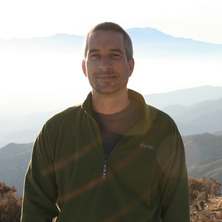
Dr. Lieske’s overarching research theme is spatial decision support. Topics include city analytics, the costs of sprawl, planning support system theory and implementation as well as regional environmental change. Additional areas of expertise include the effective use of geographic visualisation as a communication and decision support tool.
Affiliate of Centre of Architecture, Theory, Culture, and History
Centre of Architecture, Theory, Culture and History
Faculty of Engineering, Architecture and Information Technology
Professor in Architecture
School of Architecture, Design and Planning
Faculty of Engineering, Architecture and Information Technology
Availability:
Available for supervision
Media expert
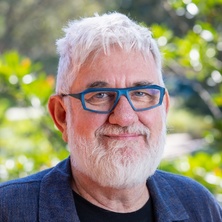
John Macarthur is Professor of architecture at the University of Queensland where he conducts research and teaches in the history and theory of architecture, and in architectural design. John graduated from the University of Queensland with Bachelor (Hons 1st) and Master of Design Studies degrees (1984) before taking a doctorate at the University of Cambridge (1989). He is a Fellow of the Australian Academy of Humanities and a Fellow of the Queensland Academy of Arts and Sciences. He was the founding Director of the research centre for Architecture, Theory, Criticism and History (ATCH) and remains an active member of the Centre. He has previously served as Dean and Head of the School of Architecture at UQ and as a member of the Australian Research Council’s College of Experts. He is a past President and a Life Member of the Society of Architectural Historians, Australia and New Zealand.
His research in the intellectual history architecture has focused on the conceptual framework of the interrelation of architecture, aesthetics and the arts. His book The Picturesque: architecture, disgust and other irregularities, was published by Routledge in 2007. John has edited and authored a further tenbooks and published over 150 papers including contributions to the journals Assemblage, Transition, Architecture Research Quarterly, Oase and the Journal of Architecture. John's book Is Architecture Art? an introduction to the aesthetics of architecture, was published in December 2024..
Memberships
Fellow, Australian Academy of Humanities Fellow; Queensland Academy of Arts and Sciences; Life Member, Society of Architectural Historians, Australia and New Zealand
School of Electrical Engineering and Computer Science
Faculty of Engineering, Architecture and Information Technology
Availability:
Not available for supervision
Lorna Macdonald delivers courses at the intersection of design, technology and humanity at The University of Queensland. Her interaction & technology interests lean towards the tangible and physical. Her research focus is on location-based systems & reinventing the value of design frameworks for education.
School of Electrical Engineering and Computer Science
Faculty of Engineering, Architecture and Information Technology
Availability:
Available for supervision
Media expert
I study design as a collaborative process that materialises alternative social futures. Those futures are sometimes new products, systems, services, infrastructures and technologies. But they can also be social contracts, agreements, processes, ways of working and new possibilities for our collective lives together.
I currently lead research projects in three broad domains: designing advocacy, designing the materials of participation, and augmenting skill and expertise through design.
The designing advocacy project has worked with a range of stakeholders with reduced agency such as people with mental health needs, chronic illnesses, injured workers, and other stigmatised or at-risk groups. We have developed methods for the inclusion of their perspectives in design processes, insights about their specific conditions and needs, critical analyses of how they are conceptualised from the perspectives of technologists and service providers, and design proposals for services and technologies that amplify their agency.
The designing the materials of participation project develops formats and processes for participatory design—the inclusion of stakeholders in the design of systems that will affect the organisation of their work and life. In this project we study how technologies and systems are used in microanalytic detail, analysing how tools and materials shape people's interactions. We use this understanding as a basis for the design of new methods and processes (and sometimes new matierals) for involving people in the design process, and giving them greater autonomy over the systems they will use.
The augmenting skill and expertise through design project studies specialist work practices for the purposes of developing technology support for that work. We have worked with aeromedical teams, audiologists, passport officers, emergency first responders, quick service chefs, primary school teachers, and other professional contexts of use to understand the local and particular skills that enable those workplaces to function effectively and collaboratively. We use these understandings to inform the deisgn of technologies and work practices that support, and preserve, those core professional skills.
The constants across these projects relate to the design process—the methods used to understand people, identify design opportunities, facilitate collaboration between project stakeholders, champion users' contexts and requirements, prototype early solutions, evaluate concepts in the field, and build new technologies. This results in a variety of research contributions: new design methods and perspectives that have been tailored for specific contexts of use, identification of the potentials and limitations of different approaches to design and analysis, the discovery of context-specific issues for the design of new systems, new understandings of people, their work and contexts of use, and the design and evaluation of bespoke technologies.
Affiliate of Centre of Architecture, Theory, Culture, and History
Centre of Architecture, Theory, Culture and History
Faculty of Engineering, Architecture and Information Technology
Professorial Research Fellow
School of Architecture, Design and Planning
Faculty of Engineering, Architecture and Information Technology
Availability:
Available for supervision
Media expert
Professor Paul Memmott is an anthropologist and architect and for some decades was the Director of the Aboriginal Environments Research Centre at the University of Queensland (School of Architecture and Institute for Social Science Research). This has now become the Aboriginal Environments Research Collaborative (AERC) within the School of Architecture, Design and Planning. The AERC has provided and continues to provide an applied research focus on a range of topics in relation to Indigenous populations, including institutional architecture, vernacular architecture, housing, crowding, governance, well-being, homelessness, family violence and social planning for communities.
Paul was the first full-time architectural-anthropological consultant in Australia, being principal of a research consultancy practice in Aboriginal projects during 1980 to 2008. His research interests encompass Aboriginal sustainable housing and settlement design, Aboriginal access to institutional architecture, Indigenous constructs of place and cultural heritage, vernacular architecture, social planning in Indigenous communities, cultural change and architectural anthropology.
Paul’s scholarly research output includes over 300 publications (including 11 books and monographs), 215 applied research reports and 40 competitive grants. He has supervised over 50 postgraduate and honours students and has won a number of prestigious teaching awards in Indigenous education (including an Australian Award for University Teaching – AAUT). One of his books, titled 'Gunyah, Goondie + Wurley: Aboriginal Architecture of Australia', received three national book awards in 2008 (Edition 1), including the prestigious Stanner Award from the Australian Institute of Aboriginal and Torres Strait Islander Studies, and then upon the publication of an expanded edition 2 in 2022, another three national book awards.
Paul also has extensive professional anthropological experience in Aboriginal land rights claims, Native Title claims and associated court work since 1980. He has presented evidence and been examined in a variety of Australian courts as an expert witness on a cross-section of Indigenous issues, in addition to the Native Title work.
Awards
AIA Neville Quarry Award, 2015
Best Exhibit, Australian Architectural Exhibit, Venice Biennale 2018 (Team led by Baracco + Wright Architects, Melbourne)
Memberships
Life Member, Academy of Social Sciences (Australia)
Affiliate of Centre of Architecture, Theory, Culture, and History
Centre of Architecture, Theory, Culture and History
Faculty of Engineering, Architecture and Information Technology
Associate Professor in Architecture
School of Architecture, Design and Planning
Faculty of Engineering, Architecture and Information Technology
Availability:
Available for supervision
Media expert
Dr Silvia Micheli (BArch Politecnico di Milano; PhD, IUAV, Venice) is Associate Professor and Program Convener of the Bachelor of Architectural Design. She joined The University of Queensland in 2012 after 5-year of teaching and research at the Politecnico di Milano. Dr Micheli works across design and history of architecture.
Her design research is cross-disciplinary, focusing on the notion of ‘productive city’ and how small-scale projects can enhance liveability and resilience in our communities. Her forthcoming co-authored book, House, Precinct and Territory: Design Strategies for the Productive City (ORO, 2024) discusses concrete scenarios for urban production. Dr Micheli is concurrently investigating strategies to enhance urban horticulture and farming practices through design to increase food security in the urban environment.
Dr Micheli is an accomplished scholar with a strong track record in contemporary architectural studies and a wide range of outputs, including exhibitions, NTROs and publications. She is co-curator of the forthcoming exhibition on the work of AIA gold medallist Enrico Taglietti, in partnership with the Canberra Museum and Gallery (CMAG). She co-designed the Blue Bower Pavilion, recipient of the Crossroads Prize at the 2021 Seoul Biennale of Architecture and Urbanism, as a manifesto of urban resilience during COVID19. In 2018, Silvia's co-designed the multi-awarded residential building One Room Tower, a demonstration project for the densification of the city.
Amongst Dr Micheli’s publications, there is her co-authored critical book on the mechanism of cultural production in late 20th century, Paolo Portoghesi: Architecture between History, Politics and Media (Bloomsbury, 2023); the co-edited volume Italy/Australia: Postmodern Architecture in Translation (URO, 2018), that reflects on the influence of Italian design culture on Australian architecture; the co-edited book Aalto beyond Finland: Buildings, Projects and Network (Helsinki, 2018), which explores the global reach of the work of Finnish architect Alvar Aalto and her contribution to the travelling exhibition catalogue Alvar Aalto: Second Nature, (Vitra Design Musem, 2014), with an essay on the impact of Italian urban culture on Aalto’s design approach.
Contextually, Silvia has also co-authored the book Storia dell’architettura italiana 1985–2015 (Turin, 2013), which reflects on the mechanisms of architectural production in contemporary Italy; co-edited the volume Italia 60/70. Una stagione dell’architettura (Padua, 2010); solo-authored the volume Erik Bryggman 1891–1955. Architettura Moderna in Finlandia (Rome, 2009). Her first co-authored book, Lo spettacolo dell'Architettura: Profilo dell'ArchistarÓ, looks at the power of media in the making of design culture.
Dr Micheli has a range of international collaborations with cultural institutions, such as the Seoul Biennale of Architecture and Urbanism, Triennale di Milano, Centre Pompidou, MAXXI Museum, Alvar Aalto Foundation and Vitra Design Museum. She has also liaised with prestigious academic institutions, including Seoul National University, Berlage Institute, Politecnico di Milano and University of Manchester. In 2019, Dr Micheli was Visiting Professor at the School of Art and Design at the Guangdong University of Technology, China.
Since 2016, Dr Micheli has assisted to secure DFAT funding to foster UQ students mobility in the Asia Pacific Region, liaising with international academic and industry partners in Ho Chi Minh City, Hanoi, Singapore, Hong Kong and Seoul.
Dr Silvia Micheli is a registered architect (Board of Architects, Lecco, Italy) and member of the editorial board of the Springer book series Transnational Histories of Design Cultures and Production.
Faculty of Engineering, Architecture and Information Technology
Availability:
Available for supervision
Media expert
Dr Mehrnoosh Mirzaei is an interdisciplinary designer, design researcher, and educator. She is a Lecturer in Design at the School of Architecture, Design and Planning, The University of Queensland (UQ). She holds a Bachelor’s and Master’s degree in Industrial Design from the University of Tehran, specialising in Product Design, and completed her PhD at the Queensland University of Technology (QUT) in 2023. Her doctoral research explored the potential of experiential learning and embodiment within disaster risk reduction (DRR) education for children, using Research-through-Design and participatory methods. The study produced a three-step design model for creating child-centred, inclusive, and practitioner-friendly DRR learning frameworks. Her research is interdisciplinary, addressing complex social and environmental challenges through design-led approaches that bridge education, community resilience, and health. Mehrnoosh’s work focuses on enhancing climate adaptation, risk perception, and well-being through participatory and embodied design methods. She leads and collaborates on projects such as the Tropical Bus Stop (TAP) project and Resilient by Design, which connect design research with real-world impact across communities, local governments, and industry.
Beyond academia, Mehrnoosh has extensive professional experience as an industrial designer, with a portfolio spanning the automotive, homeware, and toy industries, and she received the Bronze A’ Design Award (2017) for her work “Escher.” She also partners with government and health organisations to develop co-design frameworks and user engagement tools, including design-driven risk awareness programs for children and healthcare system design improvements. Mehrnoosh integrates these experiences into her teaching, advancing interdisciplinary and user-centred design practice to prepare the next generation of designers for complex societal challenges.
Affiliate of ARC Research Hub to Advance Timber for Australia's Future Built Environment (ARC Advanc
ARC Research Hub to Advance Timber for Australia's Future Built Environment
Faculty of Engineering, Architecture and Information Technology
Lecturer
School of Civil Engineering
Faculty of Engineering, Architecture and Information Technology
Availability:
Available for supervision
David Morrisset joined the School of Civil Engineering in November 2024 as a Lecturer in Fire Safety Engineering. Prior to his appointment at UQ, Dr Morrisset completed his PhD in Fire Safety Engineering at the University of Edinburgh. His research interest cover a broad range of fire safety and combustion science related topics including material flammability, fire testing, fire performance of timber, lithium-ion batteries, combustible cladding, and advanced measurement techniques (e.g., laser diagnostics). In addition to his research experience, he also has experience working as a fire safety engineer in both the United Sates and Australia.
Faculty of Engineering, Architecture and Information Technology
Availability:
Available for supervision
Media expert
Antony Moulis is Professor in the School of Architecture, Design and Planning at the University of Queensland, where he teaches and researches across the fields of architecture, urbanism and design. His current research focuses on productive cities and urban retrofit as drivers of positive community change, as featured in the jointly-authored book House, Precinct, Territory: Design Strategies for the Productive City (ORO, 2023) which addresses urban innovation and adaptation in the Asia-Pacific. He is internationally recognised for his work on architectural design practice and patterns of global knowledge transfer. Recent books include the co-authored John Andrews: Architect of Uncommon Sense (Harvard University Press, 2023), which investigates strategies of ecological design in the international context; the sole-authored Le Corbusier in the Antipodes: Art, Architecture and Urbanism (Routledge, 2021) a first account of the modern architect’s reception, encounters and global networks in Australasia, and the co-edited 4-volume anthology, Le Corbusier: Critical Concepts in Architecture (Routledge, 2018), a detailed historiographic survey of writings on, and by, the architect from 1920 to the present. Moulis' research through design involves active collaboration with industry and architectural and urban practices. Co-designed built and speculative projects highlighting micro-urban and resilience strategies for contemporary cities have been awarded, exhibited and published internationally including through journals such as Architecture Australia, The Architectural Review, and GA Houses: the recent books The New Queensland House (Thames & Hudson, 2022) and 33 Documents of Contemporary Australian Architecture (URO, 2022); and exhibited at 2021 Seoul Biennale of Architecture and Urbanism. Moulis oversaw UQ Architecture's participation in the Water Sensitive Cities CRC – a national team of academics and designers developing strategies for urban intensification and green infrastructure. His architectural writing and research spans professional and academic journals, including critical commentary on contemporary architecture.
Awards
The Productive Edge - phorm architecture+design with Silvia Micheli and Antony Moulis
2025 Architecture Australia Prize for Unbuilt Work - Special Mention
One Room Tower - phorm architecture+design with Silvia Micheli and Antony Moulis
House of the Year, Brisbane Region, Australian Institute of Architects, Queensland Awards 2018
Brisbane Regional Commendation, Residential Architecture - Houses (Alterations and Additions), Australian Institute of Architects, Queensland Awards 2018
State Award, Residential Architecture - Houses (Alterations and Additions), Australian Institute of Architects, Queensland Awards 2018
Blue Bower - phorm architecture+design with Silvia Micheli and Antony Moulis
Crossroads X Prize, Seoul Biennale of Architecture and Urbanism 2021
Greater Brisbane Region Commendation, Australian Institute of Architects, Queensland Awards 2023
State Commendation for Small Project Architecture – Australian Institute of Architects, Queensland Awards 2023
Memberships and Roles
Past President, Society of Architectural Historians, Australia and New Zealand (SAHANZ) (2013-2015)
Member, Society of Architectural Historians Australia and New Zealand (SAHANZ)
Member, European Architectural History Network
Head of Architecture & Program Director, School of Geography, Planning and Architecture (2004-2008)
Affiliate of Centre of Architecture, Theory, Culture, and History
Centre of Architecture, Theory, Culture and History
Faculty of Engineering, Architecture and Information Technology
Senior Lecturer in Architecture
School of Architecture, Design and Planning
Faculty of Engineering, Architecture and Information Technology
Availability:
Available for supervision
Media expert
Tim O’Rourke's research investigates past and present applications of cross-cultural design across different building types and settings. Such projects often require multi-disciplinary approaches to the study of architectural problems, informed by the histories of buildings and the people who use them. A Discovery Project on healthcare architecture combined different research methods to ask if design can improve the experience and participation of Aboriginal and Torres Strait Islander people in hospitals and clinics.
Tim's current research focuses on the design and social histories of Indigenous housing from the 1950s assimilation era to the 2000s. These studies seek to answer questions about design intentions and the origins, development and evaluation of architectural methods that improved public housing for Aboriginal and Torres Strait Islander people. His PhD examined the history and use of Aboriginal building traditions in the Wet Tropics Region of Queensland. He has contributed to a range of research projects related to Indigenous housing, settlements and landscapes. Research topics include self-constructed dwellings and vernacular building technologies, cultural tourism, adaption to climate change and housing sustainability. Results from these studies have been published in technical reports, conference proceedings, journals and book chapters.
Tim is a registered architect, having worked in architectural practices in Brisbane and Sydney, and he maintains an interest in timber construction and joinery. As a sole practitioner, he has designed residential projects and worked on a range of building types for Aboriginal communities. He teaches architectural technology and design and has offered a range of research topics in the Master of Architecture program.
Memberships
Fellow Australian Institute of Architects
Society of Architectural Historians Australia and New Zealand
Affiliate of ARC Research Hub to Advance Timber for Australia's Future Built Environment (ARC Advanc
ARC Research Hub to Advance Timber for Australia's Future Built Environment
Faculty of Engineering, Architecture and Information Technology
Senior Lecturer
School of Civil Engineering
Faculty of Engineering, Architecture and Information Technology
Availability:
Available for supervision
Media expert
Dr Ottenhaus is a structural engineer and senior lecturer, with expertise in design of timber connections. Their research interests encompass the theory, analysis, design and performance of timber connections, including detailing for timber durability. Dr Ottenhaus and their team research offsite timber construction using both engineered wood products and light timber framing, design for adaptability, disassembly and reuse, and reversible timber joints.
As part of the ARC Advance Timber Hub, Dr Ottenhaus co-leads Node 3 on Extending Building Life, and project 1.2 on timber connections. They serve as a committee member of TM-010 (Australian Standards technical committee on Timber Structures and Framing), and a steering committee member of the Australian Timber Construction Educator Network.
Dr Ottenhaus has been an invited speaker at the prefabAUS Offsite conference, the Brisbane Architecture and Design Festival, the International Holzbau Forum (Innsbruck, Austria) and has been interviewed by the Guardian, ABC Radio, Built Offsite, and the Holzmagazin.
Dr Ann Peterson’s research interests are in: Coastal planning, management and governance, Integrated buffer planning, Regional planning (nature conservation and open space), Planning policy and governance and Integrated landscape planning.
She received her PhD from the University of Queensland in 2002. Her current research projects are in the fields of:
Coastal planning and managementNatural resource management and planningIntegrated Buffer PlanningRegional planning
Professor Pitsis is a globally renowned expert in the strategic design and management of complex and high-risk projects. These projects range from Olympic infrastructure, deep tech quantum computing. Most recently, he is working on AI agent adoption and trust and its role in decision-making under extremely volatile conditions. He is an ideal person to speak on making the impossible possible, and the strategic and managerial constraints and opportunities of engaging and investing in high-risk, but high-reward, projects.
He is the recipient of several awards for his research. Most recently, he and his co-authors were Finalists for the 2025 Responsible Research in Management Award, co-sponsored by the Academy of Management Fellows Group and the Community for Responsible Research in Business and Management (RRBM) at The Academy of Management Annual Conference for their research on ColaLife, a temporary organisation that successfully eradicated childhood mortality due to diarrhoea in Zambia. Other awards have included the Emerald Science Citation of Excellence and the Paper of the Year Award (Human Relations).
He has published in several FT50 and other highly regarded academic and practitioner journals (including Academy of Management Learning and Education, Organization Science, Organization Studies, Long Range Planning, Journal of Management Studies, Human Relations, California Management Review, and Management Learning, amongst others). He is also a co-author of critically acclaimed and best-selling texts in management and innovation.
He has appeared on the radio (ABC) and television (BBC), in addition to podcasts in the UK and the USA. He has also provided strategic advice and leadership development for several major projects and organisations, including the Royal Air Force (Plan Astra), Royal Australian Air Force (Air Force Improvement Program), Reserve Bank of Australia, Reserve Bank of India, Commonwealth Bank of Australia, BorgWarner (Sevcon), TNT, KONNE, just to name a few.
Affiliate of Centre of Architecture, Theory, Culture, and History
Centre of Architecture, Theory, Culture and History
Faculty of Engineering, Architecture and Information Technology
Associate Professor, Urban Planning
School of Architecture, Design and Planning
Faculty of Engineering, Architecture and Information Technology
Availability:
Available for supervision
Media expert
I am an Associate Professor in the School of Architecture, Design and Planning. Since joining the University of Queensland in 2015, my research has focused on the built environment triad: urban design, mobility, and housing - in both the Global North and South. I approach my work from a feminist perspective, considering the role of gender in the city.
My personal and academic journey has been international in nature. I am a native of Albania. Over the years I have held guest teaching and/or research positions in Austria (UWien), Canada (UBC), Chile (PUC), Italy (IUAV), the Netherlands (UvA/TUD), Oman (GUTech), and Vietnam (UTC), and I have provided consultancy services to various United Nations agencies including the UNDP, UNESCAP, and UN Habitat. I speak Italian, Spanish, and French in addition to English and Albanian.
My latest books are Trophy Cities: A Feminist Perspective on New Capitals (Edward Elgar, 2021), Alternative Planning History and Theory (Routledge, 2023), Planning as Political Theatre: Chronicle of Two Megaprojects Foretold (Routledge, 2025), and Early Planning Utopias: A Feminist Critique (Anthem Press, 2025). For five consecutive years (2021-2025), I have been included in the 'Stanford/Elsevier World’s Top 2% Researchers' list, and have ranked among the top-ten 'urban and regional planning' researchers in Australia. Alongside my academic research, I also publish broadly in non-academic outlets and regularly give interviews on national and international media. My articles in The Conversation have reached nearly a million readers. Prior to joining academia, I worked in urban design and planning in California. My research has been funded by domestic and international granting bodies, including the Australian Research Council. I have attracted more than $1 million in grant funding.
My funded projects are listed below. For a full list of my publications, click the 'Works' tab, which displays results live from UQ eSpace, or visit my external profiles listed on the left panel.
Faculty of Engineering, Architecture and Information Technology
Availability:
Not available for supervision
Marguerite Renouf BSc(Hons)/BA, PhD (Env Man) UQ is a Research Fellow at the School of Chemical Engineering's Water-Energy-Carbon Research Group (www.chemeng.uq.edu.au/water-energy-carbon).
She has worked in environmental research at UQ for 20 years, with a particular interest in the environmental evaluation of production systems and urban systems using environmental life cycle assessment (LCA), urban metabolism evaluation and eco-efficiency analysis. She is interested how we can produce and consume with less drain on the environment.
Since completing a PhD in 2011, she has driven a stream of research that evaluates the environmental performance of agri-based product supply chains and products (bio-fuels, bio-materials, food, beverages) using LCA. She has collaborated with industries and researchers in Australia and overseas to develop LCA tools for industry to support the identification of more environmentally-friendly production practices and processes.
Prior to this, her research was concerned with eco-efficiency in manufacturing industries (food processing, metal industries, retail and tourism sectors) and was a long-term contributor to UQ’s Working Group for Cleaner Production (now operating as the Eco-Efficienc Group), and its Director for three years (2009-2012).
Currently, Marguerite is a lead researcher with the CRC for Water Sensitive Cities, develop methods and metrics for quantifiying the water water-sensitive performance of Australian cities, using urban metabolism approaches. In this work she collaborates cloesely with urban planners, water manager and architects.
Faculty of Engineering, Architecture and Information Technology
Associate Professor
School of the Environment
Faculty of Science
Availability:
Available for supervision
Media expert
Sonia Roitman is an urban sociologist and planner by training. Her contributions to the field of development planning and urban sociology include influential research on urban inequalities and how they manifest in cities. Her research interests include housing and poverty alleviation policies; the role of grassroots organisations in urban planning; disaster planning and informal practices; and, gated communities, segregation and planning instruments in Global South cities. Her main research locations are Indonesia, Samoa, Uganda, Argentina and Australia. Her most recent book is: Rukmana, D. and Roitman, S. (Eds), 2026, Growth of a megacity: Planning Jakarta in the Post-Suburban Era, University of Hawaii Press, Honolulu.
Teaching responsibilities
PLAN1101 Teamwork and negotiation for planners (Course coordinator and lecturer - 2021 and 2022)
PLAN3005/7121 Community planning and participation (Course coordinator and lecturer - 2019 to date)
PLAN3200/7200 Understanding development complexities: Indonesia fieldtrip course (Course coordinator and lecturer - 2015 to date)
PLAN4001/7120 Planning theory (Guest lecturer 2014-2019)
PLAN7010 Planning project (Course coordinator and lecturer - 2015-2016)
PLAN7612 Global South Cities (Course coordinator and lecturer - 2014 to date)
PLAN7614 Urban management and governance (Guest lecturer 2013-2016)
PLAN7638 Assessment of development projects (Course coordinator and lecturer 2013-2015 and lecturer 2016)
SOSC7140 Development effectiveness (Lecturer 2017)
ENVM2100/7100 Sustainable Development (Guest lecturer 2013)
GEOS3102 Global change: Problems and prospects (Guest lecturer 2022-2023)
Service and Engagement
UQ Academic Board (2025 to date) and Academic Board Executive Committee (2026-2027)
Deputy Director Teaching and Learning, School of Architecture, Design and Planning (2026 to date)
Master of Urban Planning Student Advisor (2025-2026)
Planning Program Convenor Bachelor of Regional and Town Planning and Master of Urban and Regional Planning (2023- 2024)
Planning Program Lead, UQ (2019-2023)
Student Advisor Bachelor of Urban and Regional Planning (BRTP) and Master of Urban and Regional Planning (MURP), UQ (Jan 2019- Dec 2020)
Planning Institute of Australia UQ Representative (since 2019)
Full Member of Planning Institute of Australia
Board Member RC21 Committee (Research Committee of the Sociology of Urban and Regional Development), International Sociological Association (2014-2023)
Specialty Chief Editor Urban Sociology, Frontiers in Sociology Journal (2025 - to date)
Scientific Committee Member of Prospectiva Journal (Revista Prospectiva, Universidad del Valle, Colombia) (since 2015)
Scientific Committee Member of Bitácora Urbano-Territorial Journal (Revista Bitácora Urbano-Territorial, Universidad Nacional de Colombia (since 2012)
Editorial Member of Journal of City and Regional Development (Jurnal Penbangunan Wilayah & Kota, Universitas Diponegoro, Indonesia) (since 2018)
Affiliate Associate Professor of Centre for Social Responsibility in Mining
Centre for Social Responsibility in Mining
Faculty of Engineering, Architecture and Information Technology
Associate Professor
School of Chemical Engineering
Faculty of Engineering, Architecture and Information Technology
Affiliate of W.H. Bryan Mining and Geology Research Centre
WH Bryan Mining Geology Research Centre
Faculty of Engineering, Architecture and Information Technology
Affiliate of Centre for Social Responsibility in Mining
Centre for Social Responsibility in Mining
Faculty of Engineering, Architecture and Information Technology
Principal Research Fellow
Sustainable Minerals Institute
Faculty of Engineering, Architecture and Information Technology
Availability:
Available for supervision
Media expert
Vigya is a Principal Research Fellow at the Centre for Social Responsibility in Mining (CSRM), part of the Sustainable Minerals Institute (SMI) at The University of Queensland, Australia
Vigya has degrees in engineering and social science, and she applies this interdisciplinary training to research complex social, institutional and economic aspects of the modern energy and mining sectors globally. Specifically, her interest is in understanding how the presence (or absence) of resources impacts development outcomes in host communities and regions. Her current research projects examine this complexity across the energy transition chain: from fossil fuel transition in coal-dependent regions to energy transition mineral mining and large-scale renewable energy production systems (including the role of Indigenous co-ownership).
Vigya has a part-time appointment with the School of Chemical Engineering, where she coordinates a course on Humanitarian Engineering. She led the course design in 2020 and has been its primary instructor since. The course is offered to students from across UQ's Faculty of Engineering, Architecture and Information Technology (EAIT). She is also the SMI's Director of Teaching and Learning, leading the design of a new Master's program in Sustainable Resources, tentatively scheduled for delivery in early 2028.
She advises several PhD students on energy transitions, just transitions, mine closure, and energy and development.
Vigya has an active service profile both within and outside UQ. She is the Deputy Chair of the EAIT Faculty Low and Negligible Risk (LNR) Ethics Committee. She serves on the Editorial Boards of Energy Research and Social Science and Sustainability Science. Since 2023, she has been a member of the UN Council of Engineers for the Energy Transition (CEET), established at COP27. CEET is an Independent Advisory Council to the UN Secretary-General, to contribute to their goal to build a coalition to achieve carbon neutrality by 2050, and to support the United Nations to achieve global decarbonisation goals by mid-century.
Prior to joining CSRM, she was based at the Energy Poverty Research Group (EPRG), an interdisciplinary pan-UQ initiative established to support positive social, environmental and health outcomes vital for sustainable and productive livelihoods in energy-impoverished communities globally.
Dr. Maram Shaweesh's is a qualitative researcher. Her interdisciplinary research spans several humanities and spatial disciplines, including architecture, housing adequacy, migration, multiculturalism, everyday encounters in the Australian suburb, urban design, and young people's experiences in urban spaces.
Maram has conducted various research projects focused on housing. For instance, she investigated everyday life in suburban housing as experienced by the Australian Lebanese community. This research utilised social qualitative research methods to explore the relationship between housing design and policy, and the social and cultural context in Australia, such as changing family ideals, household composition, children's wellbeing, parenting values, and social marginalisation. Additionally, Maram has experience working with remote Indigenous communities, having contributed to the "Gunana Futures" research project investigating housing adequacy in Mornington Island.
Maram was also involved in the team working on the Growing Up in Logan project as part of Growing Up in Cities. Collaborating with Logan City Council (CityStudio) and Beenleigh State High School, the project aims to understand adolescents' perceptions of urban space to better comprehend how local environments impact their everyday lives.
As part of her role at the UQ Institute for Social Science Research, Maram worked across several externally and internally funded projects, including Foundation Partner for a National Centre for Place-Based Collaboration (Nexus Centre for place-based collaboration); Targeted Review of Student Equity in Higher Education Programs and System Level Policy Levers; Social Isolation and Loneliness - Research, Analysis and Best Practice; SMBI Community Intiative - Learning by doing; Empowered Communities Partnership Lessons Learned Project; Place-based Approaches to Road Safety; and, Sharing with Friends (co-housing model for older women in Australia).