Faculty of Health, Medicine and Behavioural Sciences
Availability:
Available for supervision
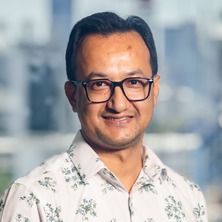
Cristian Riveros-Matthey is a dedicated and highly motivated researcher with a strong academic background in biomechanics and motor control, holding a PhD from the School of Human Movement and Nutrition Sciences (HMNS) at The University of Queensland.
He has demonstrated expertise in applying advanced technologies for human movement analysis, including markerless 3D motion capture systems, force sensors, surface and high-density electromyography (hdEMG), and ultrasound imaging. He is also proficient in data analysis and signal processing using MATLAB and Python.
Cristian’s research focuses on musculoskeletal simulation and optimisation to investigate the principles underlying action selection and the cost functions that drive human movement in constrained locomotor tasks, such as cycling, level walking, and uphill walking.
Faculty of Health, Medicine and Behavioural Sciences
Availability:
Not available for supervision
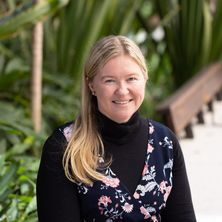
Dr Floraidh Rolf is the Deputy Director (South West) for Southern Queensland Rural Health in Charleville Queensland, as well as an educator, researcher and nurse. She is a strong supporter of social justice and activism in healthcare, in particular the duty to address gaps in the care afforded to disenfranchised and vulnerable populations.
Floraidh's background encompasses mental health, critical care, rural and remote health, and higher education. Her research interests include sociological approaches to nursing and health, power and stigma, and qualitative methodology. She is committed to supporting social change through collaborative research.
Faculty of Health, Medicine and Behavioural Sciences
Availability:
Not available for supervision
Media expert
Tanya is a certified practising speech-language pathologist who has a particular clinical and research interest in both paediatric and adult language. She has experience in conducting mixed-methods studies.
Tanya’s research interests include exploring family-centred models of care and client outcomes using the International Classification of Functioning, Disability and Health framework when working with young children who are ‘late talkers’ or who have a developmental language delay/disorder and their families.
Tanya is also passionate about the provision of accessible health information to adults who have aphasia post-stroke and to their family members. Tanya undertook her doctoral research within the Communication Disability Centre (CDC) at The University of Queensland. She is particularly interested in patient education and ensuring people with aphasia, their family, and friends receive appropriate health information and access to services across the continuum of care.
Affiliate of Centre for the Business and Economics of Health
Centre for the Business and Economics of Health
Faculty of Business, Economics and Law
Affiliate of Centre for Innovation in Pain and Health Research (CIPHeR)
Centre for Innovation in Pain and Health Research
Faculty of Health, Medicine and Behavioural Sciences
Senior Research Fellow
School of Health and Rehabilitation Sciences
Faculty of Health, Medicine and Behavioural Sciences
Availability:
Available for supervision
Media expert
Dr Megan Ross (she/her) is a Specialist Research Physiotherapist and Senior Research Fellow at RECOVER Injury Research Centre, The University of Queensland. She is part of a research team, led by Professor Trevor Russell, which focuses on developing more effective and efficient health services supported by technology innovation. Megan’s current research projects include exploring consumer perspectives of the telerehabilitation service delivery model, factors that influence the uptake and utilisation of telerehabilitation, and exploring the acceptability and usability of digital health innovations. Megan has a broad range of research skills that span both quantitative and qualitative methods and co-design approaches, including systematic reviews, cross-sectional and longitudinal study designs and data analysis, discrete choice experiments, interviews and focus group discussions and thematic analysis.
Dr Ross received a Bachelor of Physiotherapy (with First Class Honours) in 2012 and a PhD in Physiotherapy in 2020 from The University of Queensland. Megan is the inaugural Chair of the Australian Physiotherapy Association’s LGBTQIA+ Advisory Committee, is Deputy Chair of the Australian Physiotherapy Associations’ National Advisory Committee and sits on the Queensland Gender Affirming Network Steering Committee. Dr Ross leads a program of research in the area of LGBTQIA+ experiences of, and access to healthcare with a focus on physiotherapy and allied health. Megan is passionate about ensuring safe and affirming access to healthcare for people with diverse gender identities, sexual orientations and sex characteristics and has received over $1M AUD in funding, including a CIA MRFF grant to co-design, implement and evaluate an LGBTQIA+ affirming model of primary care. The overarching objective of Dr Ross’s work is to improve access to, provision of, and experiences with health care and ultimately contribute to improved health and wellbeing for the LGBTQIA+ communities.
Faculty of Health, Medicine and Behavioural Sciences
Availability:
Available for supervision
Media expert
Ingrid Rowlands’ research is broadly focused on women’s reproductive health, with a particular interest in adverse events and diseases including miscarriage, infertility, endometriosis and gynaecological cancer.
Dr Rowlands' current program of work is conducted in partnership with community and focuses on:
Multidisciplinary care needs of people with endometriosis - QENDOCare
Supportive care interventions in cancer - PROMISE trial
Co-designed, integrated, person-centred models of care for people with innate variations of sex characteristics - Interconnect Health Research
Dr Rowlands is a mixed methods researcher and combines her training in health psychology with her epidemiological skills to understand people's health and wellbeing. Her previous research has focused on:
The causes and consequences of endometriosis in Australia - GELLES
Women’s quality of life following a diagnosis of endometrial (uterine) cancer ANECS. In this role, she also led a qualitative study exploring young women’s fertility concerns following a diagnosis of gynaecological cancer.
Women’s adjustment to miscarriage using data from more than 14,000 young women participating in the Australian Longitudinal Study on Women’s Health - Coping with miscarriage study.
Affiliate of Centre for the Business and Economics of Health
Centre for the Business and Economics of Health
Faculty of Business, Economics and Law
Affiliate of Centre for Innovation in Pain and Health Research (CIPHeR)
Centre for Innovation in Pain and Health Research
Faculty of Health, Medicine and Behavioural Sciences
Affiliate of Centre for Neurorehabilitation, Ageing and Balance Research
Centre for Neurorehabilitation, Ageing and Balance Research
Faculty of Health, Medicine and Behavioural Sciences
Affiliate of RECOVER Injury Research Centre
RECOVER Injury Research Centre
Faculty of Health, Medicine and Behavioural Sciences
Affiliate of Queensland Digital Health Centre
Queensland Digital Health Centre
Faculty of Health, Medicine and Behavioural Sciences
Centre Director
School of Health and Rehabilitation Sciences
Faculty of Health, Medicine and Behavioural Sciences
Availability:
Available for supervision
Media expert
Trevor Russell is a Professor of Physiotherapy and the Director of the RECOVER Injury Research Centre where he leads a stream of research on Technology Enabled Rehabilitation. He is also co-director of both the Centre for Research in Telerehabilitation and the Telerehabilitation Clinic at the University of Queensland. His research focusses on the use of digital technologies for the remote delivery of health services with a particular focus on telerehabilitation technologies. Specifically his research aims to develop innovative computer based hardware and software solutions to enable the provision of rehabilitation services remotely via the Internet; to further the evidence base of technology enabled rehabilitation through controlled clinical trials; to evaluate the treatment efficacy of specific technology enabled interventions; investigate cost-benefit factors related to technology enabled services; and develop best practice guidelines for the implementation of technology enabled services in the rehabilitation sciences. His work is amongst the earliest and most extensive in this field.
Faculty of Health, Medicine and Behavioural Sciences
Associate Professor
School of Human Movement and Nutrition Sciences
Faculty of Health, Medicine and Behavioural Sciences
Availability:
Available for supervision
Media expert
Dr. Steven Rynne is an Associate Professor in Sport Pedagogy and Coaching as well as the Director of Engagement and Partnerships with the School of Human Movement and Nutrition Sciences at The University of Queensland, Australia. The major theme that runs throughout Steven’s work is learning in sport. Within this broad theme he has worked and conducted research with a variety of peak domestic and international sporting bodies aimed at fostering high performance through learning (e.g. how elite coaches learn their craft) and understanding outcomes for sport participants (e.g. sport for reconciliation). Steven teaches undergraduate and graduate students, is a cycling coach and registered HPE teacher, and has been immersed in junior and community sport settings for more than two decades.
Faculty of Health, Medicine and Behavioural Sciences
Availability:
Available for supervision
As a health information and digital health researcher, I am committed to leveraging technology to enhance healthcare delivery, optimize clinical workflows, and improve patient outcomes. My research explores the responsible, evidence-based, and impactful integration of digital health technologies into healthcare systems, focusing on electronic health records, health data analytics, and digital health interventions. With nearly 25 years of experience spanning academia, research, and senior leadership roles, I have contributed to advancing digital health through multidisciplinary collaborations and applied research. My research covers a wide range of topics within digital health such as health data, electronic health records, digital divide in health care, digital health, telehealth, electronic prescription systems, online search behaviour, technology acceptance models, E-health literacy, healthcare dashboard technologies, patient flow, access, and utilisation of health services. I have led and collaborated on multidisciplinary projects, contributing to the development of health data analytics frameworks and AI-driven solutions for healthcare systems. My expertise extends to evaluating digital health interventions and assessing their impact on clinical workflows, patient outcomes, and healthcare efficiency. As a Senior Research Fellow at the Queensland Digital Health Centre (QDHeC), I lead and contribute to research projects that evaluate digital health innovations, assess their impact on health services, and develop frameworks for sustainable technology adoption. My prior role as Director of Research Development and Evaluation at Lorestan University of Medical Sciences further strengthened my ability to lead large-scale health research initiatives and influence policy-driven healthcare transformation. I have successfully secured competitive research funding and published extensively in high-impact journals. I currently supervise PhD and higher-degree students and serve as a peer reviewer for academic journals in digital health and health services research.
Faculty of Health, Medicine and Behavioural Sciences
Availability:
Available for supervision
Media expert
I build quantitative systems for understanding how humans move, perform, using data from wearable sensors in real-world conditions.
My work sits at the intersection of machine learning, signal processing, and sports and health science. I develop the analytical infrastructure that makes large-scale, free-living sensor research feasible: pipelines for IMU and GNSS data, predictive models for physical activity and pain dynamics, and validation frameworks for wearable devices.
At UQ, I contribute to the CIPHeR program (NIH/NHMRC-funded), investigating mechanisms of chronic low back pain through longitudinal modelling of movement, sleep, stress, and pain. I also lead Metric Trails, an applied R&D initiative developing high-precision geospatial standards for trail and mountain running.
My background spans academia and industry. Before UQ, I led data science teams at LATAM Airlines and built research programs in wearable analytics and geospatial modelling at Adolfo Ibáñez University in Chile, where I supervised 19 postgraduate theses.
I work across disciplines, with physiotherapists, sports scientists, engineers, and clinicians, and across an international network of collaborators in Australia, Chile, Norway and Spain.
Faculty of Health, Medicine and Behavioural Sciences
Availability:
Available for supervision
A/Prof Benn Sartorius is an established spatial and global health epidemiologist, with a particular interest in the burden of infectious disease and attributable determinants at sub-national, national and global scales as a tool to help inform and optimise policy at national and subnational scales. Dr Sartorius a principal research fellow in UQ's ODeSI team at University of Queensland, an affiliate professor in Department of Health Metric Sciences at University of Washington and a honorary visiting research fellow at University of Oxfored. Prior to join UQ, Dr Sartorius was the principal investigator for the Global Research on Antimicrobial Resistance (GRAM) Project based in the Centre for Tropical Medicine and Global Health at University of Oxford.
Dr Sartorius' research has focused on better understanding the spatial-temporal burden and risk factors of multiple IDs, including mosquito-borne diseases such as malaria, sexually transmitted infections, neglected tropical diseases such as soil-transmitted helminths and onchocerciasis, vaccine preventable diseases, emerging infectious diseases and more recently focused on antimicrobial resistance. These and other examples highlight the utility of spatial epidemiology to identify higher risk areas that should be prioritised for more targeted, tailored and resource efficient intervention and control measures. However, often spatial risk estimates for IDs are often not produced in-country in settings such as the Pacific, where disease burden is high and local modelling expertise is limited, resulting in use of incomplete/biased data and resulting in inefficient and suboptimal decision-making. I’ve been a collaborator on the Global Burden of Disease (GBD) project since 2014 and the Scientific Council for the GBD Project since 2015. Dr Sartorius is a member of the WHO Reference Group on Health Statistics (RGHS) and chair of the Age-Specific Mortality Estimation and Life Table Computation task force. Benn's vision, through ODeSI-HERA, is to expand his international profile and leadership in spatial-temporal epidemiology of priority infectious diseases in Australia and the Pacific. This will include spatial epidemiological innovation, and capacity building to improve health outcomes in high-risk and vulnerable sub-populations within the region, and will be co-created with stakeholders in the region to ensure that it aligns with their priorities, and support precision-based decision-making systems to help policy makers optimise resource allocation and guide targeted interventions.
Affiliate of Centre for Living Experience Research
Centre for Living Experience Research
Faculty of Health, Medicine and Behavioural Sciences
Head of School
Faculty of Health, Medicine and Behavioural Sciences
Affiliate of University of Queensland Centre for Hearing Research (CHEAR)
Centre for Hearing Research
Faculty of Health, Medicine and Behavioural Sciences
Availability:
Not available for supervision
Media expert
Professor Nerina Scarinci is the Head of School, School of Health and Rehabilitation Sciences, Faculty of Health and Behavioural Sciences at The University of Queensland. Her main research focus is on the implementation and evaluation of patient- and family-centred care for adults and children with communication disability. Professor Scarinci has clinical and research expertise in the development, implementation, and evaluation of alternative models of allied health service delivery, including group interventions, eHealth, and communication partner training. Professor Scarinci has over 20 years clinical and research experience, with expertise in co-design, patient- and family-centred care, and the evaluation and management of communication disability.
University Profile: Professor Nerina Scarinci is a Professor in Speech Pathology and Director of Higher Degree Reserach Students in the School of Health and Rehabilitation Sciences, Faculty of Health and Behavioural Sciences.
Teaching Themes: Professional Practice and Communication Skills, Children with Special Needs in Communication, Paediatric Speech Pathology, Hearing Impairment, Service Delivery, Professional Issues and Ethics
Research interests: Paediatric and Adult Hearing Impairment, Communication Disability, International Classification of Functioning, Disability and Health (ICF), Third-Party Disability, Family-Centred Care, Early Intervention, Co-Design
Grant funding: Professor Scarinci has attained >$10.2 Million in grant funding, with >$4.12 Million as Chief Investigator and >$6.1 Million as Associate Investigator or Program Lead.
Reviewer: International Journal of Speech-Language Pathology; International Journal of Audiology; Ear & Hearing; Speech, Language and Hearing; Disability & Rehabilitation; Child Language Teaching & Therapy, American Journal of Audiology; BMC Geriatrics; Clinical Interventions in Aging.
Editorial Boards: Associate Editor for International Journal of Audiology; Editorial Consultant for International Journal of Speech-Language Pathology.
Professional Memberships: Speech Pathology Australia; The Hanen Centre; Ida Institute.
Faculty of Health, Medicine and Behavioural Sciences
Senior Research Fellow
School of Dentistry
Faculty of Health, Medicine and Behavioural Sciences
Availability:
Available for supervision
Dr. Helena Schuch is a senior research fellow at the School of Dentistry, University of Queensland.
She is a dentist and an oral epidemiologist with special interest in social epidemiology. Helena is also interested in methods to estimate causal inference and on applying machine learning techniques to predict oral health outcomes.
She completed her PhD in Oral Epidemiology at the University of Adelaide (2018) and is currently in the Editorial Board of Community Dentistry and Oral Epidemiology.
Qualifications: BDS, MScDent, PhD
Research Interests: Oral health inequalities. Life course epidemiology. Causal inference methods. Machine learning applied to oral health.
Faculty of Health, Medicine and Behavioural Sciences
Availability:
Available for supervision
Media expert
Associate Professor Jessica Schults is a Principal Research Fellow with the The University of Queensland School of Nursing, Midwifery and Sociall Work and the Herston Infectious Diseases Institute, Metro North Health. She is an NHMRC Emerging Leadership Fellow whose research focuses on reducing the burden of healthcare-associated infections. Jessica leads the NHMRC-funded REBUILD program, a national learning health system initiative designed to strengthen infection prevention and control across Australian healthcare services. She is Co-Principal Investigator of the MRFF-funded IVCare adaptive platform trial, and leads the first international living evidence synthesis for prevention of central line-associated bloodstream infection. A former paediatric intensive care nurse, Jessica has established a multidisciplinary research program spanning clinical trials, epidemiology, evidence synthesis, implementation science, consumer engagement, and policy translation. Her work is focused on generating evidence that is capable of delivering measurable improvements in patient outcomes and health system performance.
Jessica has strong national and international partnerships with healthcare consumers, clinicians, policymakers, professional organisations, and health services. She provides expert advice to government (ACSQHC technical advisor) and healthcare organisations on infection prevention and control and holds leadership roles across critical care and infection prevention societies, research networks and NGOs (board director ANZ Intensive Care Fouondation). She is committed to building research capacity and supporting the next generation of clinician-researchers.
Faculty of Health, Medicine and Behavioural Sciences
Availability:
Available for supervision
Ian Scott is the Director of Internal Medicine and Clinical Epidemiology at the Princess Alexandra Hospital and a Professor with the Faculty of Medicine. He is a consultant general physician with clinical interests in in health services evaluation and improvement, clinical guidelines, clinical decision-making, evidence-based medicine, low value care, quality use of medicines, non-invasive cardiology, advance care planning, and older patient care. He chaired the Queensland Clinical Networks Executive 2022-2024, is the inaugural chair of the Australian Deprescribing Network (2014-2023), Metro South Clinical AI Working Group, and Queensland Health Sepsis AI Working Group (both ongoing) and is a founding member of the Australian and New Zealand Affiliate of the US Society to Improve Diagnosis in Medicine (ANZA-SIDM). He was also a member of Queensland Health System Quality, Safety and Performance Management Committee (2022-2024) and the Quality and Safety Committee (2015-2020) and the Digital Health Advisory Group of the Royal Australasian College of Physicians (RACP - ongoing). He is a past President of the Internal Medicine Society of Australia and New Zealand (2003-2005) and past member of the MBS Review Taskforce for Cardiac Services (2017-2019). He has led multi-site quality improvement collaboratives in acute cardiac care including both hospitals and Divisions of General Practice. He has been involved at senior level on various high-level committees in establishing policies for Queensland Health and/or RACP on electronic discharge summaries, clinical handover, clinical indicators, evaluation of physician performance, chronic disease management, perioperative medicine, medical assessment and planning units, and patient flow through emergency departments. He has published over 300 peer-reviewed articles, presented to over 170 national and international meetings, and is a recipient of several NHMRC and government research grants.
Faculty of Health, Medicine and Behavioural Sciences
Availability:
Available for supervision
Media expert
Dr. Theresa Scott, Associate Professor and former NHMRC Dementia Research Development Fellow, specialises in researching functional outcomes for older people and people living, or caring for a person, with dementia in various settings. Her NHMRC fellowship focused on dementia-related driving issues, leading to the co-development of CarFreeMe, a driving cessation program delivering support to people with dementia, adapted for telehealth delivery through additional NHMRC funding.
Dr. Scott's recent NHMRC MRFF-funded project collaborates with stakeholders to create resources for driving safety assessment with persons with dementia in primary care settings, including an innovative video-based fitness to drive test. She is Chief Investigator (CIA Prof Barbara Masser) on an Australian Research Council Linkage Grant that is generating new knowledge in recruiting, retaining, and deferring older blood donors.
Her research spans qualitative and quantitative methods and emphasises participatory research, co-design, and the integration of lived experiences. Her mixed methods research aims to improve the mental health, emotional well-being, quality of life and quality of care of older Australians and people living with progressive brain diseases such as dementia and their family care partners, through innovative research and knowledge translation activities. Her work addresses ageism, dementia stigma, mental health outcomes of psychosocial interventions, for example the mental health benefits of nature connection, significantly impacting dementia care, and loneliness and isolation.
Research interests:
Ageing
Aged care
Co-design
Dementia and quality of life
Driving cessation and driving safety assessment
Mental health outcomes of psychosocial interventions
Research Projects:
Video-based Medical Fitness to Drive assessment (MRFF) http://researchers.uq.edu.au/research-project/55955
Driving cessation intervention for persons with dementia (NHMRC) http://researchers.uq.edu.au/research-project/32115
Engaging the over 50s to ensure the sustainability of our blood supply (ARC) http://researchers.uq.edu.au/research-project/61705
I am an Aboriginal woman from the Ngen'giwumirri language group (Daly River, Northern Territory), born in Brisbane and connected to Indigenous communities across South East Queensland. I currently hold the position of Professor and Deputy Head of School in the School of Education at The University of Queensland. My research program is nationally and internationally recognised, with a focus on Indigenous education, codesign in Indigenous education, Indigenous participation in STEM, youth studies, flexi schooling, and education policy. I lead an extensive externally funded research program, including Australian Research Council (ARC) grants and government tenders, and I actively contribute to policy development through advisory roles at both state and national levels. I am a Chief Investigator on the ARC Centre of Excellence for Indigenous Futures.
I am committed to advancing strengths-based approaches in Indigenous education. My scholarship includes over 100 publications, and I have co-edited two major texts in the field. The first, “Indigenous Education in Australia: Learning and Teaching for Deadly Futures” (Routledge, 2021), which received a national award at the Education Publishing Awards Australia. My most recent book, “Strengths-Based Approaches to Indigenous Education Research and Practice” (Routledge, 2025), co-edited with Professor Grace Sarra, further contributes to the growing body of work that centres Indigenous voices and leadership in education. My academic work builds on my foundation as a qualified, Queensland-registered secondary school teacher.
Throughout my career, I have received multiple awards in recognition of research excellence and leadership, including the UQ Foundation Research Excellence Award (2021), the UQ Award for Excellence in Graduate Research Leadership (2024), and the National ACEL Leadership Award (2020). As a qualified and experienced secondary teacher, I remain deeply committed to research translation and applied research that support advancing educational equity. I designed a specialised program aimed at growing the Indigenous Education research workforce, the SoE DEADLY Community, providing mentoring to early career researchers and supervising Indigenous higher degree research students through the creation of an environment that centres Indigenous strengths, knowledges and aspirations.
My work continues to be driven by a belief in the transformative power of education and the importance of Indigenous-led research and practice, underpinned by Indigenous-informed evidence, and a commitment to bridging research, policy and practice.
Faculty of Health, Medicine and Behavioural Sciences
Research Fellow/Senior Research officer
School of Nursing, Midwifery and Social Work
Faculty of Health, Medicine and Behavioural Sciences
Availability:
Available for supervision
Dr Lucy Shinners is an Indigenous clinician‑researcher with 25 years of ICU nursing experience and a career deeply embedded in the health system. Her work is grounded in the realities of clinical practice and the experiences of patients, families and communities, shaping a research program that examines how emerging technologies can strengthen safe, high‑quality and culturally responsive care.
Using a sociotechnical lens, Dr Shners studies how artificial intelligence influences the health workforce, clinical decision‑making and the conditions required for safe adoption. Her internationally used SHAIP tool supports health services to understand workforce perceptions of AI and ensures that consumer perspectives remain central to technology design and implementation. She also works with Indigenous health organisations to co‑design technological solutions that reflect community priorities, and has contributed to establishing First Nations leaders’ priorities for AI, an expanding line of work shaping future governance and innovation.
Her research intersects with infection prevention and vascular access safety, where she investigates healthcare‑associated infections, device‑related harm and opportunities to improve surveillance, early detection and patient experience. Increasingly, these domains converge as she explores AI‑enabled approaches for infection risk prediction and monitoring, and evaluates how emerging technologies can enhance clinical governance and system performance.
Dr Shinners’ work provides health services, policymakers and industry with evidence‑based, culturally informed insights into AI, infection prevention and the future of safe care.
Faculty of Health, Medicine and Behavioural Sciences
Availability:
Available for supervision
Dr Shakti Shrestha is Deputy Director of Research and Lecturer in Pharmacy Practice and Medicines Management at the School of Pharmacy and Pharmaceutical Sciences, The University of Queensland (UQ). His research program focuses on optimising medication use in older people and those with life‑limiting illness, with particular interests in deprescribing, medication safety, dementia and palliative care, quality use of medicines, and the implementation of evidence into practice.
Shakti conceived and co‑led the development of De‑TOPPLE, a deprescribing decision‑support framework designed to improve medication optimisation for older adults with limited life expectancy. He also served as a Research Fellow and Queensland site coordinator for the MRFF‑funded EMBRACE trial, evaluating strategies to enhance the implementation of evidence‑based psychotropic prescribing recommendations in Australian residential aged care. His broader research spans medicines optimisation, medication‑related quality of life, pharmacy practice, health services research, and implementation science, forming a coherent program aimed at reducing medication‑related harm and improving care outcomes for older populations, particularly those with palliative care needs.
He has published widely across ageing, medication safety, deprescribing and pharmacy practice, and received the 2025 Best Publication by an Early Career Researcher Award from the UQ School of Pharmacy and Pharmaceutical Sciences. He supervises PhD, postgraduate and undergraduate research projects in medicines optimisation, polypharmacy, deprescribing and medication use in older populations, integrating his research expertise into teaching and research training.
Shakti’s academic and research work is informed by extensive experience across pharmacy practice, clinical research, residential aged care and higher education in Australia, the United Kingdom and Nepal. He was awarded the 2018 Australian Research Training Scholarship for his PhD in Clinical Pharmacy and Pharmacy Practice at UQ and the 2022 Career Development Scholarship, through which he gained further clinical trail experience across Queensland Hospital and Health Services. He holds a Master of Science in Clinical Pharmacology with Distinction from the University of Aberdeen (UK), and Bachelor of Pharmaceutical Sciences with Distinction from Pokhara University (Nepal). During his Master's training in the UK, he gained research experience working with SITS-ISTR (Safe Implementation of Thrombolysis in Stroke-International Stroke Thrombolysis Registry) data within NHS Grampian.
Affiliate of Centre for Living Experience Research
Centre for Living Experience Research
Faculty of Health, Medicine and Behavioural Sciences
NHMRC Emerging Leadership Fellow
School of Health and Rehabilitation Sciences
Faculty of Health, Medicine and Behavioural Sciences
Availability:
Available for supervision
Dr Kirstine Shrubsole is an NHMRC Emerging Leadership Fellow at the Queensland Aphasia Research Centre. She holds a Bachelor of Speech Pathology (First Class Honours) from The University of Queensland, and completed her PhD in 2018. Kirstine has a research focus on improving implementation of evidence into practice in speech pathology and multidisciplinary services, with a special interest in stroke and aphasia rehabilitation. She has demonstrated that practice change is achievable for healthcare teams working in aphasia, leading to positive outcomes for patients, clinicians, and organisations.
Kirstine has published over 60 peer-reviewed journal articles, and has been awarded over $14 million in competitive research funding. Kirstine previously worked as the Conjoint Research Fellow in Speech Pathology (Princess Alexandra Hospital and The University of Queensland), providing research capacity building and mentoring to speech pathologists and supporting multidisciplinary research. Kirstine is the co-founder and Deputy Lead of the Collaboration of Aphasia Triallists’ Implementation Science in Aphasia working group, and a research affiliate of the Centre for Research Excellence in Aphasia Rehabilitation and Recovery.
Kirstine is completing a NHMRC Emerging Leadership Fellowship on the following topic:
The Aphasia Implementation Toolkit Project: Developing an implementation intervention to improve services for stroke survivors with aphasia
She is a chief investigator on three MRFF grants, including:
Unspoken, Unheard, Unmet: Improving Access to Preventative Health Care through Better Conversations about Care
Bridging the Digital Divide: Building Health Self-Efficacy through Communication-Accessible Online Environments
Enhancing utility of neuropsychological evaluation for earlier and effective diagnosis of dementia in Parkinson's disease