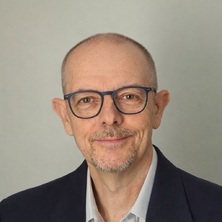
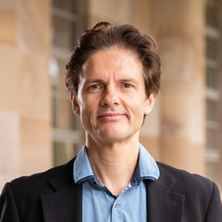
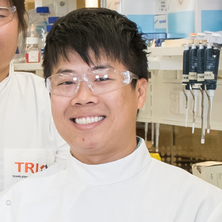
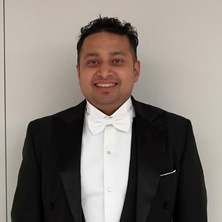
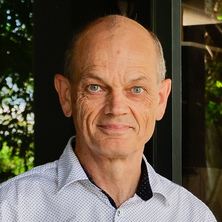
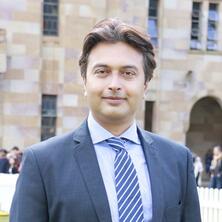
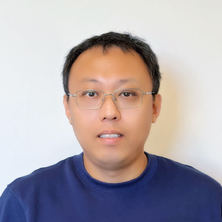
I am an independent researcher and advisor affiliated with The University of Queensland’s Centre for Policy Futures. My work focuses on how pricing, incentives and other signals are interpreted in regulated markets, and how signalling can produce unintended economic, behavioural and policy outcomes. I apply these frameworks to areas such as alcohol and no and low alcohol (nolo) beverage markets, and technology-affected markets more generally. I work at the intersection of economic behaviour, public policy and communication, developing frameworks that support better regulatory design, pricing strategy and clearer decision-making.
Faculty of Health, Medicine and Behavioural Sciences
Research Officer
School of Health and Rehabilitation Sciences
Faculty of Health, Medicine and Behavioural Sciences
Availability:
Available for supervision
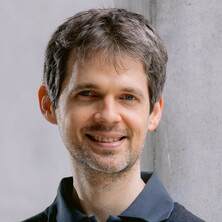
Dr Joshua Simmich is a physiotherapist and digital health researcher at UQ’s RECOVER Injury Research Centre. His work focuses on technology-enabled rehabilitation: how tools such as telerehabilitation, mobile health, wearable sensors, virtual reality, serious games and artificial intelligence can make rehabilitation more accessible, engaging and effective.
Joshua’s research spans remote and hybrid models of physiotherapy care, patient preferences for telerehabilitation, the safety and effectiveness of video-based rehabilitation and exercise, and the evaluation of digital tools for pain monitoring and clinical decision-making. His PhD examined how active video games and wearable sensors could support physical activity in people with chronic obstructive pulmonary disease.
He works with clinical and research teams to design, evaluate and translate digital health innovations for rehabilitation. Current and recent projects include virtual reality for driving anxiety, personalised motorised wheelchair trials using simulation, AI-supported navigation of the Australian healthcare system, GPS-based functional assessment for people with persistent pain, and serious games for physiotherapy education.
Joshua is available to supervise students interested in digital health, telerehabilitation, technology-enabled rehabilitation, AI in healthcare, virtual reality, wearable sensors, physical activity and rehabilitation service delivery.
Faculty of Engineering, Architecture and Information Technology
Senior Lecturer in Cyber Security
School of Electrical Engineering and Computer Science
Faculty of Engineering, Architecture and Information Technology
Availability:
Available for supervision
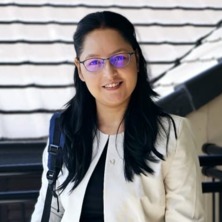
I am a passionate researcher with a background in computer science and a strong commitment to leveraging technology for the betterment of society. I hold a PhD in Image Forensics and have had the privilege of conducting postdoctoral research at prestigious institutions such as SUNY Albany and Dartmouth College, where I had the opportunity to collaborate closely with Prof. Hany Farid.
During my postdoc at Dartmouth College, I focused my research efforts on addressing a critical societal issue - real-time child pornography detection. This research not only garnered recognition within the academic community but also earned praise from luminaries like Prof. Ramesh Raskar at MIT, who invited me to share my insights through a talk at MIT.
I primarily works in the area of Cyber Security, Digital Forensics, Privacy and Security Aspects, Homomorphic Encryption and Cloud Computing.
As I continue my research journey, I remain committed to making a positive impact through innovation and collaboration. I am excited about the opportunities that lie ahead and the potential for technology to create a safer and more inclusive world.
Faculty of Engineering, Architecture and Information Technology
Associate Professor
School of Electrical Engineering and Computer Science
Faculty of Engineering, Architecture and Information Technology
Availability:
Available for supervision
Media expert
Associate Professor Graeme Smith has over 100 publications in the area of formal, i.e., mathematically based, design and analysis of software and software-based systems. His seminal work on formal object-oriented modelling has found application in the telecommunications and railways sectors, and that on real-time embedded systems in the Defence sector. He has worked at the Software Verification Research Centre (Australia), GMD First (Germany), the Technical University of Berlin (Germany), and the Centre de Recherche en Informatique de Nancy (France). Since his current appointment at The University of Queensland, he has led 3 ARC Discovery Grants on formal design and analysis of fault-tolerant systems, distributed autonomous systems, and lock-free concurrent algorithms, respectively. He currently leads a research cell of the Defence Science and Technology Group focussed on formal security analysis of concurrent code.
Research Platform Fellow (Geospatial Data Scientist)
Sustainable Minerals Institute
Faculty of Engineering, Architecture and Information Technology
Availability:
Available for supervision
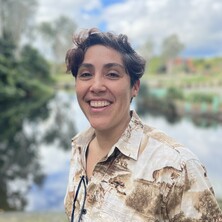
Laura Natali Sotomayor is a Research Platform Fellow (Geospatial Data Scientist) with the UQ Drone Collaborative Research Platform, based within the W.H. Bryan Mining Geology Research Centre at the Sustainable Minerals Institute. She develops tools and workflows to process, analyse and interpret drone-acquired multi-sensor imagery and lidar data, supporting research and industry applications.
She completed her PhD in Geomatic Engineering at the University of Tasmania, where her research developed deep learning workflows for multi-sensor Unoccupied Aerial Systems (UAS) monitoring of vegetation in semi-arid rangelands, combining remote sensing techniques with automated image analysis to translate high-resolution imagery into spatially explicit information on vegetation cover, structure, and function.
School of Electrical Engineering and Computer Science
Faculty of Engineering, Architecture and Information Technology
Availability:
Available for supervision
Dr Hongfu Sun completed his PhD in Biomedical Engineering at the University of Alberta in 2015, followed by postdoctoral training in Calgary until 2018. He joined the Imaging, Sensing and Biomedical Engineering team in the School of ITEE at UQ in 2019 and was awarded the ARC DECRA fellowship in 2021. His research interests include developing novel magnetic resonance imaging (MRI) contrast mechanisms, e.g. Quantitative Susceptibility Mapping (QSM), fast and multi-parametric MRI acquisitions, and advanced image reconstruction techniques, including deep learning and artificial intelligence, to advance medical imaging techniques for clinical applications.
Dr Sun is currently recruiting graduate students. Check out Available Projects for details. Open to both Domestic and International students.
Quantum computers provide a fundamentally different model of computation that lends itself to naturally to a collection of problems that are expected to be infeasible or prohibitively inefficient to solve on classical computers. In my research, I focus on identifying such problems and formulating quantum computational solutions with the goal of reducing the computational resources required to solve the problems.
On one hand, I consider the efficacy of quantum optimisation methods for the purposes of solving optimisation problems that require evaluating a cost function across an exponentially large space of possible solutions, with the aim of speeding up the procedure of identifying optimal solutions.
On the other hand, I work with quantum machine learning techniques for the purposes of learning on datasets that involve high-dimensional or otherwise unknown underlying structures, a regime in which quantum computers are expected to work well owing to the fact that they inherently operate in high-dimensional "Hilbert spaces".
At UQ, my research focuses predominantly on the former, where I aim to utilise quantum optimisation methods for the purposes of solving integer linear programs or Hamiltonian simulation problems. However I am also greatly interested in identifying inherently quantum learning problems for which substantial empirical or provable improvements in learning performance over classical machine learning methods can be derived.
Dr Aaron Tkaczynski is a Senior Lecturer in both tourism and events in the School of Business in the Faculty of Business, Economics & Law. He has been employed at the University of Queensland in a research capacity since 2009. Since 2021 he has also had an extra-ordinary Associate Professor position in the Tourism Research in Economics, Environs and Society (TREES) department at North-West University in Potchefstroom in South Africa. Aaron's research expertise and experience stems from market segmentation modelling. He publishes within journals such as Tourism Management, Journal of Sustainable Tourism, Annals of Tourism Research and the Journal of Travel Research. Dr Tkaczynski is also very interested in tourism seasonality, eco-certification, nature-based tourism, social marketing and small-scale festivals. Aaron is also a Christian and actively researches and volunteers for many Christian orientated events such as festivals and leadership conferences. Prior to academia, Aaron was employed in local government (Hervey Bay City Council, Redland Shire Council and the Local Government Association of Queensland).
Faculty of Health, Medicine and Behavioural Sciences
Affiliate of Ian Frazer Centre for Childhood Immunotherapy Research
Ian Frazer Centre for Children's Immunotherapy Research
Faculty of Health, Medicine and Behavioural Sciences
Affiliate Senior Research Fellow of Frazer Institute
Frazer Institute
Faculty of Health, Medicine and Behavioural Sciences
Affiliate of Child Health Research Centre
Child Health Research Centre
Faculty of Health, Medicine and Behavioural Sciences
Availability:
Available for supervision
Media expert
Associate Professor Kelvin Tuong is an NHMRC Emerging Leadership Fellow and Deputy Director and group Leader of the Ian Frazer Centre for Children’s Immunotherapy Research (IFCCIR), Child Health Research Centre. He is interested in single-cell analysis of immune cells and harnessing adaptive immune receptors for understanding immune cell development and function in health and in cancer.
A/Prof Tuong was born and raised in Singapore and moved to Brisbane, Australia, after completing national service in Singapore and obtaining a Diploma in Biomedical Laboratory Technology (Ngee Ann Polytechnic).
A/Prof Tuong was originally trained as a molecular cell biologist and gradually transitioned into bioinformatics during his post-doctoral training. He has been very prolific for an early career researcher, having published >70 articles since 2013, with nearly a third of them as first/co-first or last author and has a stellar track record of pushing out highly collaborative work in prestigious journals including Nature, Cell, Science, Nature Medicine, Nature Biotechnology J Exp Med etc. He has the rare combination of having excellent laboratory and bioinformatics skill sets which provide him a strong command of both fundamental immunology and computational approaches.
A/Prof Tuong completed his undergraduate Bachelor's degree in Biomedical science with Class I Honours, followed by his PhD in macrophage cell biology and endocrinology at UQ (Prof Jenny Stow lab and Emiritus Prof George Muscat lab, IMB, UQ). He then went on to a post-doc position with Emiritus Prof Ian Frazer (co-inventor of the Gardasil cervical cancer vaccine, UQ Frazer Institute, Translational Research Institute) where he worked on HPV immunology, cervical cancer and skin cancer. In his time in the Frazer lab, he developed an interest in bioinformatics analyses as a means to tackle and understanding immunology problems in health and disease. He then moved to the UK and joined Prof Menna Clatworthy's lab at the University of Cambridge and Prof Sarah Teichmann's lab at the Wellcome Trust Sanger Institute. He has focused his interests on single-cell analyses of tissue immune cells, including T and B cells and their specific receptors (TCR/BCR). He has developed bespoke bioinformatics software, including one tailored for single-cell B Cell Receptor sequencing analysis, Dandelion, which he used in one of the largest combined single-cell transcriptomic, surface proteomic and TCR/BCR sequencing dataset in the world, published in Nature Medicine, and more recently in Nature Biotechnology where we introduced a TCR-based pseudotime trajectory analysis method.
A/Prof Tuong is now leading the Computational Immunology group at the IFCCIR and his lab is focused on investigating how pediatric immunity is perturbed during cancer at the cellular level and how this information can be used for creating novel warning systems for children with cancer. For potential students/post-docs/trainees interested in joining the team, please contact A/Prof Tuong at z.tuong@uq.edu.au.
Affiliate of Centre for the Business and Economics of Health
Centre for the Business and Economics of Health
Faculty of Business, Economics and Law
Lecturer in Business Information Systems
School of Business
Faculty of Business, Economics and Law
Availability:
Available for supervision
Media expert
Bikesh Raj Upreti is a Lecturer in the Department of Business Information Systems at the University of Queensland (UQ) in Brisbane, Australia. He completed his doctoral degree from Aalto University School of Business, Helsinki. His doctoral dissertation, " Untangling the Application of Text-mining Methods in Information Systems Domain", focused on developing applications to uncover insights from the large-scale text data. After graduating, he continued as a postdoctoral researcher and visiting scholar at the Department of Information Service Management, Aalto Business school, before joining the University of Queensland.
Bikesh's research interests are in the areas of applied computational methods and quantitative inquiry of inter-disciplinary phenomena. He has applied advanced machine learning, deep learning and other analytical tools for large-scale behavioural and predictive analytics set in Information systems, marketing, finance, and political discourses. His work has been published in several journals (European Journal of Information systems, Industrial Marketing Management, Journal of Travel Research, Electronic Markets) and peer-reviewed conference proceedings (ICIS, HICSS, and Bled).
His work has won the inaugural edition of the Paper-at-hon competition at ICIS 2017, the Best paper award at the Bled conference 2019, and the nomination for the best paper award at HICSS 2020. He also actively serves as a reviewer for the journals such as (European Journal of Information systems, Decision Sciences, Internet research and Information & Management, and International Journal of Information Management) and conferences (ICIS, ECIS, HICSS, AMCIS, PACIS).
Faculty of Engineering, Architecture and Information Technology
Associate Professor in Software Eng
School of Electrical Engineering and Computer Science
Faculty of Engineering, Architecture and Information Technology
Availability:
Available for supervision
Associate Professor Mark Utting's research interests include software verification, model-based testing, theorem proving and automated reasoning, programming language design and implementation. He received his PhD from UNSW on the semantics of object-oriented languages, and since then has worked as an academic at several Queensland universities, as well as Waikato University in NZ and the University of Franche-Comte in France. He is passionate about designing and engineering good software that solves real-world problems, has extensive experience with managing software development projects and teams both in academia and industry, and has worked in industry, developing next generation genomics software and manufacturing software. He is author of the book ‘Practical Model-Based Testing: A Tools Approach’, as well as more than 80 publications on model-based testing, software verification, and language design and implementation. His current research focus is on using software verification to give strong guarantees about the correctness of compilers, correctness of blockchain smart contracts, freedom from information leaks of ARM64 binary programs, and the correctness of AI-generated code.
Radislav (Slava) Vaisman is a faculty member in the School of Mathematics and Physics at the University of Queensland. Radislav earned his Ph.D. in Information System Engineering from the Technion, Israel Institute of Technology in 2014. Radislav’s research interests lie at the intersection of applied probability, statistics, and computer science. Such a multidisciplinary combination allows him to handle both theoretical and real-life problems, in the fields of machine learning, optimization, safety, and system reliability research, and more. He has published in top-ranking journals such as Statistics and Computing, INFORMS, Journal on Computing, Structural Safety, and IEEE Transactions on Reliability. The Stochastic Enumeration algorithm, which was introduced and analyzed by Radislav Vaisman, had led to the efficient solution of several problems that were out of reach of state of the art methods. In addition, he is an author of 3 books with three of the most prestigious publishers in the field, Wiley, Springer, and CRC Press. Radislav serves on the editorial board of the Stochastic Models journal.
Affiliate of Centre for Research in Social Psychology (CRiSP)
Centre for Research in Social Psychology
Faculty of Health, Medicine and Behavioural Sciences
Centre Director of Centre for Research in Social Psychology (CRiSP)
Centre for Research in Social Psychology
Faculty of Health, Medicine and Behavioural Sciences
Professor
School of Psychology
Faculty of Health, Medicine and Behavioural Sciences
Availability:
Not available for supervision
Media expert
Professor Eric J. Vanman is a social psychologist and social neuroscientist whose research examines the emotional, physiological, and neural mechanisms underlying social behaviour. His work focuses on empathy, intergroup relations, and human interaction with emerging technologies, including AI, social robots, and social media.
Using experimental and psychophysiological methods such as facial EMG, EEG, and behavioural paradigms, he bridges social psychology, affective neuroscience, and the psychology of technology. A central theme of his work is understanding what human emotional responses to artificial agents reveal about the social brain.
His research has contributed to the study of implicit emotion and bias and informs contemporary debates about digital empathy, online behaviour, and the psychological impact of new technologies. He teaches and supervises across social psychology, social neuroscience, and the psychology of technology.
Faculty of Engineering, Architecture and Information Technology
Affiliate of Research Centre in Creative Arts and Human Flourishing
Research Centre in Creative Arts and Human Flourishing
Faculty of Humanities, Arts and Social Sciences
Associate Professor
School of Electrical Engineering and Computer Science
Faculty of Engineering, Architecture and Information Technology
Availability:
Available for supervision
Media expert
Human-centred design of interactive systems
Stephen Viller is a researcher and educator in human-centred design methods, particularly applied to designing social, domestic and mobile computing technologies, and understanding how people's interactions in everyday settings inform the design of such technologies. He has over 30 years of experience in Computer Supported Cooperative Work (CSCW), Interaction Design, and Human-Computer Interaction (HCI) research, where he has focused on bridging disciplines and diverse methodological perspectives. He has concentrated on qualitative methods, particularly observational fieldwork, contextual interviews, diary studies and field trips, but also increasingly on more ‘designerly’ approaches such as cultural probes, low-fidelity prototypes, speculative design.
Stephen is an Associate Professor in the School of Electrical Engineering & Computer Science (EECS), where he leads the Human-Centred Computing discipline. He is also UQ's Theme Leader for the Digital Worlds and Disruptive Technologies theme in the UQ-Exeter Institute, and national chair of CHISIG, the Computer-Human Interaction Special Interest Group of the Human Factors and Ergonomics Society of Australia (HFESA). From 2016-2019 he was the EECS (ITEE at the time) Director of Coursework Studies (Chair of T&L committee) and from 2011-2016 he was Program Director of the Bachelor of Multimedia Design and Master of Interaction Design. His publications span various interdisciplinary journals and conferences in HCI/CSCW and technology design. He has a BSc (Hons) Computation (UMIST), MSc Cognitive Science (Manchester) and PhD Computing (Lancaster).
Affiliate of Future Autonomous Systems and Technologies
Future Autonomous Systems and Technologies
Faculty of Engineering, Architecture and Information Technology
Lecturer
School of Mechanical and Mining Engineering
Faculty of Engineering, Architecture and Information Technology
Availability:
Available for supervision
Dr T. Thang Vo-Doan is a Lecturer of the School of Mechanical and Mining Engineering at the University of Queensland. He was a postdoctoral researcher at the Institute of Biology I, University of Freiburg, Germany (2019-2023). He was also a Research Fellow at Nanyang Technological University (NTU), Singapore (2016-2018). He was awarded his PhD in Mechanical Engineering from the School of Mechanical & Aerospace Engineering, NTU in 2016. He received his M.Eng. degree in Manufacturing Engineering and B.Eng. degree in Mechanical Engineering from Ho Chi Minh City University of Technology, Vietnam in 2010 and 2008 respectively. He was awarded the prestigious Human Frontier Science Program Cross-disciplinary Fellowship (2019-2022).
He directs the UQ Biorobotics lab after joining in the University of Queensland. Current research activities of the lab focus on insect-machine hybrid robots, bio-inspired robotics, insect structures and functions, biomechanics, fast lock-on tracking, and brain imaging in untethered insects.
Affiliate of ARC COE for Children and Families Over the Lifecourse
ARC COE for Children and Families Over the Lifecourse
Faculty of Humanities, Arts and Social Sciences
Affiliate of Centre for Policy Futures
Centre for Policy Futures
Faculty of Humanities, Arts and Social Sciences
Associate Professor in Computer Science
School of Electrical Engineering and Computer Science
Faculty of Engineering, Architecture and Information Technology
Availability:
Available for supervision
Media expert
Dr. Dhaval Vyas is an Associate Professor in the Human-Centred Computing discipline - a former ARC DECRA Fellow (2018-2022) and. He is a part of the Compassion Lab research group. His research spans the areas of Human-Computer Interaction (HCI) and Computer-Supported Cooperative Work (CSCW). In particular, he focuses on designing IT tools to support health and wellbeing of under-resourced communities. He has worked in academia and industry for over 15 years. He received a PhD in Human-Computer Interaction from University of Twente, the Netherlands; a master’s degree in Computer Science from Lancaster University, UK; and an undergraduate degree in Computer Science from Gujarat University, India.
School of Electrical Engineering and Computer Science
Faculty of Engineering, Architecture and Information Technology
Availability:
Available for supervision
Dr Sen Wang is an ARC DECRA Senior Research Fellow and Senior Lecturer in computer science and data science at the School of Information Technology and Electrical Engineering at UQ. He is also a CI on several health data analytics research grants. Sen has an interest in ICU data and has clinical collaborations with RBWH and Children’s Hospital. Dr Wang received his PhD degree in 2014 and his research interest includes various topics on Feature Selection, Semi-supervised Learning, Deep Learning, Pattern Recognition, Data Mining, and Health Informatics. Since 2010, Dr Wang has published 80+ academic papers in top conferences and journals. Most were published in internationally renowned journals and conferences in the fields of data science, data mining, and machine learning, such as Algorithmica, TNNLS, TMC, TKDE, TCYB, TMM, WWWJ, Signal Processing, ACM TOMM, ACM MM, IJCAI, AAAI, SDM, CIKM, CVPR, ICCV, ICDM, ISWC, ECML-PKDD, PAKDD, ICONIP, ICPADS, and WISE, all CORE A/A* journals and conferences.