Affiliate of Centre for Extracellular Vesicle Nanomedicine
Centre for Extracellular Vesicle Nanomedicine
Faculty of Health, Medicine and Behavioural Sciences
Research Fellow
Australian Institute for Bioengineering and Nanotechnology
Availability:
Available for supervision
Media expert
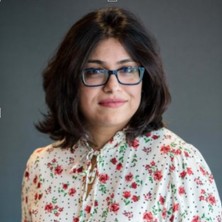
Dr Mostafa Kamal Masud is a CCQ Next Generation Cancer Research Fellow at the Australian Institute for Bioengineering & Nanotechnology (AIBN), the University of Queensland (UQ). In 2020, he received his PhD in Medical Biotechnology Diagnostics and Nanobiotechnology from AIBN, UQ. He received his MS and B.Sc. (Hons.) in Chemistry from Shahjalal University of Science and Technology (SUST), Sylhet-3114, Bangladesh. After completing his PhD, he was awarded a prestigious JSPS Postdoctoral Fellowship (success rate >10%) from Japan and served as a Postdoctoral Fellow at Japan's National Institute for Materials Science (NIMS).He recently been awarded a highly prestigious ARC DECRA fellowship for the period 2024-2026 and a QLD Cancer Council fellowship for the period 2024–2028. His research focuses on the development of novel nanostructures and nanodiagnostic technologies to address critical issues in medical diagnosis. As an early career researcher, he has an excellent track record with more than 60 peer-reviewed publications in prestigious and high-impact journals in the area that achieve <2800 citations with an h-index of 29 (Scholar google link: https://bit.ly/2Vtv67l). He has developed new classes of superparamagnetic nanostructures and fabricated novel biosensors for the detection of disease-specific biomolecular targets e.g., for miRNA, DNA, exosome and protein biomarker detection that have proven to be easy and effective, allowing for rapid diagnosis with minimal equipment. He made a major contribution to nanotechnology integrated-analytical and diagnostic fields by providing analytical and technological input as well as developing key collaborations with clinicians and biologists for translational research. His strategy is to create nano-architecture point-of-care diagnostic technology for early diagnosis of cancer that could hopefully lead to a healthy and happier life for humans.
Faculty of Health, Medicine and Behavioural Sciences
Availability:
Available for supervision
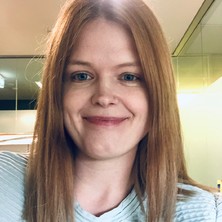
My research focuses on understanding the cellular and molecular mechanisms that regulate innate immune responses during infection and inflammation. I have expertise in host–pathogen interactions, macrophage biology, Toll-like receptor signalling, and intracellular trafficking, with a particular interest in how spatiotemporal regulation of immune receptors shapes antimicrobial and inflammatory responses. Through the integration of cell biology, immunology, and advanced imaging approaches, my work aims to identify mechanisms that can be leveraged for host-directed therapies against infectious diseases, including tuberculosis and bacterial infections. My research program combines fundamental discovery science with translational approaches to improve our understanding of immune regulation in health and disease.
Affiliate of Centre for Biodiversity and Conservation Science
Centre for Biodiversity and Conservation Science
Faculty of Science
Availability:
Available for supervision
Dr McDonald-Madden is an ARC Research Fellow in the School of Geography, Planning and Environmental Management at the University of Queensland and a Chief Investigator on the ARC Centre of Excellence for Environmental Decisions, NESP Threatened Species Hub and is a founding member of UQ Centre for Biodiversity and Conservation Science. Her research is focused on improving environmental decision-making in complex systems.
To resolve questions in environmental decision-making her team uses a suite of analysis techniques that are largely novel to ecology and conservation. The foundation of our work is ‘Decision Theory’, a concept initially used to maximise the effectiveness of scarce military resources while dealing with the uncertainties always present in war. By investigating the use of techniques from fields such as manufacturing sciences, artificial intelligence research and economic theory her group hope to improve decision-making in the face of complexity that is inherent, but often ignored, in environmental problems, incorporating the social context of decisions, the complexity of interacting species and the uncertainty faced by decisions makers.
Eve’s groups work spans all forms of conservation decision-making including population management, organisational and government reporting, the management of interacting species, ecosystem services and conservation planning.
Dr McDonald-Madden completed her PhD at the University of Queensland (2009), prior to that she worked for the Victorian Government on biodiversity research and management whist completing a graduate diploma in Mathematics. She has two young children.
Affiliate of ARC COE for Plant Success in Nature and Agriculture
ARC COE for Plant Success in Nature and Agriculture
Faculty of Science
Associate Professor and Deputy Head of School
School of the Environment
Faculty of Science
Availability:
Available for supervision
Media expert
As an evolutionary quantitative geneticist, I conduct research that aims to extend our understanding of how genetic variation determines the capacity of populations to adapt. Over the 20+ years of my research career, I have designed experiments in species ranging from freshwater fish to Drosophila fruit flies. My research group uses a combination of statistics and machine learning to answer questions about the nature of genetic variation in complex traits, like swimming speed, wing shape and sex pheromones. This fundamental knowledge underpins predictions of the rate at which individual traits within the complex, multi-trait phenotype of organisms can evolve. We are particularly interested in understanding how historical adaptation might affect the ability of populations to adapt to changing conditions now and into the future. I’m interested in bringing evolutionary quantitative genetic tools to answer questions about natural and manipulated evolution in non-model species, in complex natural environments. I am passionate about training researchers in genetics and statistics, foundational skills for a range of careers addressing both applied and fundamental questions. I teach these skills to undergraduate and coursework Masters students, as well as research students ranging from undergraduate projects, through Honours and PhD.
Faculty of Health, Medicine and Behavioural Sciences
Availability:
Available for supervision
Media expert
I am a basic science researcher with training in cell biology, genetics and research translation. My research investigates the female reproductive system by focusing on the contribution of individual cells. I aim to understand the influence of genetic architecture, differentiation and maturation on these individual cells and how this contributes to changes in the microenvironment that can contribute to disease initiation and progression.
After the completion of my PhD in 2008 at the University of Queensland, I undertook post-doctoral studies at the University of Bern, Department of Biomedical Research (DBMR), focusing on endometriosis, ovarian and endometrial cancer. I curated patient samples from clinical research trials to investigate inflammatory and metabolic components of reproductive tissue and disease and began developing patient-derived models of the endometrium. I established a relationship between endometriosis lesions, nerves and pain and how this interaction was mediated by inflammation. I further developed patient-derived in vitro models to understand the interaction between inflammation and hormonal response of endometriotic lesions and how this could be utilized to target current and novel treatments. On returning to Australia in 2016 I joined the Genomics of Reproductive Disorders laboratory to integrate genetic background into patient-derived in vitro models. I established the Endometriosis Research Queensland Study (ERQS) in collaboration with the Royal Brisbane and Women’s Hospital (RBWH) and extended in vitro models into complex multi-cellular assembloids (combinations of organoids and surrounding stromal cells).
Affiliate Professor of Institute for Molecular Bioscience
Institute for Molecular Bioscience
Affiliate Professor of School of Biomedical Sciences
School of Biomedical Sciences
Faculty of Health, Medicine and Behavioural Sciences
Affiliate of Clem Jones Centre for Ageing and Dementia Research
Clem Jones Centre for Ageing Dementia Research
Faculty of Health, Medicine and Behavioural Sciences
Professor and Academic Senior Group/Unit Leader/Supervisor
Queensland Brain Institute
Faculty of Health, Medicine and Behavioural Sciences
Availability:
Available for supervision
Media expert
Professor Frederic Meunier obtained his Masters degree in Neurophysiology at the Paris XI University, France in 1992 and completed his Ph.D in Neurobiology at the CNRS in Gif-sur-Yvette, France in 1996. He was the recipient of a European Biotechnology Fellowship and went on to postgraduate work at the Department of Biochemistry at Imperial College (1997-1999) and at Cancer Research UK (2000-2002) in London, UK. After a short sabbatical at the LMB-MRC in Cambridge (UK), he became a group leader at the School of Biomedical Sciences at the University of Queensland (Australia) in 2003. He joined the Queensland Brain Institute of the University of Queensland in 2007 and obtained an NHMRC senior research fellowship in 2009 renewed in 2014 with promotion. He became Professor in 2014 at the Queensland Brain Institute and is currently part of the Centre for Ageing Dementia Research.
United Nations (UN) member states in 2015 agreed to 17 global Sustainable Development Goals (SDGs) to end poverty, protect the planet and ensure prosperity for all. Dr Deirdre Mikkelsen is a microbiologist and Senior Lecturer in Food Science at the School of Agriculture and Food Sustainability, where her teaching and research contribute to several UN SDGs, including:
Goal 2 – Zero Hunger
Goal 3 – Good Health and Well-being
Goal 4 – Quality Education
Goal 12 – Responsible Consumption and Production
Goal 13 – Climate Action
Goal 15 – Life on Land
Deirdre holds a B.Sc. (First Class Honours, 1999) and a PhD in Microbiology (2005), both from UQ. She has expertise in molecular microbial ecology, bioinformatics and fermentation microbiology. Her academic journey includes research roles at the Advanced Wastewater Management Centre (2005) and from 2006 at the Centre for Nutrition and Food Sciences (CNAFS), Queensland Alliance for Agriculture and Food Innovation (QAAFI), where she held Postdoctoral and Research Fellow positions. She joined her current School in 2019.
Program Coordination and Teaching
Dr Deirdre Mikkelsen is the Program Coordinator for the following postgraduate programs:
Master of Food Science and Technology
Master of Food Science and Technology (Research Extensive)
Graduate Certificate in Food Science and Technology
She also coordinates and teaches:
FOOD2000 – Food Science
FOOD3017 – Food Safety & Quality Management
FOOD7021 – Professional Experience (Work Integrated Learning)
Professional Memberships and Engagement
Member, Australian Institute of Food Science and Technology (AIFST) – Queensland Branch Committee
Member, International Union of Food Science and Technology (IUFoST) Education Oversight Group – Australasia representative
Member, IUFoST – Food Safety Working Committee 2.2 (Education focus)
Academic Advisory Group Member, Ag Connections Agriskills Accelerator Program
Faculty of Health, Medicine and Behavioural Sciences
ARC Future Fellow
School of Social Science
Faculty of Humanities, Arts and Social Sciences
Availability:
Available for supervision
Media expert
I am an ARC Future Fellow at UQ with interdisciplinary research interests spanning social and biological sciences. My research examines how environmental and societal structures shape skeletal growth, metabolism, and health, drawing on technical expertise in skeletal histology applied across bioarchaeology, forensics, palaeontology, biology, and biomedicine. I also offer ad hoc skeletal histology consultation in forensic cases. My research has attracted ~$1.7M in competitive funding as PI (>$3.3M including collaborative grants), including an ARC DECRA and Future Fellowship.
I currently serve as Editor‑in‑Chief of Anthropological Review, Editorial Board Member of Annals of Human Biology, and Vice‑President of the Australasian Society for Human Biology. In 2024, I received the Linnean Society of London’s Trail‑Crisp Medal for contributions to microscopy in natural history.
My career spans academic, government, and industry roles in Australia, the UK, and the Netherlands, including positions at Naturalis Biodiversity Center, the Australian Government, ANU, Imperial College London, and the University of Kent, where I completed my BSc (Hons), PhD, and PGCHE. My previous service includes Treasurer of the Australasian Society for Human Biology and editorial roles with The Proceedings of the Royal Society of Queensland, Scientific Reports, and Anthropological Review.
Affiliate Professor of School of Chemistry and Molecular Biosciences
School of Chemistry and Molecular Biosciences
Faculty of Science
Affiliate of ARC COE for Innovations in Peptide and Protein Science
ARC COE for Innovations in Peptide and Protein Science
Institute for Molecular Bioscience
Affiliate Associate Professor
Institute for Molecular Bioscience
Professorial Research Fellow
Australian Institute for Bioengineering and Nanotechnology
Availability:
Available for supervision
Media expert
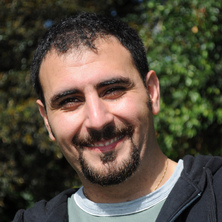
Professor Mobli is a structural biologist and a group leader at the University of Queensland's Australian Institute for Bioengineering and Nanotechnology (AIBN). He is well known internationally for his contributions to the basic theory of multidimensional nuclear magnetic resonance and its applications to resolving the molecular structure of peptides and proteins, as well as studying their physiochemical properties and function. Mehdi's contributions to the field has been recognised by being appointed an Executive Editor of the AMPERE society's journal "Magnetic Resonance", and to the advisory board of the international Biological Magnetic Resonance Data Bank (BMRB) as well as serving on the board of directors of the Australia and New Zealand Society for Magnetic Resonance (ANZMAG). He is a former ARC Future Fellow and recipient of the ASBMB MERCK medal, the Australia Peptide Society's Tregear Award, the ANZMAG Sir Paul Callaghan medal and the Lorne Proteins Young Investigator Award (now Robin Anders Award).
Prof. Mobli's research group focuses on characterising the structure and function of receptors involved in neuronal signalling, with a particular focus on developing new approaches for the discovery and characterisation of modulators of these receptors through innovations in bioinformatics, biochemistry and and biophysics. This work has led to publication of more than 100 research articles attracting over 6,000 citations.
Faculty of Health, Medicine and Behavioural Sciences
Availability:
Available for supervision
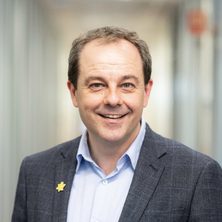
Greg studies cellular signalling in disease and the identification of new drug targets. Greg leads the Calcium Signalling Therapeutics Team (CaSTT) in the School of Pharmacy and Pharmaceutical Sciences at UQ.
His lab specializes in the development and application of genetically encoded calcium indicators for high-content imaging in live cells. His team focuses on integrating these technologies into high-throughput assays that are critical for drug discovery efforts targeting calcium-mediated signaling pathways. The group has developed and utilized high-content imaging platforms to investigate calcium signaling in various cell types. These platforms enable the team to conduct large-scale screenings and these have been instrumental in identifying novel therapeutic targets.
Greg has established a research program with research funding via NHMRC, ARC, Queensland Cancer Council, Society of Biomolecular Screening, Department of Defense (USA) and other grants and collaboration with Pharmaceutical companies. His interests are signal transduction in disease, calcium transporters as drug targets and biomolecular screening. His work has led to patents and projects towards commercialization for new therapies for cancer.
In 2006 he received a UQ Foundation research excellence award and in 2016 he received the UQ Research Higher Degree Supervision Excellence Award - video link. Greg has also recieved a Research Mentorship Award (HaBS, 2017) and an award for Excellence in Leadership (UQ, 2016).