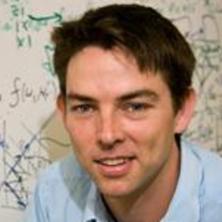
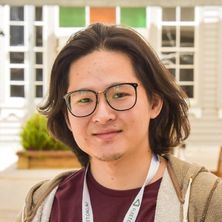
Professor White leads the Quantum Technology Laboratory at UQ, which he established in 1999, and is an Australian Research Council Laureate Fellow. He is internationally recognised for research in quantum science and technology, and is interested in all aspects of quantum weirdness. He is a Fellow of the Australian Academy of Science, the American Physical Society, and Optica. Andrew’s research spans: quantum foundations; production, manipulation and exploitation of quantum states of light, both in conventional optics and nanophotonics; and utilising quantum technology, be it in quantum computation, quantum communication, quantum sensing, or neuromorphic computing. Details can be found at the Quantum Laboratory website.
Professor White has worked with twenty-two postdoctoral researchers since 2001, five of whom received ARC Discovery Early Career Researchers Awards whilst working in his lab, six receiving Marie Skłodowska-Curie Fellowships subsequently and one a Erwin Schrödinger Fellowship. He has supervised more than 40 postgraduate students, who have received an array of awards including a Rhodes Scholarship, three Springer PhD thesis prizes, Australian representative at the Lindau Nobel Meeting, the only-ever runner for the Australian Institute of Physics Bragg Medal, and UQ Medals and Valedictorian, to name but a few.
Bio: Andrew was raised in a Queensland dairy town, before heading south to the big smoke of Brisbane to study chemistry, maths, physics and, during the World Expo, the effects of alcohol on uni students from around the world. Deciding he wanted to know what the cold felt like, he first moved to Canberra, then Germany—completing his PhD in quantum physics—before moving on to Los Alamos National Labs in New Mexico where he quickly discovered that there is more than enough snow to hide a cactus, but not nearly enough to prevent amusing your friends when you sit down. Over the years he has conducted research on various topics including shrimp eyes, nuclear physics, optical vortices, and quantum computers. He likes quantum weirdness for its own sake, but his current research aims to explore and exploit the full range of quantum behaviours—notably entanglement—with an eye to engineering new technologies and scientific applications. He is currently Director of the Centre of Engineered Quantum Systems, an Australia-wide, 14-year long, research effort by more than 250 scientists to build quantum machines that harness the quantum world for practical applications.
Faculty of Engineering, Architecture and Information Technology
Centre Director of ARC COE for Quantum Computation and Communication Technology
ARC COE for Quantum Computation and Communication Technology
Faculty of Science
Professor
School of Mathematics and Physics
Faculty of Science
Availability:
Available for supervision
Media expert
Professor Ralph obtained a BSc Hons from Macquarie University in 1989 and a PhD in Physics from The Australian National University in 1993. He has held three Australian Research Council Fellowships - Postdoctoral, QEII and Professorial. He is currently Node Director for the ARC Centre of Excellence for Quantum Computation and Communication Technology at the University of Queensland.
Centre Director of ARC COE in Quantum Biotechnology (QUBIC)
ARC COE in Quantum Biotechnology
Faculty of Science
Professor
School of Mathematics and Physics
Faculty of Science
Availability:
Available for supervision
Media expert
Professor Bowen is Director of the Australian Research Council Centre of Excellence in Quantum Biotechnology, and leads the Quantum Optics Laboratory at UQ. He is recognised both nationally and internationally for research at the interface of quantum science and nanotechnology; including bioimaging, biotechnology, nanophotonics, nanomechanics, quantum optomechanics and photonic/quantum sensing. He is a Fellow of the Australian Institute of Physics.
Professor Bowen's research spans from the very fundamental, e.g. how does quantum physics transition into our everyday world at large scales?, to applied, e.g. developing next generation sensors for medical diagnostics and navigation. To pursue this research, his lab works in close partnership with industry and uses state-of-the-art facilities for nanofabrication, nanoanalysis, precision optical measurement and deep cryogenic refrigeration available in-house or on campus at UQ.
Professor Bowen has supervised more than thirty postgraduate students, who have been recognised with prizes such as Fulbright Scholarships, an Australian Youth Science Ambassadorship, a Springer PhD theses prize, the Queensland nomination for the Australian Institute of Physics Bragg Medal, the Australian Optical Society Postgraduate Student Prize and UQ Graduate of the Year. He regularly has projects available, both for postgraduate students and for postdoctoral researchers. Please check his website, above, or contact him directly for details (w.bowen@uq.edu.au).
Pedram Rashidi is a Research Fellow with a joint appointment at the Centre for Policy Futures and the ARC Centre of Excellence in Quantum Biotechnology (QUBIC). He is currently developing a responsible innovation framework for quantum biotechnology in collaboration with QUBIC.
With a Master's degree in Physics, extensive industry experience, and a PhD in Political Science, Pedram's interdisciplinary research spans science and technology studies, responsible innovation, environmental governance, and decarbonisation policy.
His current research focuses on identifying regulatory gaps in emerging quantum-enabled decarbonisation sectors, developing risk profiles for quantum biotechnology research and innovation, and examining the geopolitical implications of emerging technologies.
Pedram's work has informed both national and international organisations. His contributions include supporting CSIRO's public engagement initiatives in quantum innovation, and participating in the IPCC Expert Meeting on Gender, Diversity, Equity and Inclusivity.
He also leads the Responsible Science Program, a QUBIC initiative that supports researchers in navigating ethical, social, and academic challenges. The program addresses issues ranging from artificial intelligence and data governance to authorship, research integrity, and responsible research practices. As part of this initiative, Pedram produces two podcast series, Quantum & Society and Responsible Science, which explore the broader impacts of emerging technologies and scientific research.
Dr Jorge Campos-González-Angulo develops theoretical and computational models for quantum molecular systems, working at the interface of quantum chemistry, molecular photonics, and quantum computing. His research is part of the quantum decarbonisation mission of the Queensland Quantum Decarbonisation Alliance, providing the physical models needed to simulate and engineer molecular systems for clean energy and quantum technology applications.
His work on light–matter interaction spans from single molecules to collective quantum optical regimes, with applications in the design of organic light-emitting materials for sustainable electronics. A parallel line of research develops reduced models for spin-vibronic systems at molecule–electrode interfaces, with relevance to quantum sensing and electrochemical energy conversion. He also builds physically motivated molecular models that serve as rigorous benchmarks for fault-tolerant quantum computers, connecting advances in quantum hardware directly to chemical problems of practical importance.
Jorge completed his PhD in Chemistry at the University of California San Diego, where he worked with Prof. Joel Yuen-Zhou on foundational problems in vibropolaritonic chemistry. He then joined the Matter Lab of Prof. Alán Aspuru-Guzik at the University of Toronto as a Postdoctoral Fellow, where he was also an affiliate of the Vector Institute for Artificial Intelligence. He joined the University of Queensland in 2026 as a Lecturer jointly appointed in the Schools of Mathematics & Physics and Chemistry & Molecular Biosciences, and is a Chief Investigator at the ARC Centre of Excellence in Quantum Biotechnology (QUBIC).
Faculty of Engineering, Architecture and Information Technology
Professor
School of Mathematics and Physics
Faculty of Science
Availability:
Available for supervision
Media expert
Professor Stace completed his PhD at the Cavendish Lab, University of Cambridge in the UK on quantum computing, followed by postdoctoral research at the Department of Applied Mathematics and Theoretical Physics, also at Cambridge, and Queens' College, Cambridge. Since 2006, he has held various ARC research fellowships, most recently a Future Fellowship (2015-2019).
His research topics include device physics for quantum computing solid-state and atomic systems, quantum error correction, and quantum measurement and precision sensing.
Professor Stace is the Deputy Director of the ARC Centre of Excellence in Engineered Quantum Systems (equs.org).
School of Electrical Engineering and Computer Science
Faculty of Engineering, Architecture and Information Technology
Senior Research Fellow
School of Mathematics and Physics
Faculty of Science
Availability:
Available for supervision
Media expert
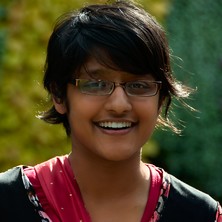
Dr. Riddhi S. Gupta is a continuing Senior Lecturer in Quantum Computing in the School of Electrical Engineering and Computer Science.
Riddhi develops theoretical and computational tools for ensuring robust quantum computation. Her recent research has focused on developing quantum computing algorihtms to solve real-world optimisation challenges.
Previously, her work has included developing tools for characterising and mitigating noise on quantum computers, and using dynamic quantum computation to prepare high-quality resource states for fault-tolerant quantum computing. Prior to joining UQ, Riddhi worked as a Staff Scientist in IBM Quantum (2020-2024) in the US and completed her Ph.D at the University of Sydney (2016-2020).
Riddhi is part of the Queensland Quantum Decarbonization Alliance (2026 to present); Deputy lead for the quantum computing workstream for the Queensland Digital Health Center (2024 - present); Associate Investigator in ARC CoE QUBIC (2025 to present), and founded the Asia Pacific Hub of IBM Quantum's Industry Working Group for Healthcare and Lifesciences.
Affiliate of ARC COE in Quantum Biotechnology (QUBIC)
ARC COE in Quantum Biotechnology
Faculty of Science
Professor
School of Mathematics and Physics
Faculty of Science
Availability:
Available for supervision
Media expert
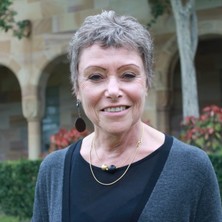
Professor Halina Rubinsztein-Dunlop’s research interests are in the fields of atom optics, laser micromanipulation, nano optics, quantum computing and biophotonics.
She has long standing experience with lasers, linear and nonlinear high-resolution spectroscopy, laser micromanipulation, and atom cooling and trapping. She was one of the originators of the widely used laser enhanced ionisation spectroscopy technique and is well known for her recent work in laser micromanipulation. She has been also working (Nanotechnology Laboratory, Göteborg, Sweden) in the field of nano- and microfabrication in order to produce the microstructures needed for optically driven micromachines and tips for the scanning force microscopy with optically trapped stylus. Recently she led the team that observed dynamical tunnelling in quantum chaotic system. Additionally Prof. Rubinsztein-Dunlop has led the new effort into development of new nano-structured quantum dots for quantum computing and other advanced device related applications.
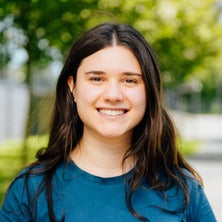
Dr Laura Serino's research interests are in quantum optics and quantum communication, particularly high-dimensional quantum systems (qudits) and the time-frequency degree of freedom of photons.
Laura completed her BSc in Physics at the University of Bari and her MSc in Physics of Matter at the University of Padova, including an Erasmus+ thesis in experimental plasma physics at Eindhoven University of Technology in the Netherlands. She then traded plasmas for single photons and moved to Germany to undertake a PhD in quantum optics at Paderborn University under the supervision of Prof. Christine Silberhorn, where she developed an experimental framework for time-frequency qudits. Following her PhD, she moved to the University of Queensland as a postdoctoral researcher in the Quantum Technology Lab led by Prof Andrew White.
Her current research focuses on experimental quantum optics and integrated photonics. She is particularly interested in understanding strange and counterintuitive quantum phenomena and finding ways to translate them into practical technologies for communication, computation, and sensing.
Faculty of Engineering, Architecture and Information Technology
Associate Professor
School of Mathematics and Physics
Faculty of Science
Availability:
Available for supervision
Media expert
Dr Jacqui Romero is an expert in experimental quantum information. Her research is focused on using higher-dimensional systems for exploring curious quantum physics phenomena and developing future quantum technologies. She is the group leader of the research team Qudits@UQ, there's more information on her group's webpage.
Jacqui was born and bred in Manila, Philippines. Hearing her high school physics teacher complain about quantum physics, she became curious and googled "quantum physics"—she has been hooked ever since. She holds BS Applied Physics magna cum laude and MS Physics degrees from the University of the Philippines. She finished her PhD at the University of Glasgow (in sunny Scotland!) where she was a researcher for seven years. In 2015, she moved to Brisbane to join the Quantum Technology group at the University of Queensland. In 2016 she took up an ARC DECRA fellowship with the same group. In 2019, she took up a Westpac Research Fellowship and formed her own team, Qudits@UQ. Jacqui is recognised for moving the shape of photons to mainstream quantum information. She has received several prestigious national and international awards which include: a L'Oreal-UNESCO For Women In Science award in 2017 (one of four in Australia), the Ruby Payne-Scott Medal of the Australian Institute of Physics for excellence in early-career research in 2018, and a L'Oreal-UNESCO For Women In Science International Rising Talent Award in 2019 (one of fifteen awards globally).
She is currently an associate professor and Westpac Research Fellow. She is also a chief investigator at the Centre of Excellence For Engineered Quantum Systems (EQUS).
Outside work, she is a busy mum to three lovely boys, and an occasional painter. She also loves sharing her research to the wider community, example here.
Dr Verdi's research is in the field of computational materials physics. Her work employs first-principles or ab initio methods, complemented by machine learning techniques, to predict and understand physical properties of materials without relying on empirical models. For more information, visit the research group website.
She received her doctorate from the University of Oxford in 2017. After working at the University of Oxford and the University of Vienna, Dr Verdi moved to the University of Sydney in 2023 as an ARC DECRA Fellow. In the same year, she then joined UQ as a Lecturer in Condensed Matter Physics. She is an associate investigator of the ARC Centre of Excellence for Quantum Biotechnology (QUBIC).
Her current research focuses on understanding the structural, optical and thermodynamic properties of atomic defects for applications in quantum technologies. She is also interested in studying the influence of atomic vibrations, defects, temperature and disorder on the intrinsic properties of various functional materials that can be exploited for novel technologies. Feel free to reach out to Dr Verdi if you are interested in simulating materials properties from first principles using supercomputers and exploring how this can help develop better materials.
Dr Naydenova is an emerging early-career researcher in the field of quantum biotechnology with a rare cross-disciplinary expertise in quantum biotechnology and molecular biology. She specialises in single-molecule detection and optical trapping of proteins using biomolecular optomechanics approaches at the University of Queensland’s Quantum Optics Lab led by Prof. Warwick Bowen. She is interested in fundamental research questions such as the relationship between function-dynamics-structure in proteins, as well as applications of biomolecular optomechanics for sensing in sport (e.g. anti-doping) and in biosecurity contexts (e.g. plant pathogens).
Dr Naydenova holds a PhD in Pharmacognosy and Phytochemistry by the Medical University-Sofia, Bulgaria, where her research focused on plant biotechnology, epigenetics and plant-derived chiral metabolites with anti-cancer properties. Chiral metabolites have a property called chirality, also known as handedness, that underpins many interactions between molecules, including drugs binding to molecular targets such as proteins and enzymes to modulate activity. Her work was recognised with the Medical University – Sofia’s Award for best research in pharmacy, an annual distinction for outstanding doctoral and early-career researchers.
In 2023, she was awarded a Postdoctoral Research Grant to investigate protein dynamics using molecular optomechanics approaches. She joined Prof. Bowen's lab and successfully transitioned to the field of quantum biotechnology, securing over $1.2M in external research funding from Australian and Queensland Governments in the past two years. Previous experience in industry engagement and program management in Australia's higher education sector further provides a strong foundation for translating cutting-edge science into real-world applications, bridging academic innovation with practical impact.
In addition to her research development, Dr Naydenova is also committed to her leadership development. Through her affiliation with the Centre of Excellence in Quantum Biotechnology (QUBIC), she served as the inaugural co-Chair of the centre's EMCR Committee and is an active member of the centre's Outreach and Engagement Portfolio, engaging in STEM outreach to school students.
Dr Naydenova's goal is to harness and continue building skills and expertise to drive impactful cross-disciplinary research that can drive both applied and cutting-edge fundamental research.
Director of Research of School of Mathematics and Physics
School of Mathematics and Physics
Faculty of Science
UQ Amplify Associate Professor
School of Mathematics and Physics
Faculty of Science
Availability:
Available for supervision
Media expert
A/Prof. Neely leads research projects on quantum turbulence in quasi-uniform 2D BEC superfluids, atomtronics, quantum sensing, and spinor condensates. He was an associate investigator in the ARC Centre of Excellence for Engineered Quantum Systems (EQUS) and is currently an associate investigator of the ARC Centre of Excellence for Quantum Biotechnology (QUBIC).
His career has spanned three institutions, first the College of Optical Sciences at the University of Arizona, where he received his PhD in 2010 working with Bose-Einstein condensates (BECs) and quantum turbulence. Subsequently, he had a postdoctoral position at NIST (2010-2012), where he developed and advanced new techniques for midinfrared spectroscopy with pulsed lasers.
The Bose-Einstein condensation lab has openings for honours, PhD, and undergraduate projects. Please contact A/Prof. Neely (t.neely@uq.edu.au) regarding current opportunities.
Dr Joel Corney’s research interests are in the fields of quantum physics, ultracold gases, and optics.
He completed his PhD at The University of Queensland in 2000.
His chief research projects are in the areas of: Bose-Einstein Condensation, Quantum Phase-Space Simulation Techniques, Quantum Effects in Optical Fibres, and Nonlinear Optics
School of Electrical Engineering and Computer Science
Faculty of Engineering, Architecture and Information Technology
Availability:
Available for supervision
Dr Xiaoqiong (Tina) Qi is a Senior Lecturer at the School of Electrical Engineering and Computer Science at The University of Queensland (UQ). She obtained her Bachelor’s degree in Electrical Engineering from Lanzhou University, China, and was subsequently offered direct entry into a PhD program. Her PhD research focused on high-speed, long-haul optical fibre transmission system design. During her doctoral studies, she was awarded a China Scholarship Council (CSC) scholarship to study two years at the University of California, Los Angeles (UCLA), where she focuses on semiconductor laser dynamics and their applications in radio-over-fibre communications and optical sensing.
She was awarded her PhD in Photonics in 2009 and subsequently joined the Institute of Semiconductors, Chinese Academy of Sciences, where she secured three national grants and two industry grants as lead Chief Investigator in optical sensing system design. She was promoted to Associate Professor in 2015. In the same year, she was awarded a UQ Fellowship and relocated to Australia, where she expanded her research into laser dynamics in terahertz quantum cascade lasers (QCLs) for biomedical applications.
She received the Mid-Career Advance Queensland Industry Research Fellowship (AQIRF) in 2020 and the UQ Amplify Fellowship in 2023. She has developed advanced optical sensing technologies spanning ultraviolet, near-infrared, and far-infrared (terahertz) wavelengths, with applications in greenhouse gas monitoring, road weather sensing, and skin cancer detection. Her AQIRF project focuses on terahertz imaging for early melanoma diagnosis, with translational research conducted in collaboration with the Princess Alexandra Hospital and the Translational Research Institute in Australia.
School of Electrical Engineering and Computer Science
Faculty of Engineering, Architecture and Information Technology
Availability:
Available for supervision
Dr. Karl Bertling has made significant contributions to pioneering imaging and sensing via laser feedback interferometry, spanning diverse laser technologies including sensors based on visible lasers, infrared surface-emitting lasers, mid-infrared inter-band cascade lasers, and terahertz quantum cascade lasers. His current research focus includes leveraging terahertz quantum cascade laser feedback interferometry for early melanoma detection and agri-photonics, as well as near-field terahertz and mid-infrared imaging of nanomaterials and nanostructures.
Professor Matthew Davis is a theoretical and computational physicist. His main research area is non-equilibrium quantum many-body systems, and he particularly focuses on the platform of ultracold quantum gases. He particularly enjoys connecting theory with experiment, and has published several high impact papers with several international experimental groups.
His specific research areas include:
Non-equilibrium dynamics of Bose-Einstein condensates and other quantum gases;
Superfluidity, vortices, and quantum turbulence;
Dynamics of phase transitions and formation of topological defects;
Relaxation of isolated quantum systems and quantum thermodynamics;
Computational methods for quantum systems.
He did his undergraduate studies in physics at the University of Otago in Dunedin, New Zealand, before completing his PhD at the University of Oxford in 2001 under the supervision of Sir Professor Keith Burnett. He started at the University of Queensland in 2002, became a teaching and research academic in 2004, and was promoted to Professor in 2013. He was recently a Chief Investigator in the ARC Centre of Excellence for Engineered Quantum Systems (2018-25), and the ARC Centre of Excellence in Future Low-Energy Electronics Technologies (2017-24).
His personal webpage can be found here: https://people.smp.uq.edu.au/MatthewDavis/
Yi-Hsun Chen completed his PhD in Physics at the Monash University in 2024. Prior to this PhD, he obtained his Master degree in Optoelectronics at the National Chiao Tung University, Taiwan, in 2014.
His research interests relate to electronic transport and optical properties of the following field of study:
Superconducting qubits
Exciton science
Bose-Einstein condensate
2D materials (graphene, transition metal dichalcogenides, etc.)
Plasmonics
In 2024, He joins UQ as a Postdoctoral Research Fellow under an ARC Linkage Project "Surface and Interface Engineering for Superconducting Quantum Circuits," pursuing high-quality superconducting quantum circuits using surface engineering strategies.
Please find his publication list via google scholar profile https://scholar.google.com.tw/citations?user=EvKa9qIAAAAJ&hl=en