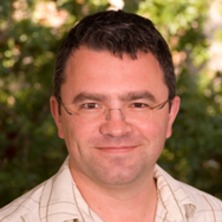
General Research specialises in: Evolutionary microbiology, Marine microbiology; Molecular phylogenetics, genomics and bioinformatics of bacteria; Planctomycete bacteria; Bacterial cell biology and structure.
Current research projects include:
Molecular cell biology of planctomycete bacteria in relation to the origin of eukaryotes and cell compartmentalisation (ARC Large Grant).Culture, molecular phylogenetics and ultrastructure of Archaeal and Bacterial symbionts of marine sponges.
Queensland Alliance for Agriculture and Food Innovation
Availability:
Available for supervision
Media expert
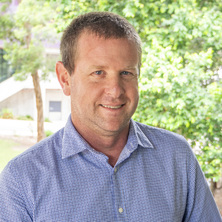
I am primarily a plant virologist but have has a diversity of research interests in mycology, bacteriology and even entomology as part of broader biosecurity projects. Living in Queensland has provided me the opportunity to work on diseases of tropical and subtropical horticultural crops such as banana, avocado, pineapple, citrus and sugarcane, and his expertise has been sought in developing nations throughout the world, particularly in southeast Asia.I strive to see fundamental scientific discoveries translated into practical outcomes for farmers. I also take a keen interest in promoting the profession of plant pathology through a previous role as President of the Australasian Plant Pathology Society, and my current role as Vice President of the International Society of Plant Pathology.
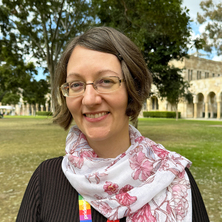
Dr. Laura Grogan is a qualified veterinarian, Senior Lecturer in Wildlife Science and Leader of the Biodiversity Health Research Team (https://www.biodiversity-health.org/) - a collaborative multiple-university research group focused on finding sustainable solutions for the most challenging threatening processes currently affecting biodiversity.
Dr. Grogan has a background in research on wildlife diseases, ecology and conservation. She's particularly interested in investigating the dynamics, relative importance, and impacts of infectious diseases among other threats affecting wildlife across both individual and population scales, to improve conservation management.
While she works across taxa and methodological approaches, her main study system currently involves the devastating amphibian fungal skin disease, chytridiomycosis, where at the individual scale she focuses on the pathogenesis and amphibian immune response to the disease, untangling the roles of resistance and tolerance in defense against infection. At the population and landscape scale she explores mechanisms underlying persistence in the face of endemic infection, focused on the endangered Fleay's barred frog. She also studies population and infection dynamics of chlamydiosis in koala using a mathematical modelling approach, exploring the relative benefits of different management approaches. In addition to working on amphibian and koala diseases, Laura is a keen birdwatcher, wildlife photographer and artist. She supervises projects across wildlife-related fields (predominantly vertebrates).
You can find out more about her research team here: www.biodiversity-health.org.
Dr. Grogan has been awarded around $1.3 million in research funding since 2018. In late 2019 she was awarded an Australian Research Council Discovery Early Career Researcher Award (DECRA; DE200100490), worth $426,742. This project, titled "Understanding infection tolerance to improve management of wildlife disease", commenced in late 2020. Dr. Grogan was identified as one of the four top-ranked science DECRA awardees by the Australian Academy of Science’s 2020 J G Russell Award, and was also recipient of the highest award of the Wildlife Disease Association Australasia Section with their 2019 Barry L Munday Recognition Award.
PhD and Honours projects are now available in the following areas (plus many more areas - please get in touch if you have an idea):
Can frogs be ‘vaccinated’ by antifungal treatment of active infections to develop protective immunity to the devastating chytrid fungus? (Principal Supervisor)
Establishing the conservation status of south-east Queensland’s amphibians - occupancy surveys and species distribution models (Principal Supervisor)
Tadpoles as a reservoir of the lethal frog chytrid fungal disease – measuring sublethal effects on growth, time to metamorphosis and ability to forage (mouthpart loss) (Principal Supervisor)
Impacts of chytrid fungus on the survival of juvenile endangered Fleay’s barred frogs, Mixophyes fleayi, and importance for population recruitment (Principal Supervisor)
Measuring the infection resistance versus tolerance of barred frogs to the devastating chytrid fungal disease to improve management outcomes (Principal Supervisor)
Mapping the impacts of fire-fighting chemicals on endangered frog habitats (Co-Supervisor)
Bowra birds: what do long-term monitoring data reveal about bird communities in the semi-arid region? (Co-Supervisor)
Impacts of fire-fighting chemicals on endangered frogs: Implications for conservation and management (Co-Supervisor)
Faculty of Engineering, Architecture and Information Technology
Research Fellow
Australian Institute for Bioengineering and Nanotechnology
Availability:
Available for supervision
Dr. Wenyi Gu’s early education was conducted in China which include his undergraduate and master’s degrees in veterinary medicine. In 1996, he migrated to Australia and pursued his PhD study in biochemistry & molecular biology at the Australian National University (ANU). After a short period of work at John Curtin Medical School ANU as a junior scientist, he moved to Brisbane in 2001 for his post-doc at the University of Queensland and currently a post-doctoral research fellow at AIBN. He held a Peter Doherty Fellowship (2006-2009) and was further supported by NHMRC to spend 7 months at Harvard University as a visiting fellow in 2008. Since his post-doctoral research he has been working in the area of using RNAi to treat viral diseases and cancers. He also has a strong background in immunology and vaccine development.
Faculty of Health, Medicine and Behavioural Sciences
NHMRC Emerging Leadership Fellow
School of Dentistry
Faculty of Health, Medicine and Behavioural Sciences
Affiliate of Centre for Extracellular Vesicle Nanomedicine
Centre for Extracellular Vesicle Nanomedicine
Faculty of Health, Medicine and Behavioural Sciences
Affiliate of Centre for Orofacial Regeneration, Reconstruction and Rehabilitation (COR3)
Centre for Orofacial Regeneration, Reconstruction and Rehabilitation
Faculty of Health, Medicine and Behavioural Sciences
Availability:
Available for supervision
Media expert
Dr Pingping Han currently leads the Epigenetic Nanodiagnostics and Therapeutics Group within the Centre for Orofacial Regeneration, Reconstruction and Rehabilitation (COR3) at the UQ School of Dentistry. She received her PhD in Biomedical Engineering from the Queensland University of Technology (QUT) in 2014.
Dr Han’s current research focuses on three main areas: (a) salivary diagnostics for periodontal disease and (b) “cell-free” regenerative therapies for periodontal tissue engineering.
Faculty of Health, Medicine and Behavioural Sciences
Availability:
Available for supervision
Media expert
A/Prof Sumaira Hasnain graduated with her PhD in December 2010 from The University of Manchester and is an Associate Professor at Mater Research with a team of eight researchers. A/Prof Hasnain was the first globally to demonstrate that immunity can modulate protein production in secretory cells in infection and chronic diseases. Her long-term vision has been to characterise these novel immune factors and manipulate them therapeutically using pre-clinical models of immune-driven pathologies.
A/Prof Hasnain holds a patent for targeted immunotherapy in metabolic disease which has led to the formation of a spin-off company, Jetra Therapeutics and venture capitalist funding. She has a rapid upward trajectory in research, evident by extensive body of high-quality publications including in Nature Medicine, Nature Communications, Journal of Experimental Medicine, Oncogene and Gastroenterology. She has been awarded more than $9 million in competitive funding and recently gained the National Health and Medical Research Council L1 Investigator Grant. A/Prof Hasnain has won 21 awards to date, including the Commercialisation award from The University of Queensland in 2022 and the Gastroenterological Society for Australasia; Lawrie Powell Award in 2023.
Affiliate of Centre for Geoanalytical Mass Spectrometry
Centre for Geoanalytical Mass Spectrometry
Faculty of Science
Affiliate of Australian Centre for Water and Environmental Biotechnology (formerly AWMC)
Australian Centre for Water and Environmental Biotechnology
Faculty of Engineering, Architecture and Information Technology
Affiliate of Dow Centre for Sustainable Engineering Innovation
Dow Centre for Sustainable Engineering Innovation
Faculty of Engineering, Architecture and Information Technology
Professor and ARC Mid-Career Industry Fellow
Australian Centre for Water and Environmental Biotechnology
Faculty of Engineering, Architecture and Information Technology
Availability:
Available for supervision
Prof Hu is an environmental scientist and engineer. He has a track record in both undertaking ground-breaking research works and applying fundamental research to develop practical solutions. Prof Hu's research and discoveries help established previously unrecognised links between the global carbon, nitrogen and metal cycles, as shown by his publications in Nature, Nature Microbiology and Nature Communications, which have significant implications in methane emissions from aquatic environments. Prof Hu has also been working intensively with water industry partners in developing novel water technologies. Prof Hu has worked as a CI and project manager of many industry projects (total cash budget > $15 M) in collaboration with Australian and international water utilities on sulfide control and carbon and nutrients removal and recovery in wastewater, resulting in many publications including in Science, Nature Communications, Water Research, Environmental Science and Technology.
Prof Hu is an Executive Committee member of UQ’s Australian Centre for Water and Environmental Biotechnology, which is one of the top three water research centres in the world. He has played a leadership role in the joint establishment and management of the Urban Utilities Innovation Centre since 2014, which is now regarded as the best platform for demonstration and translation of novel water treatment technology in Australia.
As an expert in new technology scale-up, he has won 10+ awards for collaborative R&D projects:
Australian Water Association (AWA) Queensland R&D Excellence Award 2022 for project ‘Transforming wastewater treatment in regional Australia', as a CI
UQ Awards for Excellence 2022 - Promoting Industry Engagement in Graduate Research, as program leader
AWA Queensland Infrastructure Project Innovation Award 2021 for project ‘Australia’s first municipal sidestream anammox treatment facility’, as the UQ representative
AWA Qld R&D Excellence Award 2020 for project ‘Zero-energy sewage treatment, harnessing the power of biogas’, as a CI and project co-leader
Finalist for AWA Qld R&D Excellence Award 2020 for project ‘Urban Utilities algae research project/program’, as a project CI
AWA Qld R&D Excellence Award 2019 for project ‘An integrated approach to iron salt use in urban water systems’, as a team member
UQ Awards for Excellence - Partners in Research Excellence Awards 2017
Queensland Urban Utilities Research Innovation Award 2017
AWA National R&D Excellence Award 2017 for project ‘Nitrogen removal from wastewater while maximising resource recovery potential’, as project co-leader
Advance Queensland Research Fellowship 2016
AWA Qld R&D Excellence Award 2016 for project ‘Affordable and sustainable water recycling through optimal technology integration’, as project co-leader
Finalist for AWA Qld R&D Excellence Award 2015 for project ‘Queensland Urban Utilities Innovation Centre', as project co-leader
International Water Association (IWA) Global Project Innovation Award 2014 for Project ‘Sewer Corrosion and Odour Research (SCORe) - Putting Science in Sewers’, as a team member
Teaching
WATR 6103: Advanced Wastewater and Biosolids Treatment
WATR 6105: Integrated Urban Water Management
WATR7104 Sewer Networks - Design, Operation and Maintenance
Affiliate of Centre for Environmental Responsibility in Mining
Centre for Environmental Responsibility in Mining
Faculty of Engineering, Architecture and Information Technology
Affiliate of Centre for Geoanalytical Mass Spectrometry
Centre for Geoanalytical Mass Spectrometry
Faculty of Science
Professorial Research Fellow
Sustainable Minerals Institute
Faculty of Engineering, Architecture and Information Technology
Availability:
Available for supervision
Media expert
Professor Longbin Huang is a Full Professor and leader of an interdisciplinary research group in Ecological Engineering in Mining. His research focuses on mine waste rehabilitation, ecological engineering, and geomicrobial soil formation, integrating ecological, microbiological, and environmental processes to address sustainability challenges in the mining sector, with influence spanning industry, academia, and policy. Professor Huang leads cutting-edge research in: Geo-microbial ecology, Mineral bioweathering, Microbially and rhizosphere driven soil formation from Tailings Minerals.
Professor Huang's work has advanced nature-based solutions for transforming mine tailings, waste rock, and bauxite residues into sustainable ecosystems. Supported by approximately AUD $23 million in competitive and industry-funded research over the past 15 years, his team has developed and demonstrated innovative rehabilitation technologies with field-scale applications. These include a pioneering technology for the treatment and dealkalization of bauxite residues, which has been commercialized through the University of Queensland startup Bioculum Pty Ltd, and novel approaches for preventing acid mine drainage generation in mine waste materials.
Professor Huang has published over 190 scholarly outputs, including journal articles, conference papers, patents, and book chapters. His research has attracted broad international recognition and has contributed significantly to the advancement of mine waste management, ecological restoration, and sustainable mining practices worldwide.
He is highly experienced in industry-partnered research and translation of knowledge into field-based technologies for tackling large environmental challenges in the mining industry, for example, technologies for tackling global tailings problem. Since 2010, he has led many large and industry-partnered research projects attracting about $23M funding. The research aims to deliver transformative knowledge and practices (i.e., technologies/methdologies) in the rehabilitation of mine wastes (e.g., tailings, mineral residues, spoils, waste rocks) and mined landscapes for non-polluting and ecologically and financially sustainable outcomes. Prof Huang has successfully demonstrated innovative methodology and technology to achieve nature-based outcomes in treating and rehabilitating tailings and waste rocks. Prof Huang’s research program was featured in Rio Tinto’s media releases as one of the four most successful global R&D partnerships in 2024. Prof Huang led the development of the first field-feasible technology to treat and dealkalize alkaline bauxite residues for sustainable rehabilitation. His industry-partnered research was recognised in 2019 UQ’s Partners in Research Excellence Award (Resilient Environments) (Rio Tinto and QAL). Prof Huang is also developing new knowledge and technologies for achieving non-polluting and ecologically sustainable rehabilitation of, for example, coal mine spoils and tailings, Fe-ore tailings, bauxite tailings (from mining bauxite), and Cu/Pb-Zn tailings.
Membership of Board, Committee and Society
Professional associations and societies
2010 – Present Australian Soil Science Society.
2023 – Present AuSIMM
2015 – 2025 Present American Society of Mining and Reclamation (ASMR)
Editorial boards/services
2025 - present: Member of Editorial Board, Energy & Environment Nexus
Affiliate Professor of Institute for Molecular Bioscience
Institute for Molecular Bioscience
Centre Director of Australian Centre for Ecogenomics (ACE)
Australian Centre for Ecogenomics
Faculty of Science
Affiliate of ARC COE for Plant Success in Nature and Agriculture
ARC COE for Plant Success in Nature and Agriculture
Faculty of Science
Affiliate of Centre for Marine Science
Centre for Marine Science
Faculty of Science
Professor
School of Chemistry and Molecular Biosciences
Faculty of Science
Availability:
Available for supervision
From a PhD in 1994 at the University of Queensland, Phil Hugenholtz developed a career in microbiology and genomics in the USA and in Australia. Phil’s last position in the USA was as Staff Scientist (2004-2010) at the Department of Energy, Joint Genome Institute. In late 2010 Phil returned home to establish the Australian Centre for Ecogenomics (ACE) at the University of Queensland. He has contributed to the field of culture-independent analysis of microorganisms through the discovery and characterisation of numerous previously unrecognised major bacterial and archaeal lineages each with greater evolutionary divergence than animals and plants combined. Phil has played important roles in the development and application of metagenomics, the genome-based characterisation of microbiomes, which has revolutionised our understanding of microbial ecology and evolution. This has resulted in several discoveries in environmental and clinical microbiology sometimes overturning decades of misdirected culture-based studies. He has applied his interest in comparative genomics and metagenomics to develop a systematic genome-based taxonomy for bacteria and archaea, which is facilitating scientific communication and endeavour. Phil has published over four hundred papers on molecular microbial ecology and evolution.
As Professorial Research Fellow at UQ and Director of ACE, Phil has affiliate appointments with the Institute for Molecular Bioscience and the UQ Diamantina Institute, which supports collaborative research at ACE. Currently, Phil’s research interests include the microbial ecology and evolution of environmental and host-associated ecosystems including marsupial and insect guts, biomining, marine and genomic mapping of the microbial tree of life.
Current research includes:
- A Genome Taxonomy Database for the Kingdom Fungi
- Tracing the emergence of cellular complexity in the phylum Planctomycetota
- Dual-function ribonucleases: unexpected agents of antibiotic resistance
- Breaking critical barriers in soil formation of bauxite residues
- Changing the classification status quo with a global genome-based taxonomy
- GBR Microbial Genomic Database
In 2018, Phil co-founded a start-up company, Microba Life Sciences (microba.com), which is focused on metagenome-based diagnostics and therapeutics.
Phil received the Young Investigators Award from the International Society of Microbial Ecology (ISME) in 2016, was elected in 2012 as a Fellow of the American Academy of Microbiology (AAM), elected a Fellow of the Australian Academy of Science in 2017, is a Member of the International Scientific Advisory Board (Fachbeirat) of the Max Planck Institute for Marine Microbiology, Bremen and is the outgoing President (2024-2026) of the International Society for Microbial Ecology (ISME). Phil has been a Clarivate Highly Cited Researcher since 2014 and one of only ~300 researchers worldwide to be highly cited in two fields (Microbiology and Biology & Biochemistry) from 2019-2024.
Associate Dean (Academic) and Deputy Executive Dean
Faculty of Science
Availability:
Not available for supervision
Invertebrate Virology
Insects are commonly infected with viruses. We study the interactions between viruses and their insect or arthropod hosts.
Viruses are obligate parasites, that is, they are completely dependent on the host cell machinery to complete their replication cycle. During infection, viruses commonly cause pathology in the host. For these reasons, viruses and hosts are in a constant evolutionary arms race. The host evolves antiviral mechanisms to prevent virus infection, while the virus adapts to overcome these host responses. Insects are ideal hosts to understand both the host response and the virus mechanisms for controlling the host.
My research group investigates the interactions between viruses and insects, primarily using Drosophila as a model. In this model we can control the genetics of both the host and the virus to tease apart the contribution of each partner to the interaction.
We discovered that a bacterium, Wolbachia, mediated antiviral protection in insects. We have several projects investigating both the mechanisms that protect the insects from virus infection and the impact of this protection on virus transmission.
Director of Teaching and Learning of School of Veterinary Science
School of Veterinary Science
Faculty of Science
Professor
School of Veterinary Science
Faculty of Science
Availability:
Available for supervision
Media expert
Malcolm Jones (BSc Hons PhD Qld) is Professor of Parasitology in the School of Veterinary Sciences. His research interest lie in the biology and control of helminth parasites of humans. His major research interests lie in investigations of shistosomiasis, food-borne trematodiases and echinococcosis.
Human schistosomes are a major scourge of tropical and developing nations. Currently, over 260 million people are infected with schistosomes, and the diseases caused by these parasites lead to chronic morbidity and death. Professor Jones investigates novel control stratgies for schistosomiasis, including vaccines, parasite biology and host interactions and better diagnostic methods.
Professor Jones is a former Deputy Editor of PLoS Neglected Tropical Diseases and is currently Editor-in-Chief of One Health. He is President-elect of the International Federation for Tropical Medicine.
Associate Professor Kappler (ORCiD: 0000-0002-2642-1319) is Group Leader in the School of Chemistry and Molecular Biosciences at UQ, and Chair of the Metals in Biology group. She held an ARC Australian Fellowship (2008-12) and has proven expertise in managing research projects funded by ARC & NHMRC project grants (>$2.5 million) as well as funding from other agencies. A/Prof. Kappler has > 20 years experience in bacterial physiology and the investigation of enzyme function and metabolic pathways in a wide variety of bacteria, with a particular focus on bacterial sulfur metabolism. Over the past ~10 years she has developed an extensive program of research on the physiology and pathogenesis of the human respiratory pathogen Haemophilus influenzae. Her laboratory is investigating the role of H. influenzae metabolism for host-pathogen interactions, as well as molecular defences against antimicrobials produced by the human immune system (publications: Front. Microbiol., 2015, 2016, 2021, Res. Microbiol. 2018, Adv. Microb. Physiol. 2019, 2xACS Infect. Dis. 2020) Her research has contributed to the development of a novel model of H. influenzae infection that is based on primary human nasal cells differentiated at Air-Liquid Interface.
A/ Prof. Kappler is regularly invited to present her work at international conferences (GRCs, MoTec, EMBO Microbial Sulfur Metabolism, Biometals), and has extensive expertise in the successful supervision of research students and has graduated 10 PhD, 24 Masters and 28 Honors students. She has been the Chair of the UQ Institutional Biosafety Subcommittee (2018-2021), and is the current Chair of the Australian Society for Microbiology (ASM) Queensland branch committee and a member of the ASM national council.
Alexander Khromykh has PhD degree in Molecular Virology. He worked as Postdoctoral Fellow at the University of Ottawa in Canada. He then joined Sir Albert Sakzewski Virus Research Centre in Brisbane and became a laboratory Head in 2001. He moved his laboratory to St Luica campus in 2005 to take an appointment with the School of Chemistry and Molecular Biosciences (SCMB). He was the founding Director of the SCMB’s Centre for Infectious Disease Research and is currently the Deputy Director of the Australian Infectious Diseases Research Centre. He is also the Director of Centre of Excellence and a member of COVID-19 and Zika virus Task Forces in the Global Virus Network.
Affiliate Research Fellow of School of Chemistry and Molecular Biosciences
School of Chemistry and Molecular Biosciences
Faculty of Science
Affiliate of Centre for Cardiovascular Health and Research
Centre for Cardiovascular Health and Research
Faculty of Health, Medicine and Behavioural Sciences
Availability:
Available for supervision
Media expert
Dr Larisa Labzin is an ARC Future Fellow and leads the viruses and innate immunity lab at the Institute for Molecular Bioscience. Her lab studies how our innate immune system detects viral infections and deciphers diverse signals to mount an appropriate immune response, with a focus on influenza and SARS-CoV-2. The Labzin group aims to identify new therapeutic targets to prevent and treat viral infections and diseases in humans and animals.
The lab has four key research areas: (1) how viral tropism and life cycle shape innate immune sensing and inflammation; (2) how pre-existing antibodies influence innate responses to viruses and vaccines; (3) how innate immune signalling differs across patient risk groups and species; and (4) how viral-triggered inflammation drives vascular dysfunction and thrombosis. As cell biologists, the Labzin Lab studies the primary cellular targets of these viruses (respiratory epithelial cells, macrophages, and endothelial cells) using imaging, molecular biology, gene editing, and immunological approaches.
Dr Labzin started her career in innate immunity with Honours at the Institute for Molecular Bioscience (IMB) at UQ with Prof. Matt Sweet before relocating to Germany to undertake her PhD with Prof. Eicke Latz, a world leader in innate immunity (2015, University of Bonn). She was subsequently awarded an EMBO Fellowship and NHMRC CJ Martin Fellowship to undertake postdoctoral training at the MRC-Laboratory of Molecular Biology in Cambridge, UK, from 2016 to 2019. She returned to Australia in 2019 as a CJ Martin Fellow to start her independent research team at the IMB under the mentorship of Prof. Kate Schroder. She was heavily involved in science communication during the COVID-19pandemic and was a 2022 QLD Tall Poppy recipient and winner of the 2022 Australian Society of Immunology Public Engagement Award.
Affiliate of ARC COE for Innovations in Peptide and Protein Science
ARC COE for Innovations in Peptide and Protein Science
Institute for Molecular Bioscience
Associate Professor
School of Chemistry and Molecular Biosciences
Faculty of Science
Availability:
Available for supervision
Media expert
A/Prof Landsberg's undergraudate and Honours studies, majoring in Chemistry, were completed at Central Queensland University and the CSIRO (JM Rendel laboratories) before he moved to the University of Queensland to study a PhD in Biochemistry (awarded 2003). He then moved to a postdoctoral position at the Institute for Molecular Bioscience, spending time as a Visiting Scientist at Harvard Medical School (2008) and securing promotion to Senior Research Officer upon his return to IMB in 2009. He additioanlly spent time as a Visiting Scientist at the Victor Chang Cardiac Research Institute in 2010 and 2011.
In 2016, he joined UQ's School of Chemistry and Molecular Biosciences as a Group Leader in Cryo-EM and Macromolecular Structure and Senior Lecturer in Biochemistry and Biophysics, where he was promoted to Associate Professor in 2019. He has secured >$13.5M in competitive research funding since 2012, including major grants from the Australian Research Council and National Health and Medical Research Council. He his research has been presented at over 70 national and international conferences and research institutions.
My research focuses on using host defence molecules as the basis for designing peptide-based drugs with improved safety and reduced likelihood of drug resistance to combat infectious disease caused by pathogenic bacteria and malaria parasites. Zooming in to investigate molecular interactions at the cell surface and inside infected cells allows me to describe and refine how drug candidates overcome disease organisms to produce the next generation of antimicrobial drugs.