
Overview
Background
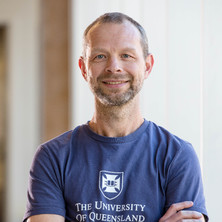
Mikael Bodén has a PhD in Computer Science and statistical machine learning from the University of Exeter (UK) but has spent the last decade and a half in biological research environments, including the Institute for Molecular Bioscience/ARC Centre of Excellence in Bioinformatics and the School of Chemistry and Molecular Biosciences, where he is currently located. He is the director of UQ’s postgraduate program in bioinformatics. Mikael Bodén has supervised 7 postdocs from funding he received from both ARC and NHMRC; he has been the primary advisor for 11 PhD and 3 MPhil graduates; he is currently supervising another 6 PhD students in bioinformatics and computational biology. Mikael Bodén collaborates with researchers in neuroscience, developmental biology, protein engineering and bioeconomy to mention but a few, and contributes expertise in the processing, analysis and integration of biological data; this is exemplified by recent publications in Science, Nature Catalysis, Nature Communications, Cell Systems, Nucleic Acids Research and Bioinformatics.
Availability
- Professor Mikael Boden is:
- Available for supervision
- Media expert
Fields of research
Qualifications
- Bachelor of Science, Skövde University College
- Masters (Coursework) of Science, Skövde University College
- Doctor of Philosophy, University of Exeter
Research interests
-
Bioinformatics
Thanks to major advances in biotechnology and instrumentation, biology is becoming an information centred science. The field of bioinformatics draws on computer science, math and statistics to enable discoveries in biological data sets. Our research aims to develop, investigate and apply bioinformatics methodologies to understand and resolve a range of open problems in genomics, molecular and systems biology. Recent applications involve protein sorting, nuclear protein organisation, mechanisms of transcriptional regulation, sequence and structure determinants of protein function and modification, and protein engineering. Biological data are now available at scales that challenges our ability to process and analyse them. On the flip side, greater scale gives statistical power to distinguish biologically meaningful signals from mere noise or artefacts, i.e. to identify "drivers" and "determinants" of function and structure. Sometimes the number of features (that describe each observation) is so great that we must use (biological) expertise to constrain the search for signals. Broadly put, our research aims to 1. effectively manage the complexity of operations involved in analysing millions of sequence reads, thousands of genomes, and proteomes of thousands of dynamically regulated molecules, etc 2. enable the seamless aggregation (or integration) of uncertain and incomplete data, typical of the next wave of biotechnology, across genomics, proteomics, structural biology, etc, and of using biological expertise 3. empower the interpretation of "whole system" data, aimed at understanding of basis of disease and other scientifically relevant phenotypes, using statistics and machine learning
Works
Search Professor Mikael Boden’s works on UQ eSpace
1999
Conference Publication
An experimental comparison of weight evolution in neural control architectures for a 'Garbage-Collecting' Khepera robot
Ziemke, T., Carlsson, J. and Boden, M. (1999). An experimental comparison of weight evolution in neural control architectures for a 'Garbage-Collecting' Khepera robot. 1st International Khepera Workshop, Paderborn, Germany, 10-11 December 1999. Paderborn, Germany: HNI-Verlagsschrittenreihe.
1999
Conference Publication
Learning to predict a context-free language: Analysis of dynamics in recurrent hidden units
Boden, M. B., Wiles, J. H., Tonkes, B. and Blair, A. D. (1999). Learning to predict a context-free language: Analysis of dynamics in recurrent hidden units. ICANN'99, Edinburgh, Scotland, 7-10 September, 1999. London, United Kingdom: IEE. doi: 10.1049/cp:19991135
1999
Conference Publication
Content, context and connectionist networks
Niklasson, L. and Boden, M. B. (1999). Content, context and connectionist networks. 21st Annual Meeting of the Cognitive Science Society, Vancouver, August 1999. New York, NY, United States: Lawrence Erlbaum.
1998
Journal Article
Creativity and artificial intelligence
Boden, MA (1998). Creativity and artificial intelligence. Artificial Intelligence, 103 (1-2), 347-356. doi: 10.1016/S0004-3702(98)00055-1
1996
Conference Publication
A connectionist variation on inheritance
Bodén, Mikael (1996). A connectionist variation on inheritance. 1996 International Conference on Artificial Neural Networks, ICANN 1996, , , July 16, 1996-July 19, 1996. Springer Verlag. doi: 10.1007/3-540-61510-5_62
1995
Conference Publication
Features of distributed representations for tree-structures: A study of RAAM
Boden, M and Niklasson, L (1995). Features of distributed representations for tree-structures: A study of RAAM. Swedish Conference on Connectionism, Skovde Sweden, Mar 02-03, 1995. MAHWAH: LAWRENCE ERLBAUM ASSOC PUBL.
1993
Journal Article
Connectionism
Boden, MB and Niklasson, LF (1993). Connectionism. Artificial Intelligence Review, 7 (5), 259-260. doi: 10.1007/BF00849053
1993
Conference Publication
A Representational Architecture for Nonmonotonic Inheritance Structures
Bodén, Mikael and Narayanan, Ajit (1993). A Representational Architecture for Nonmonotonic Inheritance Structures. ICANN 1993: International Conference on Artificial Neural Networks, Amsterdam, The Netherlands, 13-16 September, 1993. London, United Kingdom: Springer London. doi: 10.1007/978-1-4471-2063-6_79
Funding
Current funding
Supervision
Availability
- Professor Mikael Boden is:
- Available for supervision
Looking for a supervisor? Read our advice on how to choose a supervisor.
Supervision history
Current supervision
-
Doctor Philosophy
Using Statistical Models to Integrate Epigenetic Information by Distinguishing Sources of Variability
Principal Advisor
Other advisors: Professor Michael Piper
-
Doctor Philosophy
Bioinformatics of epigenetics at multiple scales: from evolution of epigenetic factors to tracing their marks in organellar development
Principal Advisor
Other advisors: Dr Woo Jun Shim
-
Doctor Philosophy
Protein engineering squared: phylogenetics and machine learning for synthetic biology
Principal Advisor
Other advisors: Dr Yosephine Gumulya
-
Doctor Philosophy
Dual-function ribonucleases: unexpected agents of antibiotic resistance
Principal Advisor
Other advisors: Professor Phil Hugenholtz
-
Doctor Philosophy
Do cell types exist in a continuum? Single-cell bioinformatics across species, over time and space
Principal Advisor
Other advisors: Professor Michael Piper
-
Doctor Philosophy
Decoding Multi-dimensional Macromolecular Constraints via Language Models
Principal Advisor
Other advisors: Professor Nathan Palpant
-
Doctor Philosophy
Grounding the computational design of enzymes in their relative diversity
Principal Advisor
Other advisors: Professor Gary Schenk
-
Doctor Philosophy
Merger of natural and engineered biological sequence space
Principal Advisor
Other advisors: Associate Professor Michael Forbes
-
Doctor Philosophy
How SETD2 shapes cortical development
Associate Advisor
Other advisors: Professor Stefan Thor, Professor Michael Piper
Completed supervision
-
2023
Doctor Philosophy
Cell Type Definition from Single Cell RNA-seq
Principal Advisor
Other advisors: Professor Michael Piper, Professor Jessica Mar, Professor Stefan Thor
-
2023
Doctor Philosophy
Machine learning models of epigenetic dynamics driving cell fate
Principal Advisor
Other advisors: Professor Jessica Mar, Professor Stefan Thor
-
2022
Doctor Philosophy
Methods for ancestral sequence reconstruction of large and complex protein families
Principal Advisor
Other advisors: Emeritus Professor Ross Barnard, Associate Professor Michael Landsberg, Professor Elizabeth Gillam
-
2021
Doctor Philosophy
Identifying Genetic Regulators of Cell Fate Through Computational Analysis of Epigenetic Repression
Principal Advisor
Other advisors: Professor Nathan Palpant
-
2020
Doctor Philosophy
Protein structural phylogeny, a missing chapter in molecular evolutionary biology
Principal Advisor
Other advisors: Professor Bostjan Kobe
-
2020
Doctor Philosophy
A computational analysis of transcription factor interactions and binding guided by epigenetics
Principal Advisor
Other advisors: Professor Michael Piper
-
2019
Doctor Philosophy
Computational Modelling of Enzymes: Predicting and Understanding the Selectivity of an Epoxide Hydrolase
Principal Advisor
Other advisors: Dr Yosephine Gumulya
-
-
2016
Doctor Philosophy
Molecular interaction motifs in a system-wide network context: Computationally charting transient kinase-substrate phosphorylation events
Principal Advisor
Other advisors: Professor Bostjan Kobe
-
2015
Master Philosophy
A Human Factors Evaluation of Auditory Displays in Medical Electrical Equipment
Principal Advisor
-
2013
Doctor Philosophy
Computational Models of Nucleo-Cytoplasmic Trafficking by Integrating Heterogeneous Data
Principal Advisor
-
2011
Master Philosophy
The collection and data-driven analyses of proteins localized to nuclear compartments
Principal Advisor
-
2010
Master Philosophy
Integrating sequence and structure for annotating proteins in the twilight zone: A machine learning approach
Principal Advisor
-
2008
Doctor Philosophy
Machine architectures for biological sequence classification
Principal Advisor
Other advisors: Professor Janet Wiles, Associate Professor Rohan Teasdale
-
2023
Doctor Philosophy
Statistical approaches to investigate cellular heterogeneity and stability in single-cell transcriptomic data
Associate Advisor
Other advisors: Professor Jessica Mar
-
2023
Doctor Philosophy
Structure, function and inhibition of Fe-S cluster-dependent dehydratases from the ilvD/EDD family
Associate Advisor
Other advisors: Professor Luke Guddat, Professor Gary Schenk
-
2022
Doctor Philosophy
Understanding Cell Identity Through the Lens of Genome-Wide Epigenetic Repression
Associate Advisor
Other advisors: Professor Nathan Palpant
-
2022
Doctor Philosophy
Ancestral reconstruction and characterisation of the CYP2U subfamily
Associate Advisor
Other advisors: Professor Elizabeth Gillam
-
2022
Doctor Philosophy
Understanding How Antimicrobial Peptides Interact with Membranes
Associate Advisor
Other advisors: Professor Alan Mark
-
2020
Doctor Philosophy
Ancestral reconstruction of cytochrome P450 family 1, 4 and cytochrome P450 reductase: Insights into evolution and applications in biocatalysis
Associate Advisor
Other advisors: Professor Elizabeth Gillam
-
2015
Doctor Philosophy
Biometric Markers for Affective Disorders
Associate Advisor
Other advisors: Associate Professor Marcus Gallagher
-
2015
Master Philosophy
PreDiZ: a PDZ domain-peptide interaction prediction method
Associate Advisor
Other advisors: Professor Bostjan Kobe
-
2012
Doctor Philosophy
Predicting tissue-specific transcription factor binding and gene expression in silico
Associate Advisor
-
2010
Doctor Philosophy
Thermodynamic models for the analysis of quantitative transcriptional regulation
Associate Advisor
-
2007
Doctor Philosophy
RULE-EXTRACTION FROM SUPPORT VECTOR MACHINES: MEDICAL DIAGNOSIS PREDICTION AND EXPLANATION
Associate Advisor
-
2006
Master Philosophy
COMPUTATIOANL MODELLING OF THE LANGUAGE PRODUCTION SYSTEM: SEMANTIC MEMORY, CONFLICT MONITORING, AND COGNITIVE CONTROL PROCESSES
Associate Advisor
Other advisors: Professor Janet Wiles
-
2006
Doctor Philosophy
ROBUSTNESS IN BOOLEAN MODELS OF GENETIC REGULATORY SYSTEMS
Associate Advisor
Other advisors: Professor Janet Wiles
-
2006
Doctor Philosophy
FROM GENES TO PHENES AND BACK AGAIN: MODELING THE INTERACTION BETWEEN INDIVIDUAL BEHAVIOUR AND EVOLUTION
Associate Advisor
Other advisors: Dr Jim Hanan, Professor Janet Wiles
-
Doctor Philosophy
TOPOLOGICAL MODELS OF TRANSMEMBRANE PROTEINS FOR SUBCELLULAR LOCALIZATION PREDICTION
Associate Advisor
Other advisors: Associate Professor Marcus Gallagher, Professor Geoffrey McLachlan
Media
Enquiries
Contact Professor Mikael Boden directly for media enquiries about:
- Artificial Intelligence (AI)
- Bioinformatics
- Biology and computers
- Computational biology
- Computer learning
- DNA sequencing
- Machine learning
- Systems biology
Need help?
For help with finding experts, story ideas and media enquiries, contact our Media team: