
Overview
Background
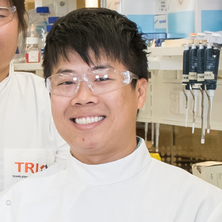
Associate Professor Kelvin Tuong is an NHMRC Emerging Leadership Fellow and Deputy Director and group Leader of the Ian Frazer Centre for Children’s Immunotherapy Research (IFCCIR), Child Health Research Centre. He is interested in single-cell analysis of immune cells and harnessing adaptive immune receptors for understanding immune cell development and function in health and in cancer.
A/Prof Tuong was born and raised in Singapore and moved to Brisbane, Australia, after completing national service in Singapore and obtaining a Diploma in Biomedical Laboratory Technology (Ngee Ann Polytechnic).
A/Prof Tuong was originally trained as a molecular cell biologist and gradually transitioned into bioinformatics during his post-doctoral training. He has been very prolific for an early career researcher, having published >70 articles since 2013, with nearly a third of them as first/co-first or last author and has a stellar track record of pushing out highly collaborative work in prestigious journals including Nature, Cell, Science, Nature Medicine, Nature Biotechnology J Exp Med etc. He has the rare combination of having excellent laboratory and bioinformatics skill sets which provide him a strong command of both fundamental immunology and computational approaches.
A/Prof Tuong completed his undergraduate Bachelor's degree in Biomedical science with Class I Honours, followed by his PhD in macrophage cell biology and endocrinology at UQ (Prof Jenny Stow lab and Emiritus Prof George Muscat lab, IMB, UQ). He then went on to a post-doc position with Emiritus Prof Ian Frazer (co-inventor of the Gardasil cervical cancer vaccine, UQ Frazer Institute, Translational Research Institute) where he worked on HPV immunology, cervical cancer and skin cancer. In his time in the Frazer lab, he developed an interest in bioinformatics analyses as a means to tackle and understanding immunology problems in health and disease. He then moved to the UK and joined Prof Menna Clatworthy's lab at the University of Cambridge and Prof Sarah Teichmann's lab at the Wellcome Trust Sanger Institute. He has focused his interests on single-cell analyses of tissue immune cells, including T and B cells and their specific receptors (TCR/BCR). He has developed bespoke bioinformatics software, including one tailored for single-cell B Cell Receptor sequencing analysis, Dandelion, which he used in one of the largest combined single-cell transcriptomic, surface proteomic and TCR/BCR sequencing dataset in the world, published in Nature Medicine, and more recently in Nature Biotechnology where we introduced a TCR-based pseudotime trajectory analysis method.
A/Prof Tuong is now leading the Computational Immunology group at the IFCCIR and his lab is focused on investigating how pediatric immunity is perturbed during cancer at the cellular level and how this information can be used for creating novel warning systems for children with cancer. For potential students/post-docs/trainees interested in joining the team, please contact A/Prof Tuong at z.tuong@uq.edu.au.
Availability
- Associate Professor Kelvin Tuong is:
- Available for supervision
- Media expert
Fields of research
Qualifications
- Doctor of Philosophy, The University of Queensland
Research interests
-
Deep learning of immune repertoires
T cells and B cells play a critical role in recognizing and eliminating cancer cells through their highly specific adaptive immune receptors. Our vision is to harness the power of these receptors to enable early cancer detection and real-time disease monitoring, particularly in children. These receptors act as natural "time-keepers" of the immune system’s engagement with tumors, capturing a molecular history of the immune response as cancer progresses. Our research focuses on understanding the properties that make these immune cells effective in the context of childhood cancers. Using high-resolution single-cell gene expression profiling, we aim to uncover how T and B cells behave in pediatric patients and how their receptors evolve during disease and treatment. To achieve this, we are developing new computational tools and algorithms designed to analyze immune receptor sequences and their expression patterns. Using deep learning, we aim to identify receptor signatures that are specific to cancer, and use these patterns to predict therapeutic responses and monitor disease progression in children with blood cancers. This approach offers a path toward highly sensitive tool for early detection and long-term monitoring of pediatric immunity and cancer.
-
Single-cell prediction of cancer cells
We’re interested in using deep learning to make sense of single-cell RNA sequencing (scRNA-seq) data, especially to uncover copy number variations (CNVs) that are often hidden in the noise of single-cell measurements. CNVs are a key feature in many cancers, but detecting them reliably at the single-cell level is still a challenge. Rather than relying on traditional approaches that often struggle with the sparse and noisy nature of scRNA-seq, we’re exploring how deep learning models can be trained to recognize subtle patterns in gene expression that point to underlying genomic alterations. Our goal is to build tools that can separate cancer cells from normal cells based on these inferred CNVs, helping us better understand tumor composition, heterogeneity, and evolution. This work has implications not just for identifying malignant cells, but also for tracking how tumors change over time or respond to treatment. We’re also interested in combining this with other data types—like epigenomic or spatial information—to build a more complete picture of what’s happening inside tumors at the single-cell level. We approach this work from both a computational and biological perspective, and we’re motivated by the potential for these methods to contribute to more personalized and effective cancer diagnostics.
-
Paediatric Immune Cell Atlas
We’re building the largest immune cell atlas of Australian children to date, profiling blood samples from over 1,000 healthy and disease-affected children using single-cell RNA sequencing (scRNA-seq). Our goal is to create a high-resolution map of the developing immune system in early life—a period when immune function is still maturing and highly dynamic. Children’s immune systems differ significantly from those of adults, yet they remain understudied in immunology. By analyzing immune cell populations at single-cell resolution, we’re uncovering how these cells change with age, how they respond to infections or immune-related diseases, and how early-life immunity is shaped by both genetic and environmental factors. To fully capture the complexity of the pediatric immune system, we’re incorporating machine learning and deep learning approaches to uncover subtle patterns and rare cell states across this large and diverse dataset. We’re also applying integrative methods to link scRNA-seq data with immune repertoire sequencing, enabling us to explore how T and B cell clonality and diversity contribute to immune development and disease. This work has important implications for understanding pediatric diseases, identifying early biomarkers of immune dysregulation, and designing age-specific diagnostics and therapies. In addition to its clinical relevance, the atlas will serve as a foundational reference for researchers working in pediatric immunology and systems biology.
Works
Search Professor Kelvin Tuong’s works on UQ eSpace
2024
Journal Article
Tumour-retained activated CCR7+ dendritic cells are heterogeneous and regulate local anti-tumour cytolytic activity
Lee, Colin Y. C., Kennedy, Bethany C., Richoz, Nathan, Dean, Isaac, Tuong, Zewen K., Gaspal, Fabrina, Li, Zhi, Willis, Claire, Hasegawa, Tetsuo, Whiteside, Sarah K., Posner, David A., Carlesso, Gianluca, Hammond, Scott A., Dovedi, Simon J., Roychoudhuri, Rahul, Withers, David R. and Clatworthy, Menna R. (2024). Tumour-retained activated CCR7+ dendritic cells are heterogeneous and regulate local anti-tumour cytolytic activity. Nature Communications, 15 (1) 682, 1-18. doi: 10.1038/s41467-024-44787-1
2024
Journal Article
Rapid functional impairment of natural killer cells following tumor entry limits anti-tumor immunity
Dean, Isaac, Lee, Colin Y. C., Tuong, Zewen K., Li, Zhi, Tibbitt, Christopher A., Willis, Claire, Gaspal, Fabrina, Kennedy, Bethany C., Matei-Rascu, Veronika, Fiancette, Rémi, Nordenvall, Caroline, Lindforss, Ulrik, Baker, Syed Murtuza, Stockmann, Christian, Sexl, Veronika, Hammond, Scott A., Dovedi, Simon J., Mjösberg, Jenny, Hepworth, Matthew R., Carlesso, Gianluca, Clatworthy, Menna R. and Withers, David R. (2024). Rapid functional impairment of natural killer cells following tumor entry limits anti-tumor immunity. Nature Communications, 15 (1) 683, 1-18. doi: 10.1038/s41467-024-44789-z
2023
Journal Article
Early human lung immune cell development and its role in epithelial cell fate
Barnes, Josephine L., Yoshida, Masahiro, He, Peng, Worlock, Kaylee B., Lindeboom, Rik G. H., Suo, Chenqu, Pett, J. Patrick, Wilbrey-Clark, Anna, Dann, Emma, Mamanova, Lira, Richardson, Laura, Polanski, Krzysztof, Pennycuick, Adam, Allen-Hyttinen, Jessica, Herczeg, Iván T., Arzili, Romina, Hynds, Robert E., Teixeira, Vitor H., Haniffa, Muzlifah, Lim, Kyungtae, Sun, Dawei, Rawlins, Emma L., Oliver, Amanda J., Lyons, Paul A., Marioni, John C., Ruhrberg, Christiana, Tuong, Zewen Kelvin, Clatworthy, Menna R., Reading, James L. ... Nikolić, Marko Z. (2023). Early human lung immune cell development and its role in epithelial cell fate. Science Immunology, 8 (90) eadf9988, 1-18. doi: 10.1126/sciimmunol.adf9988
2023
Journal Article
Tissue-resident B cells orchestrate macrophage polarisation and function
Suchanek, Ondrej, Ferdinand, John R., Tuong, Zewen K., Wijeyesinghe, Sathi, Chandra, Anita, Clauder, Ann-Katrin, Almeida, Larissa N., Clare, Simon, Harcourt, Katherine, Ward, Christopher J., Bashford-Rogers, Rachael, Lawley, Trevor, Manz, Rudolf A., Okkenhaug, Klaus, Masopust, David and Clatworthy, Menna R. (2023). Tissue-resident B cells orchestrate macrophage polarisation and function. Nature Communications, 14 (1) 7081, 1-20. doi: 10.1038/s41467-023-42625-4
2023
Journal Article
Autoimmune uveitis in Behçet's disease and Vogt‐Koyanagi‐Harada disease differ in tissue immune infiltration and T cell clonality
Kang, Hao, Sun, Hongjian, Yang, Yang, Tuong, Zewen K., Shu, Minglei, Wei, Yunbo, Zhang, Yu, Yu, Di and Tao, Yong (2023). Autoimmune uveitis in Behçet's disease and Vogt‐Koyanagi‐Harada disease differ in tissue immune infiltration and T cell clonality. Clinical and Translational Immunology, 12 (9) e1461, 1-17. doi: 10.1002/cti2.1461
2023
Journal Article
Atypical B cells and impaired SARS-CoV-2 neutralization following heterologous vaccination in the elderly
Ferreira, Isabella A.T.M., Lee, Colin Y.C., Foster, William S., Abdullahi, Adam, Dratva, Lisa M., Tuong, Zewen Kelvin, Stewart, Benjamin J., Ferdinand, John R., Guillaume, Stephane M., Potts, Martin O.P., Perera, Marianne, Krishna, Benjamin A., Peñalver, Ana, Cabantous, Mia, Kemp, Steven A., Ceron-Gutierrez, Lourdes, Ebrahimi, Soraya, Lyons, Paul, Smith, Kenneth G.C., Bradley, John, Collier, Dami A., McCoy, Laura E., van der Klaauw, Agatha, Thaventhiran, James E.D., Farooqi, I. Sadaf, Teichmann, Sarah A., MacAry, Paul A., Doffinger, Rainer, Wills, Mark R. ... Gupta, Ravindra K. (2023). Atypical B cells and impaired SARS-CoV-2 neutralization following heterologous vaccination in the elderly. Cell Reports, 42 (8) 112991, 112991. doi: 10.1016/j.celrep.2023.112991
2023
Journal Article
A novel multifunctional radioprotective strategy using P7C3 as a countermeasure against ionizing radiation-induced bone loss
Wei, Fei, Tuong, Zewen Kelvin, Omer, Mahmoud, Ngo, Christopher, Asiatico, Jackson, Kinzel, Michael, Pugazhendhi, Abinaya Sindu, Khaled, Annette R., Ghosh, Ranajay and Coathup, Melanie (2023). A novel multifunctional radioprotective strategy using P7C3 as a countermeasure against ionizing radiation-induced bone loss. Bone Research, 11 (1) 34, 1-20. doi: 10.1038/s41413-023-00273-w
2023
Journal Article
Distinct pathogenic roles for resident and monocyte-derived macrophages in lupus nephritis (vol 7, e159751, 2022)
Richoz, Nathan, Tuong, Zewen K., Loudon, Kevin W., Patino-Martinez, Eduardo, Ferdinand, John R., Portet, Anais, Romo-Tena, Jorge, Bashant, Kathleen R., Thevenon, Emeline, Rucci, Francesca, Hoyler, Thomas, Junt, Tobias, Kaplan, Mariana J., Siegel, Richard M. and Clatworthy, Menna R. (2023). Distinct pathogenic roles for resident and monocyte-derived macrophages in lupus nephritis (vol 7, e159751, 2022). Jci Insight, 8 (10) e171762. doi: 10.1172/jci.insight.171762
2023
Conference Publication
Venous plexus-associated lymphoid hubs support meningeal humoral immunity
Zanluqui, Nagela Ghabdan, Fitzpatrick, Zachary, Rosenblum, Jared S., Tuong, Zewen Kelvin, Chandrashekhar, Vikram, Negro-Demontel, Maria Luciana, Allinson, Kieren S. J., Mastorakos, Panagiotis, Chittiboina, Prashant, Maric, Dragan, Donahue, Danielle, Ferdinand, John R., Portet, Anais, Penalver, Ana, Gillman, Eleanor, Zhuang, Zhengping, Clatworthy, Menna R. and McGavern, Dorian B. (2023). Venous plexus-associated lymphoid hubs support meningeal humoral immunity. Immunology 2023™ Meeting, Washington, DC United States, 11-15 May 2023. Rockville, MD United States: American Association of Immunologists. doi: 10.4049/jimmunol.210.supp.76.23
2023
Journal Article
Dandelion uses the single-cell adaptive immune receptor repertoire to explore lymphocyte developmental origins
Suo, Chenqu, Polanski, Krzysztof, Dann, Emma, Lindeboom, Rik G. H., Vilarrasa-Blasi, Roser, Vento-Tormo, Roser, Haniffa, Muzlifah, Meyer, Kerstin B., Dratva, Lisa M., Tuong, Zewen Kelvin, Clatworthy, Menna R. and Teichmann, Sarah A. (2023). Dandelion uses the single-cell adaptive immune receptor repertoire to explore lymphocyte developmental origins. Nature Biotechnology, 42 (1), 40-51. doi: 10.1038/s41587-023-01734-7
2023
Journal Article
Low-dose IL-2 enhances the generation of IL-10-producing immunoregulatory B cells
Inaba, Akimichi, Tuong, Zewen Kelvin, Zhao, Tian X., Stewart, Andrew P., Mathews, Rebeccah, Truman, Lucy, Sriranjan, Rouchelle, Kennet, Jane, Saeb-Parsy, Kourosh, Wicker, Linda, Waldron-Lynch, Frank, Cheriyan, Joseph, Todd, John A., Mallat, Ziad and Clatworthy, Menna R. (2023). Low-dose IL-2 enhances the generation of IL-10-producing immunoregulatory B cells. Nature Communications, 14 (1) 2071, 1-11. doi: 10.1038/s41467-023-37424-w
2023
Journal Article
Heparan sulfate regulates IL-21 bioavailability and signal strength that control germinal center B cell selection and differentiation
Chen, Zhian, Cui, Yanfang, Yao, Yin, Liu, Bo, Yunis, Joseph, Gao, Xin, Wang, Naiqi, Cañete, Pablo F., Tuong, Zewen Kelvin, Sun, Hongjian, Wang, Hao, Yang, Siling, Wang, Runli, Leong, Yew Ann, Simon Davis, David, Qin, Jiahuan, Liang, Kaili, Deng, Jun, Wang, Conan K., Huang, Yen-Hua, Roco, Jonathan A., Nettelfield, Sam, Zhu, Huaming, Xu, Huajun, Yu, Zhijia, Craik, David, Liu, Zheng, Qi, Hai, Parish, Christopher and Yu, Di (2023). Heparan sulfate regulates IL-21 bioavailability and signal strength that control germinal center B cell selection and differentiation. Science Immunology, 8 (80) eadd1728, 1-17. doi: 10.1126/sciimmunol.add1728
2023
Journal Article
Dimensionality reduction under scrutiny
Yang, Yang, Tuong, Zewen K. and Yu, Di (2023). Dimensionality reduction under scrutiny. Nature Computational Science, 3 (1), 8-9. doi: 10.1038/s43588-022-00383-1
2022
Journal Article
A human fetal lung cell atlas uncovers proximal-distal gradients of differentiation and key regulators of epithelial fates
He, Peng, Lim, Kyungtae, Sun, Dawei, Pett, Jan Patrick, Jeng, Quitz, Polanski, Krzysztof, Dong, Ziqi, Bolt, Liam, Richardson, Laura, Mamanova, Lira, Dabrowska, Monika, Wilbrey-Clark, Anna, Madissoon, Elo, Tuong, Zewen Kelvin, Dann, Emma, Suo, Chenqu, Goh, Isaac, Yoshida, Masahiro, Nikolić, Marko Z., Janes, Sam M., He, Xiaoling, Barker, Roger A., Teichmann, Sarah A., Marioni, John C., Meyer, Kerstin B. and Rawlins, Emma L. (2022). A human fetal lung cell atlas uncovers proximal-distal gradients of differentiation and key regulators of epithelial fates. Cell, 185 (25), 4841-4860.e25. doi: 10.1016/j.cell.2022.11.005
2022
Journal Article
Distinct pathogenic roles for resident and monocyte-derived macrophages in lupus nephritis
Richoz, Nathan, Tuong, Zewen K., Loudon, Kevin W., Patiño-Martínez, Eduardo, Ferdinand, John R., Portet, Anaïs, Bashant, Kathleen R., Thevenon, Emeline, Rucci, Francesca, Hoyler, Thomas, Junt, Tobias, Kaplan, Mariana J., Siegel, Richard M. and Clatworthy, Menna R. (2022). Distinct pathogenic roles for resident and monocyte-derived macrophages in lupus nephritis. JCI Insight, 7 (21) e159751, 1-19. doi: 10.1172/jci.insight.159751
2022
Journal Article
Obesity is associated with attenuated tissue immunity in COVID-19
Guo, Shuang A., Bowyer, Georgina S., Ferdinand, John R., Maes, Mailis, Tuong, Zewen K., Gillman, Eleanor, Liao, Mingfeng, Lindeboom, Rik G H, Yoshida, Masahiro, Worlock, Kaylee, Gopee, Hudaa, Stephenson, Emily, Gao, Catherine A, Lyons, Paul A, Smith, Kenneth G C, Haniffa, Muzlifah, Meyer, Kerstin B, Nikolić, Marko Z, Zhang, Zheng, Wunderink, Richard G, Misharin, Alexander V, Dougan, Gordon, Navapurkar, Vilas, Teichmann, Sarah A, Conway Morris, Andrew and Clatworthy, Menna R (2022). Obesity is associated with attenuated tissue immunity in COVID-19. American Journal of Respiratory and Critical Care Medicine, 207 (5), 566-576. doi: 10.1164/rccm.202204-0751OC
2022
Journal Article
Fracture hematoma micro-architecture influences transcriptional profile and plays a crucial role in determining bone healing outcomes
Woloszyk, Anna, Tuong, Zewen K., Perez, Louis, Aguilar, Leonardo, Bankole, Abraham I., Evans, Christopher H. and Glatt, Vaida (2022). Fracture hematoma micro-architecture influences transcriptional profile and plays a crucial role in determining bone healing outcomes. Biomaterials Advances, 139 213027, 1-15. doi: 10.1016/j.bioadv.2022.213027
2022
Journal Article
A robust experimental and computational analysis framework at multiple resolutions, modalities and coverages
Tran, M., Yoon, S., Teoh, M., Andersen, S., Lam, PY., Purdue, B. W., Raghubar, A., Hanson, S.J., Devitt, K., Jones, K., Walters, S., Monkman, J., Kulasinghe, A., Tuong, Z.K., Soyer, H.P., Frazer, I. H. and Nguyen, Q. (2022). A robust experimental and computational analysis framework at multiple resolutions, modalities and coverages. Frontiers in Immunology, 13 911873, 911873. doi: 10.3389/fimmu.2022.911873
2022
Journal Article
Group 3 innate lymphocytes make a distinct contribution to type 17 immunity in bladder defence
Riding, Alexandra M., Loudon, Kevin W., Guo, Andrew, Ferdinand, John R., Lok, Laurence S.C., Richoz, Nathan, Stewart, Andrew, Castro-Dopico, Tomas, Tuong, Zewen Kelvin, Fiancette, Remi, Bowyer, Georgina S., Fleming, Aaron, Gillman, Eleanor S., Suchanek, Ondrej, Mahbubani, Krishnaa T., Saeb-Parsy, Kourosh, Withers, David, Dougan, Gordan, Clare, Simon and Clatworthy, Menna R. (2022). Group 3 innate lymphocytes make a distinct contribution to type 17 immunity in bladder defence. iScience, 25 (7) 104660, 1-30. doi: 10.1016/j.isci.2022.104660
2022
Journal Article
Mapping the developing human immune system across organs
Suo, Chenqu, Dann, Emma, Goh, Issac, Jardine, Laura, Kleshchevnikov, Vitalii, Park, Jong-Eun, Botting, Rachel A., Stephenson, Emily, Engelbert, Justin, Tuong, Zewen Kelvin, Polanski, Krzysztof, Yayon, Nadav, Xu, Chuan, Suchanek, Ondrej, Elmentaite, Rasa, Domínguez Conde, Cecilia, He, Peng, Pritchard, Sophie, Miah, Mohi, Moldovan, Corina, Steemers, Alexander S., Mazin, Pavel, Prete, Martin, Horsfall, Dave, Marioni, John C., Clatworthy, Menna R., Haniffa, Muzlifah and Teichmann, Sarah A. (2022). Mapping the developing human immune system across organs. Science, 376 (6597) eabo0510, eabo0510-+. doi: 10.1126/science.abo0510
Funding
Current funding
Past funding
Supervision
Availability
- Associate Professor Kelvin Tuong is:
- Available for supervision
Looking for a supervisor? Read our advice on how to choose a supervisor.
Available projects
-
Developing single-cell analysis methods harnessing adaptive immune receptors
The direct linkage of adaptive immune receptor repertoire with cellular phenotypes from single-cell sequencing technology has proven to be a powerful tool in understanding lymphocyte development and function in healthy and disease contexts. Multi-omics analysis leverages data from different modalities e.g. transcriptomics, epigenetics, proteomics. Recent advances has successfully integrated the data modalities to study cellular biology at an unprecedented resolution. However, unlike the other data modalities, which are largely continuous data, single-cell adaptive immune receptor sequencing (scVDJ-seq) data are a mixture of categorical and continuous data which poses additional challenges for integration. It consists of annotations of variable (V), diversity (D) and joining (J) genes, which are selected and recombined during B/T-cell development. The technology to profile this at the single cell level with paired gene expression data is relatively new. I have led the development of Dandelion, a scVDJ-seq software framework which has been used to deeply profile single-cell lymphocyte biology and I aim to expand on the its capabilities for immunology research.
-
Deep Learning of T-Cell Receptor Signatures for Monitoring Pediatric Cancer Immunity
T cells play a crucial role in recognizing and attacking cancer cells through their highly specific T-cell receptors (TCRs). These receptors carry detailed information about the immune system’s engagement with tumors, offering a rich but complex source of data for understanding immune responses in childhood cancers. This project focuses on developing deep learning models to decode TCR sequences, with the aim of identifying cancer-specific immune responses and predicting therapeutic outcomes in pediatric patients.
Using immune receptor sequencing data, we are characterizing the clonal landscape of T cells in children with cancers. By integrating this data, we aim to learn predictive features of TCR sequences associated with anti-tumor activity, treatment response, and disease progression. These models will be trained to recognize subtle sequence motifs, clonal expansions, and phenotype-receptor relationships that are often missed by conventional approaches.
A central goal of this project is to develop tools that allow for immune-based monitoring of pediatric cancers over time. By identifying cancer-associated TCRs, we aim to build sensitive and specific assays for early detection, residual disease tracking, and treatment monitoring. Ultimately, this work will help uncover how the developing immune system interacts with cancer and contribute to more personalized, immune-informed approaches to treating childhood cancers.
-
Building Australia’s Largest Single-Cell Atlas of the Pediatric Immune System
The immune system in early life undergoes rapid and unique developmental changes that are not well captured by adult immune profiling studies. This project aims to generate the most comprehensive single-cell atlas of the pediatric immune system in Australia, based on over 1,000 blood samples from both healthy children and those affected by various diseases, including immune disorders and infections.
We use single-cell RNA sequencing (scRNA-seq) to capture the diversity of immune cells in unprecedented detail, allowing us to map how these cells evolve with age and in response to disease. Importantly, we are integrating scRNA-seq with adaptive immune receptor sequencing (scVDJ-seq) and clinical metadata to uncover how immune repertoires develop and function across different pediatric cohorts.
To analyze this complex dataset, we are developing advanced machine learning and deep learning frameworks capable of identifying age- and disease-specific immune states. We are also applying integrative computational approaches to connect transcriptional states with immune clonotypes and repertoire diversity. This atlas will serve as a key resource for pediatric immunology, providing foundational insights that can inform early diagnostics, vaccine strategies, and targeted therapies for children.
-
Profiling Childhood Acute Myeloid Leukaemia Immunity
This project aims to use single-cell TCR-profiling to achieve two key objectives: 1) identify if there are endogenous neo-antigen-specific T-cells in childhood AML, and 2) assess whether these T-cells can be induced by antigen stimulation. We will use single-cell sequencing to profile the tumour microenvironment in paediatric AML to assess for T-cell clonality and presence/absence of key immune cell interactions that may be useful for a vaccination response. In parallel, we will design and implement experimental workflows to assess T-cell-mediated tumour killing, enabling functional validation of potential neo-antigen candidates, in collaboration with leading immunology labs at UQ and beyond.
-
Deep Learning Approaches for Inferring Copy Number Variation from Single-Cell Transcriptomics in Cancer
Copy number variations (CNVs) are a hallmark of cancer, but detecting them accurately at the single-cell level remains a major challenge due to the noisy and sparse nature of single-cell RNA-seq (scRNA-seq) data. This project focuses on the development of deep learning models capable of inferring CNVs directly from transcriptomic profiles, with the ultimate goal of identifying cancer cells within heterogeneous tissues.
By applying neural network architectures tailored to single-cell data, we aim to model the underlying gene dosage effects reflected in gene expression patterns. Our models will be trained to distinguish malignant from normal cells and to identify patterns of genomic instability across tumor subclones. These methods will allow us to reconstruct the evolutionary dynamics of tumors and better understand the relationship between transcriptomic signatures and chromosomal alterations.
This work has direct applications in cancer diagnostics, especially in improving the resolution of tumor profiling for early detection and minimal residual disease monitoring. We also aim to make these methods publicly available as open-source tools to support the broader community studying tumor heterogeneity through single-cell approaches.
Supervision history
Current supervision
-
Doctor Philosophy
Harnessing adaptive immune receptors to monitor paediatric immunity in cancer and enhance neoantigen vaccine pipeline
Principal Advisor
Other advisors: Professor Di Yu
-
Master Philosophy
Deep Learning Approaches for Inferring Copy Number Variation from Single-Cell Transcriptomics in Cancer
Principal Advisor
Other advisors: Professor Kiarash Khosrotehrani
-
Doctor Philosophy
Advancing Paediatric Cancer Immunotherapy with Antigen Receptors and Artificial Intelligence
Principal Advisor
Other advisors: Dr Yang Yang
-
Doctor Philosophy
A Comprehensive Paediatric Immune Cell Atlas for Children's Immunotherapy Innovation
Principal Advisor
Other advisors: Dr Quan Nguyen, Professor Di Yu
-
Doctor Philosophy
Integrating Single Cell Transcriptomic Sequencingand AI to Enhance Cancer Immunotherapy
Associate Advisor
Other advisors: Associate Professor Sherry Wu
-
Doctor Philosophy
Development of novel vaccines for cancer immunotherapy
Associate Advisor
Other advisors: Professor Maher Gandhi, Honorary Professor Kristen Radford
-
Doctor Philosophy
Pipelines to model immune signalling networks in barrier tissue protection
Associate Advisor
Other advisors: Dr M. Zeeshan Chaudhry, Professor Gabrielle Belz
Completed supervision
-
2026
Doctor Philosophy
Investigate T cell specificity and function in immune responses by systems immunology
Associate Advisor
Other advisors: Dr Yang Yang, Professor Di Yu
-
2022
Doctor Philosophy
Understanding CD4+ T cell responses to HPV16 E7 antigen in a mouse model of precancerous skin
Associate Advisor
Other advisors: Emeritus Professor Ian Frazer, Dr Janin Chandra
Media
Enquiries
Contact Associate Professor Kelvin Tuong directly for media enquiries about:
- Cancer
- Genomics
- Immunology
Need help?
For help with finding experts, story ideas and media enquiries, contact our Media team: