
Overview
Background
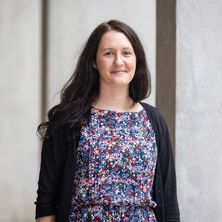
I am a research leader who believes the best science is built with the people it is designed to serve. As a two-time NHMRC Emerging Leadership Fellow and Certified Practising Speech Pathologist, I lead a transdisciplinary team of more than 20 researchers at the University of Queensland. We work in partnership with consumers, clinicians, communities, government, and industry to co-produce interventions, technologies, systems, and standards that drive real change and serve the public good.
My research themes include: (a) Design and implementation of a national audit system to drive quality improvement in post-stroke aphasia services; (b) Development and implementation of methodological standards to improve aphasia research quality and reduce research wastage; (c) Development of technology-enhanced interventions to support self-management, promote equitable access to information and services, and empower people with communication support needs; (d) Development of fit-for-purpose training and resources for aged care workers to help older Australians have better conversations about aged care.
I am Director of the Centre for Living Experience Research and lead the Qualitative Collective, and the School of Health and Rehabilitation Sciences Communication Research and Engagement Theme (CommRET). I am a UQ Research Integrity Advisor.
Availability
- Associate Professor Sarah Wallace is:
- Available for supervision
- Media expert
Fields of research
Qualifications
- Bachelor of Speech Pathology, The University of Queensland
- Graduate Certificate in Gerontology, La Trobe University
- Doctor of Philosophy, The University of Queensland
Research interests
-
Ageing and aged care
-
Communication disability
-
Aphasia rehabilitation
-
Core Outcome Set development
-
Consensus techniques and stakeholder engagement
-
Co-design
-
Outcome measurement
Works
Search Professor Sarah Wallace’s works on UQ eSpace
2018
Conference Publication
Family members’ experiences and preferences for receiving aphasia information during early phases in the continuum of care
Rose, Tanya A. and Wallace, Sarah J. (2018). Family members’ experiences and preferences for receiving aphasia information during early phases in the continuum of care. International Aphasia Rehabilitation Conference (IARC), University of Aveiro, Portugal, 5-7 September 2018. Abingdon, Oxon, United Kingdom: Routledge. doi: 10.1080/02687038.2018.1487009
2017
Journal Article
Using the International Classification of Functioning, Disability, and Health to identify outcome domains for a core outcome set for aphasia: a comparison of stakeholder perspectives
Wallace, Sarah J., Worrall, Linda, Rose, Tanya and Le Dorze, Guylaine (2017). Using the International Classification of Functioning, Disability, and Health to identify outcome domains for a core outcome set for aphasia: a comparison of stakeholder perspectives. Disability and Rehabilitation, 41 (5), 1-10. doi: 10.1080/09638288.2017.1400593
2017
Journal Article
Discourse measurement in aphasia research: have we reached the tipping point? A core outcome set … or greater standardisation of discourse measures?
Wallace, Sarah J., Worrall, Linda E., Rose, Tanya and Le Dorze, Guylaine (2017). Discourse measurement in aphasia research: have we reached the tipping point? A core outcome set … or greater standardisation of discourse measures?. Aphasiology, 32 (4), 479-482. doi: 10.1080/02687038.2017.1398811
2017
Journal Article
Which outcomes are most important to people with aphasia and their families? An international nominal group technique study framed within the ICF
Wallace, Sarah J., Worrall, Linda, Rose, Tanya, Le Dorze, Guylaine, Cruice, Madeline, Isaksen, Jytte, Pak Hin Kong, Anthony, Simmons-Mackie, Nina, Scarinci, Nerina and Alary Gauvreau, Christine (2017). Which outcomes are most important to people with aphasia and their families? An international nominal group technique study framed within the ICF. Disability and Rehabilitation, 39 (14), 1-16. doi: 10.1080/09638288.2016.1194899
2017
Conference Publication
Results of an international consensus meeting to develop a core outcome set for aphasia treatment research
Wallace, Sarah J., Worrall, Linda, Rose, Tanya, Le Dorze, Guylaine and Rochon, Elizabeth (2017). Results of an international consensus meeting to develop a core outcome set for aphasia treatment research. Academy of Aphasia 55th Annual Meeting, Baltimore, MD USA, 5-7 November 2017. Lausanne, Switzerland: Frontiers Research Foundation. doi: 10.3389/conf.fnhum.2017.223.00072
2017
Journal Article
Which treatment outcomes are most important to aphasia clinicians and managers? An international e-Delphi consensus study
Wallace, Sarah J., Worrall, Linda, Rose, Tanya and Le Dorze, Guylaine (2017). Which treatment outcomes are most important to aphasia clinicians and managers? An international e-Delphi consensus study. Aphasiology, 31 (6), 643-673. doi: 10.1080/02687038.2016.1186265
2016
Other Outputs
Improving research outcome measurement in aphasia: Development of a core outcome set
Wallace, Sarah J. (2016). Improving research outcome measurement in aphasia: Development of a core outcome set. PhD Thesis, School of Health and Rehabilitation Sciences, The University of Queensland. doi: 10.14264/uql.2017.61
2016
Journal Article
Core outcomes in aphasia treatment research: an e-Delphi consensus study of international aphasia researchers
Wallace, Sarah J., Worrall, Linda E., Rose, Tanya and Le Dorze, Guylaine (2016). Core outcomes in aphasia treatment research: an e-Delphi consensus study of international aphasia researchers. American Journal of Speech-Language Pathology, 25 (4S), S729-S742. doi: 10.1044/2016_AJSLP-15-0150
2016
Journal Article
Let’s call it “aphasia”: rationales for eliminating the term “dysphasia”
Worrall, Linda, Simmons-Mackie, Nina, Wallace, Sarah J., Rose, Tanya, Brady, Marian C., Kong, Anthony Pak Hin, Murray, Laura and Hallowell, Brooke (2016). Let’s call it “aphasia”: rationales for eliminating the term “dysphasia”. International Journal of Stroke, 11 (8), 848-851. doi: 10.1177/1747493016654487
2016
Book Chapter
Aphasia in later life
Worrall, Linda, Rose, Tanya, Brandenburg, Caitlin, Rohde, Alexia, Berg, Karianne and Wallace, Sarah J. (2016). Aphasia in later life. Encyclopedia of Geropsychology. (pp. 1-7) edited by A. N. Pachana. Singapore: Springer Singapore. doi: 10.1007/978-981-287-080-3_346-1
2015
Journal Article
The ICF, Relationship-Centred Care and Research Outcome Measurement: Carol Frattali's Impact on Aphasia Research
Worrall, Linda and Wallace, Sarah (2015). The ICF, Relationship-Centred Care and Research Outcome Measurement: Carol Frattali's Impact on Aphasia Research. SIG 2 Perspectives on Neurophysiology and Neurogenic Speech and Language Disorders, 25 (3), 107-113. doi: 10.1044/nnsld25.3.107
2015
Journal Article
An international perspective on quality of life in aphasia: a survey of clinician views and practices from sixteen countries
Hilari, Katerina, Klippi, Anu, Constantinidou, Fofi, Horton, Simon, Penn, Claire, Raymer, Anastasia, Wallace, Sarah, Zemva, Nada and Worrall, Linda (2015). An international perspective on quality of life in aphasia: a survey of clinician views and practices from sixteen countries. Folia Phoniatrica et Logopedia, 67 (3), 119-130. doi: 10.1159/000434748
2014
Journal Article
A good outcome for aphasia
Wallace, Sarah J., Worrall, Linda, Rose, Tanya and Le Dorze, Guylaine (2014). A good outcome for aphasia. Aphasiology, Latest articles (11), 1400-1404. doi: 10.1080/02687038.2014.935119
2014
Journal Article
Measuring outcomes in aphasia research: a review of current practice and an agenda for standardisation
Wallace, Sarah J., Worrall, Linda, Rose, Tanya and Le Dorze, Guylaine (2014). Measuring outcomes in aphasia research: a review of current practice and an agenda for standardisation. Aphasiology, Latest articles (11), 1364-1384. doi: 10.1080/02687038.2014.930262
2013
Journal Article
The World Report on Disability as a blueprint for international, national, and local aphasia services
Worrall, Linda E., Howe, Tami, O'Callaghan, Anna, Hill, Anne J., Rose, Miranda, Wallace, Sarah J., Rose, Tanya, Brown, Kyla, Power, Emma, O'Halloran, Robyn and Rohde, Alexia (2013). The World Report on Disability as a blueprint for international, national, and local aphasia services. International Journal of Speech Language Pathology, 15 (1), 106-112. doi: 10.3109/17549507.2012.721004
Funding
Current funding
Supervision
Availability
- Associate Professor Sarah Wallace is:
- Available for supervision
Looking for a supervisor? Read our advice on how to choose a supervisor.
Available projects
-
Profound Pathways: Including people with severe and profound intellectual disability in health research, policy and practice
Young Australians with severe and profound intellectual disability are rarely included in the research, consultation and policy that shapes their care.
Profound Pathways, a four-year consumer-led MRFF program, is co-designing guidelines for health care transition and decision-making, and a toolkit for consumer and community involvement.
This interdisciplinary PhD asks how the perspectives and needs of people with severe and profound intellectual disabilities can be included and consulted. The topic will be shaped collaboratively with you. We welcome applicants from any relevant discipline, including public health, policy, law, social sciences, disability studies, or clinical practice.
Questions might include: how can health systems better include people they rarely reach? How can policy be co-designed more inclusively? How does legal capacity work in practice in health settings? What is inclusive research, and what does profound disability ask of models of inclusion?
Principal supervisor: Dr Michelle King; School of Health and Rehabilitation Sciences; View Dr Michelle King's profile
Associate supervisor: Associate Professor Sarah Wallace; School of Health and Rehabilitation Sciences; View Associate Professor Sarah Wallace's profile
Preferred educational background
Your application will be assessed on a competitive basis.
We take into account your:
- previous academic record
- publication record
- honours and awards
- employment history.
A working knowledge of disability and inclusion, health systems and policy, or research methods and ethics would be of benefit to someone working on this project.
You will demonstrate academic achievement in the fields of public health, health policy, sociology, social sciences, disability studies, law, allied health, medicine or related disciplines and the potential for scholastic success.
A background or knowledge of lived or professional experience with people with intellectual disability, and a commitment to inclusive and consumer-led research, is highly desirable.
-
Family Voice, Dementia and Digital Health
We are seeking expressions of interest from prospective PhD students interested in dementia, communication, digital health and co-design.
This project will explore how recordings from family members can support the wellbeing of people living with dementia and how technology can help families create meaningful, personalised content. The research will combine communication science, dementia care, lived-experience co-design and digital intervention development.
The project will be supervised by Associate Professors Anthony Angwin and Sarah Wallace.
Applicants from speech pathology, psychology, linguistics, cognitive science, dementia care, public health, human-computer interaction and related disciplines are encouraged to get in touch.
Supervision history
Current supervision
-
Doctor Philosophy
Describing the delivery and outcomes of post-stroke aphasia rehabilitation in Australia using a minimum dataset
Principal Advisor
Other advisors: Professor David Copland
-
Doctor Philosophy
How can we help people with aphasia return to driving following stroke?
Principal Advisor
Other advisors: Professor David Copland, Dr Hannah Gullo
-
Doctor Philosophy
MEASuRE up! Driving High-Quality Care through Adherence to Quality Indicators
Principal Advisor
Other advisors: Dr Kirstine Shrubsole
-
Doctor Philosophy
Driving High-Quality Care through Adherence to Quality Indicators in Rural and Regional Australia
Principal Advisor
Other advisors: Dr Kirstine Shrubsole
-
Doctor Philosophy
Co-Designing Technology-Enhanced Training for Aged Care Workers
Associate Advisor
Other advisors: Dr Peter Worthy
-
Doctor Philosophy
Development of change champion training to improve the implementation of aphasia services.
Associate Advisor
Other advisors: Professor David Copland, Dr Kirstine Shrubsole
Completed supervision
-
2025
Doctor Philosophy
Measuring conversation in couples where one person has aphasia: development of a patient-reported outcome measure
Principal Advisor
Other advisors: Dr Kirstine Shrubsole
-
2025
Doctor Philosophy
Measuring what Matters: Interpreting meaningful outcomes in clinical care and economic evaluation for people with post-stroke aphasia.
Principal Advisor
Other advisors: Dr Sam Harvey
-
2025
Doctor Philosophy
International Stakeholder Perspectives, Experiences, and Priorities for Aphasia Awareness: Co-design of a Unified Campaign
Principal Advisor
-
2024
Doctor Philosophy
The M.O.S.T-Project: Meaningful Outcomes for School-aged Children and Adolescents with Cognitive-Communication Disorders arising from Traumatic Brain Injuries
Principal Advisor
Other advisors: Associate Professor Anthony Angwin, Dr Tanya Rose
-
2023
Doctor Philosophy
Using experience-based co-design to understand unmet needs and priorities across the continuum of care: A blueprint for aphasia service development
Principal Advisor
Other advisors: Professor David Copland
-
2022
Doctor Philosophy
Prognostication in post-stroke aphasia
Principal Advisor
Other advisors: Professor David Copland
-
2022
Doctor Philosophy
Self-management of aphasia: building and supporting a communication infrastructure
Associate Advisor
Media
Enquiries
Contact Associate Professor Sarah Wallace directly for media enquiries about:
- Aged care
- Aphasia
- Co-design
- Communication
- Lived experience
- Speech pathology
- Stroke
Need help?
For help with finding experts, story ideas and media enquiries, contact our Media team: